
White Sands National Park, known for its beautiful white gypsum sand dunes, is surrounded by government facilities that were instrumental in testing the first atomic bomb and the development of the U.S. Space Program.
This New Mexico dune field is the largest of its kind on earth, covering 275 square miles, an average of 30 feet deep with dunes reaching up to 60 feet high, at an elevation ranging from 3,887 to 4,116 feet above sea level.
Gypsum is a sulfate mineral composed of calcium sulfate dihydrate. It typically forms in translucent crystals of selenite. It has a Mohs hardness value of 2 and is water-soluble, less so at higher temperatures and rarely found as sand…so why here in the Tularosa Basin in south-central New Mexico—an area so large and so white that it’s visible from space?

Sue Eyre
Key Takeaways
- White Sands National Park preserves the world’s largest gypsum dune field, covering approximately 275 square miles in southern New Mexico.
- The dunes formed from ancient marine gypsum deposits that were weathered, transported, and reshaped by wind over thousands of years.
- Unlike quartz sand, gypsum remains cool underfoot and gives the dunes their striking white appearance.
- The park offers hiking, sledding, ranger-led programs, and seasonal full moon events.
- Fossilized human footprints discovered in the area may be among the oldest known human footprints in North America.
- White Sands is surrounded by sites significant to American military and space history, including Trinity Site and White Sands Missile Range.
- More than 800 species of plants and animals inhabit the dune field, many of which have adapted to the bright white landscape.
How the White Sands Dunes Formed
In the Permian Period, a shallow sea covered the area and left behind gypsum. Tectonic activity raised the gypsum-rich seabed as it created what is now part of the San Andres and Sacramento Mountains. Rain and wind erosion over thousands of years washed the gypsum down into the Tularosa Basin and trapped it with no outlet to the sea.
As it evaporated, the trapped gypsum-rich water formed crystalline selenite on the surface. Meltwater from the ice age created several lakebeds that again dried out, leaving selenite crystals behind. Wind and rain broke down the crystals into sand-sized grains that were carried by the prevailing southwest winds to create the white sand dunes over 7,000 years ago.
Today, moisture lurks 18 to 24 inches below the surface, holding the dunes in place. This moisture allows vegetation to thrive even during periods of drought. The dunes are constantly changing and new white sand forms as rain dissolves the gypsum and cements it into more solid layers and wind breaks it down into sand…a process that has been repeated since the dunes were first created.

National Park Service
Gypsum, in its purest form, is white, but just how white is the sand in the Tularosa Basin? From Google Earth, the footprint of this area looks white. In pictures, you might think you are looking at snow. Only on a rare snowy day, is the off-white or ivory color of the gypsum sand a good comparison to the bright white snow.
Sue Eyre
Visiting White Sands National Park
White Sands National Park covers 115 sq. miles, only 41 percent of the total white sand area. The park is located on the southeastern edge of the dune field, just north of U.S. Route 70, about 15 miles southwest of Alamogordo and 52 miles northeast of Las Cruces.
The park was designated a National Monument on January 18, 1933, and re-designated a National Park on December 20, 2019. White Sands is the most visited National Park Service (NPS) site in New Mexico with about 600,000 visitors each year.
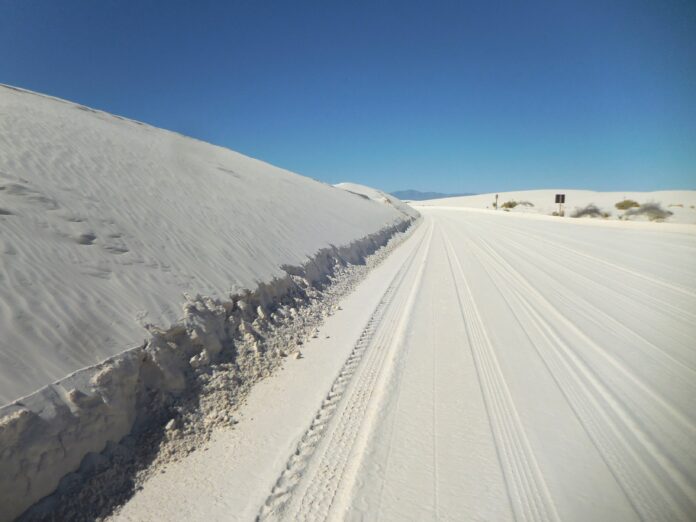
The 8-mile drive through the park is like riding down a highway after a snowstorm, with drifts of gypsum sand on either side of the road. On windy days, grains of white sand blow across the road and at times, may completely cover it. You may even see a snowplow along the way. The difference here is the temperatures, which range between 40⁰F from November to February and as high as 110⁰F from April to September. The park averages less than 10 inches of precipitation a year, of which less than 2 inches falls as snow.
There are hiking trails, picnic areas and restrooms within the park, but be sure to fill water bottles at the Visitor’s Center as no water is available beyond this point. Several backcountry camping sites are available by permit, however, as of this writing, they were closed for improvements.
National Park Service
Things to Do Among the Gypsum Dunes
1. Who doesn’t enjoy a sled ride? Bring your own or rent a sled from the Visitors’ Center. Waxed saucer sleds work best because the water-soluble gypsum has more resistance than snow. Safety first! Check with a ranger at the Visitors’ Center for sledding locations and safety rules before heading into the park.
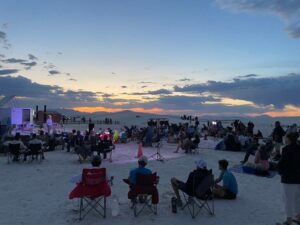
2. Plan to attend a full moon event. The NPS offers full moon hikes and concerts. Check the park’s website for the special event schedule.
3. Take a Ranger-led hike. The park’s events calendar lists sunset hikes as well as hikes to Lake Lucero.
As in all National Parks, collection of sand, minerals and artifacts is prohibited. Also, the park and the adjacent highway may close because of activities at the surrounding government facilities. Park rangers usually receive notification of closures several days in advance, so if you plan to visit, call ahead or visit the park’s website or social media pages.
National Park Service
Human History in the Tularosa Basin
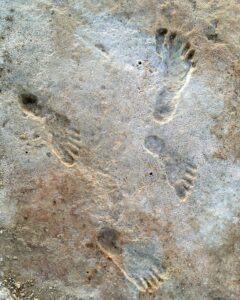
Fossilized footprints in the gypsum sand are probably the oldest known human footprints in North America. They were discovered in 2009 on the shore of the dried-up ice age lakebed of Lake Otero. The footprints formed at a time when the area was less arid and had extensive grasslands and have been radiocarbon dated to be 21,000 to 23,000 years old.
There have been numerous inhabitants in the Tularosa Basin area, including Paleo-Indians, Apache tribes, Spanish settlers, ranchers and even miners. In the 1800s, Hispanic settlers started mixing water with the gypsum sand to create plaster for their adobe homes.
In the 1880s, Texan cattle drives brought ranchers to the basin to raise sheep, goats and cattle. Heavy rains at that time, created several lakes including Lake Lucero, named after the brothers who set up a ranch on the south shore of that lake. Remnants of the ranch can be seen on Ranger-led hikes to the area.
In the early 1900s, the discovery of oil, coal, silver, gold and other minerals brought prospectors to settle in the area and file claims. In 1907, a plaster of Paris plant was constructed at the edge of the dunes using the gypsum sand. The operation was eventually shut down by the National Monument.
Wildlife and Plants at White Sands National Park
This unique environment requires plants and animals that live here to adapt to survive and thrive. Plants need to adjust to the alkaline-rich and nutrient-poor soil, low rain levels and huge temperature swings. Cacti, including cholla, and other desert plants like the soaptree yucca and desert grasses are among the most prevalent plants at White Sands.
Over 800 animal species live in this area. They have adapted to the white gypsum sand, many changing to a lighter color, even turning white. Some species are endemic to the area, including the bleached earless lizard and Apache pocket mouse. Common desert critters like spiders, snakes, scorpions and many varieties of birds also live here. Between 1969 and 1977, one unlikely animal was introduced by the New Mexico Department of Game and Fish—the African oryx. They were released for hunting purposes, but with no natural predators, their increased numbers soon became a threat to the National Park, which later erected a 67-mile fence to keep them out.
Sue Eyre
The Atomic Age and Trinity Site
This remote desert area was the perfect place for the U.S. government to develop the weapon testing facilities it needed during WWII. White Sands Missile Range and Holloman Air Force Base have surrounded the National Park since 1941. Trinity Site, just to the north of the basin, was the site of the first atomic bomb test in July 1945.
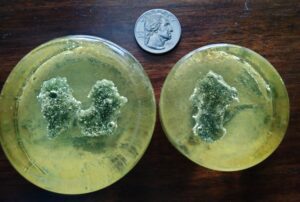
During that test, heat generated by the exploding atomic bomb caused the desert sand to fuse into a “mineral” we now call trinitite.
Trinity Site is open to the public twice a year on the first Saturday of April and the third Saturday of October. A limited number of participants join a caravan that leaves from Alamogordo and drives to the site.

Sue Eyre
Rockets, Space History and the Missile Range
Fascination with sending rockets soaring into the skies started in the 1930s, but during WWII, the practical side of using rocket propulsion to aid in combat became a priority.
After the war ended, the U.S. Space program started in earnest and much of the early research and development was done at the Missile Range. In 1946, the U.S. brought German rocket builder Wernher Von Braun to White Sands to work on the program. The first V-2 rocket was launched from White Sands later that year.
Later in the space program, the Alkali Flat area on Holloman Air Force Base, was designated as a training and emergency landing site for the shuttle program. In March 1982, the shuttle Columbia made an emergency landing on the hard-packed sand runway when both the Kennedy Space Center and Edwards Air Force Base Shuttle runways were unavailable.
A few miles southwest of the National Park, in the town of White Sands, is the White Sands Missile Range Museum. Outdoor and indoor displays highlight the atomic bomb and space program history. The museum is free and open to the public. Visitors must present a valid driver’s license, vehicle registration and proof of insurance at the gate. Check the hours of operation before visiting.
Planning Your White Sands Visit
The most popular time to visit this area is winter, when temperatures are cooler. If you go, be sure to check the attraction hours and possible road and park closures. Also, because this is a remote area with few services, plan your visit with a full tank of gas, a picnic lunch to eat in the park, personal water bottles and plan to spend the night in either Alamogordo or Las Cruces.
Not all sand is actually on a beach, but some, like New Mexico’s gypsum white sand, can be admired where it formed originally and continues to regenerate indefinitely.
Frequently Asked Questions
Why is White Sands National Park white?
The dunes are made of gypsum, a mineral composed of calcium sulfate dihydrate. Unlike the quartz sand found on most beaches and deserts, gypsum forms brilliant white grains that reflect sunlight and create the park’s distinctive appearance.
How were the White Sands dunes formed?
The dunes originated from gypsum left behind by an ancient sea that covered the region during the Permian Period. Over time, erosion carried the mineral into the Tularosa Basin, where it crystallized and eventually broke down into sand-sized grains that were shaped into dunes by wind.
Can you collect sand at White Sands National Park?
No. Collecting sand, minerals, fossils, artifacts, or other natural features is prohibited within the park to help preserve this unique environment.
What is the best time of year to visit White Sands National Park?
Winter and early spring are generally the most comfortable times to visit because temperatures are cooler. Summer temperatures can exceed 100°F, making outdoor activities more challenging.
Are there fossils at White Sands National Park?
Yes. The park contains fossilized human and animal footprints preserved in ancient lakebed sediments. Some of the human footprints have been dated to between 21,000 and 23,000 years old.
Can visitors go to Trinity Site from White Sands National Park?
Trinity Site is separate from the national park and is typically open to the public only twice each year. Visitors should check schedules and access requirements before planning a trip.
What animals live at White Sands National Park?
More than 800 animal species live in and around the dunes, including lizards, rodents, birds, snakes, spiders, and scorpions. Several species have evolved lighter coloration that helps them blend into the white landscape.
What makes White Sands National Park unique?
White Sands protects the largest gypsum dune field on Earth. Its bright white dunes, unusual geology, ancient footprints, and connections to both atomic and space-age history make it one of the most distinctive national parks in the United States.
Conclusion
White Sands National Park is far more than a scenic landscape of brilliant white dunes. It is a place where geology, natural history, archaeology, and modern American history intersect in remarkable ways. From the formation of the world’s largest gypsum dune field to ancient human footprints, unique wildlife adaptations, and nearby connections to the atomic and space ages, the park offers visitors an experience unlike any other in the United States.
Whether you’re hiking across the dunes, sledding down sandy slopes, photographing a desert sunset, or exploring the region’s rich history, White Sands National Park provides an opportunity to witness an ever-changing landscape shaped by wind, water, and time. Its dazzling gypsum sands continue to regenerate today, making this New Mexico wonder one of North America’s most extraordinary natural treasures.
This story about New Mexico’s white sand previously appeared in Rock & Gem magazine. Click here to subscribe. Story by Sue Eyre.