
The history of birthstones encompasses a long span of symbolism, spiritual tradition and, more recently, marketing ingenuity. Gem sellers have long linked their products to personal milestones—weddings, anniversaries, graduations and especially birthdays. Birthstones, gemstones symbolically connected to a person’s birth month, have become an enduring part of that tradition.
The appeal of birthstones is largely rooted in the beauty of the stones themselves. Their history and symbolism add another dimension. The word “birthstone” dates only to the early 20th century. The idea of connecting gemstones with specific months, beliefs and personal identity reaches back much further into antiquity.
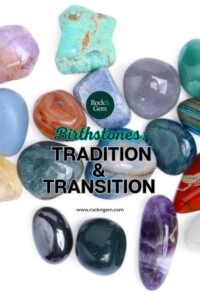
History of Birthstones & the Biblical Breastplate
Most historians agree that the practice of relating gemstones to specific events and beliefs originated in the 15th century B.C., when stones were thought to possess mystical powers of protection and power. These assumptions were embodied in the biblical breastplate of Aaron, the high priest of the Israelites. A symbol of divine guidance, this sacred, golden breastplate is described in the Old Testament’s Book of Exodus. It was set with 12 different gemstones of the Bible. Each was engraved with the name of one of the 12 tribes of Israel.
The precise identity of the breastplate stones has been lost over centuries of biblical translation. Research suggests they were carnelian, peridot, turquoise, garnet, lapis lazuli, chrysoprase, amber, agate, amethyst, yellow chalcedony, aquamarine and onyx.
The Role of the Number 12 in Birthstone Lore
The number 12 has biblical significance for both Christians and Jews as a symbol of God’s power. The New Testament’s Book of Revelation, compiled during the 1st century C.E., states that God would build the New Jerusalem upon 12 foundation stones, each set with a different gemstone engraved with the name of one of Christ’s 12 apostles.
The number 12 also appears in the zodiac. This is the section of the sky that includes the sun, moon and planets. Astrologers believe their positions in the sky influence human events and traits. In the 4th century B.C., the Greeks divided the zodiac into 12 equal segments or signs. Each sign became linked to a specific gemstone.
Specific gemstones then became associated with the 12 calendar months. Among the first to document these so-called “natal stones” were the 1st-century Roman-Jewish historian Flavius Josephus in his Antiquities of the Jews.
The practice of acquiring all 12 natal stones and wearing the stone appropriate for each month emerged in the Middle Ages. By the late 1500s, women in northern Europe began wearing the stone that represented their birth month. They also wore the stone for their zodiacal sign during the entire year.
George Frederick Kunz and the Revival of Birthstones
General public awareness of natal stones during modern times began with the work of George Frederick Kunz. He was a self-taught gem expert and writer who is considered America’s first gemologist.
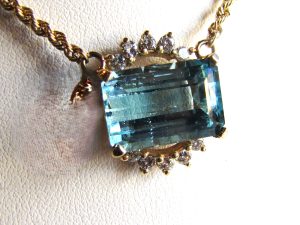
Steve Voynick
In 1891, Kunz’s employer, New York City’s prestigious Tiffany & Co., published his booklet Natal Stones: Sentiments and Superstitions Connected with Precious Stones.
Although just 36 pages in length, Natal Stones documented and consolidated what had for centuries survived only as an informal tradition. Jewelers nationwide watched with interest as Natal Stones boosted Tiffany’s sales of natal-related gemstones and jewelry.
Modernizing the Birthstone Tradition
In 1906, the newly founded American National Retail Jewelers Association (now Jewelers of America) replaced the archaic term “natal stone” with the more contemporary word “birthstone.” In 1912, the Association modernized the entire birthstone concept. Throughout history, most biblical and zodiacal stones, and the birthstones that followed, had been translucent or opaque and cut into cabochons.
Casting tradition aside, the Association replaced four of the original stones with the contemporary “big four” precious gemstones—faceted, transparent diamond, ruby, emerald and sapphire. Pearl and opal, also popular at the time, replaced two other traditional stones. The Association later modified the birthstone sequence by moving ruby, with its “warm” color, from December to July, while shifting “cool” colored turquoise from July to December.
George Frederick Kunz, in his 1913 classic The Curious Lore of Precious Stones, objected to the sudden appearance of transparent, faceted precious gems as birthstones, and also to the sequential rearrangement of ruby and turquoise. But the Association’s revised birthstones by month list prevailed—with more changes to come.
History of Birthstones: The Landscape Today
The 1930s brought the first alternate gemstones—additional stones for specific months—to offer buyers a wider selection of gem colors for their birth months, as well as options for those uncomfortable with some of the original stones’ religious and spiritual connotations.
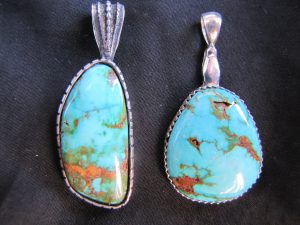
Steve Voynick
Critics argued that each month should have only a single stone and that the new alternate birthstones were simply marketing ploys with no historical credentials. Nevertheless, in 1952, alexandrite, yellow citrine, pink tourmaline, and blue zircon also made the birthstone lists, while tanzanite appeared in 2002 and spinel in 2016.
Today, various gem trade organizations publish birthstones by month lists, but few agree. Some months retain a single birthstone (January: garnet), while others have two or even three birthstones (December: turquoise, tanzanite, and blue zircon). To further the confusion, foreign birthstone lists often differ significantly from those published in the United States.
History of Birthstones: Final Thoughts
Today, the significance of birthstones lies in the eye of the beholder. Some cherish birthstones for their symbolism and long centuries of biblical, astrological, and spiritual tradition, while others are content with the physical beauty of the stones and their tenuous links to birth months. But all agree that the birthstone concept does indeed have a long, colorful history and that birthstones will remain a major marketing tool for the gem trade.
This article about the history of birthstones previously appeared in Rock & Gem magazine. Story by Steve Voynick. Click here to subscribe.