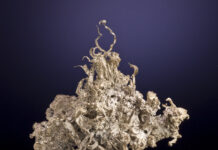

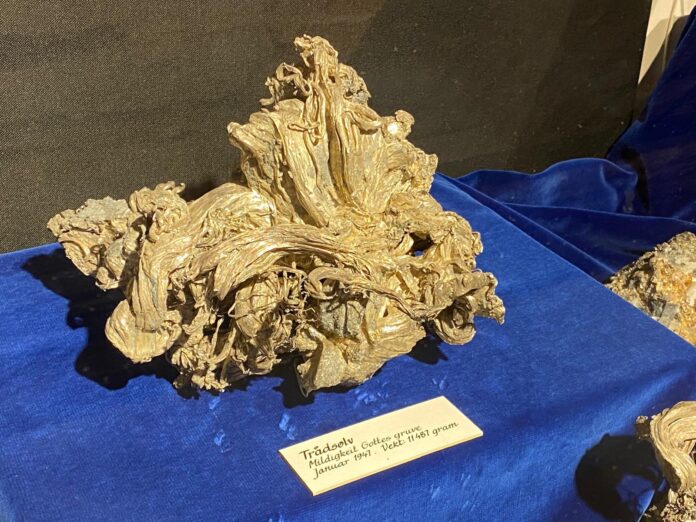
Kongsberg silver made headlines in 2022 when an extraordinary specimen from a long-lost pair appeared at auction in Norway. Collectors battled fiercely for the massive, intricate piece, but Marcus Budil of Monaco ultimately claimed the prize, flying in to bid in person. Now a showpiece at the Houston Museum of Natural Science, it is considered one of the finest Kongsberg silver specimens ever recovered. But what happened to its missing twin?
Key Takeaways
- Kongsberg, Norway, was once a major silver mining center, with approximately 200 mines operating in the region.
- Two remarkable silver specimens from the Mildigkeit mine were documented in 1947, but eventually disappeared into private hands.
- One specimen resurfaced at auction in Norway in 2022 and was acquired by Marcus Budil.
- After nearly two years of research, the second specimen was located in a private home in Monaco.
- The second silver made its public debut at the 2025 Denver Hard Rock Summit, selling for $10 million.
Kongsberg Silver Mines and Their Remarkable Specimens
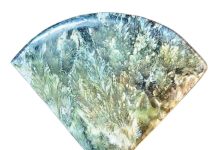
Kongsberg was the leader when it came to producing silver. At one time, around 200 mines were operating in large veins as far down as 3,000 feet. The mines were closed in 1958; more than 300 years after being in operation. While the silver was readily melted for use, collectors also found appeal in the variety of silver specimens recovered, including perfect cubes and long curling wires. While some of the silver was native, there were also a variety of silver compounds with much of it being in calcite.
According to Bob Jones, mineral expert, “The neat thing about this deposit is it was not discovered by a person, but an ox! In 1632, two youngsters were tending their herd, and an ox decided to scrape the coating off his horns and rubbed them against a rock, exposing a shiny metal. The children brought some of the metal home to their dad, who realized what it was. He collected some of the silver and sold it, only to be later arrested for stealing the King’s property!”
The Underwater Discovery That Preserved the Silver
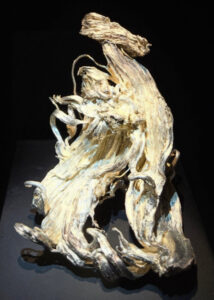
What makes the 2022 auction silver twin so extraordinary is not only its size but also its shine. Kongsberg silvers usually turn dark or tarnish over time, yet this piece flashes with bright, fresh luster.
According to expert Peter Lyckberg, that brilliance comes from the way it was found. The pocket, from the Mildigkeit mine, was entirely underwater until discovery, reportedly when a miner’s boot snagged on a wire of silver. Immersion preserved the metal’s surface, and a tiny tennantite inclusion with natural tarnish proves the luster is authentic. Lyckberg also believes this remarkable pocket was most likely discovered around 1938 and simply held back until its official sale in 1947.
Research continues, but whether it dates to 1938 or the early 1940s, evidence shows the mine produced some of the most lustrous and dramatic silvers ever mined at Kongsberg. In February 1947, the Norwegian newspaper Laagendalsposten reported that the largest specimen would be placed on display that summer and “regarded with awe, as telling proof that the silver mines at Kongsberg have not yet played their role.” That very specimen, weighing about 11.5 kilograms, is still on show in the Kongsberg Mining Museum, where it remains one of the most admired pieces in the Silver Room.
The Search for the Missing Kongsberg Silver
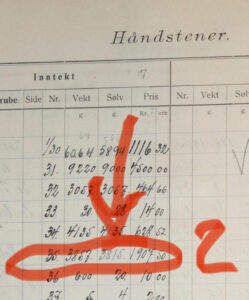
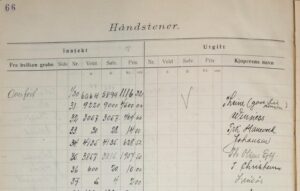
Other pieces from the pocket were carefully documented in the mine’s ledgers. On July 14, 1947, Buskerud County Governor Nils Nilsen Thune purchased a silver specimen weighing 9,220 grams (with 9,000 grams of silver content) for 4,800 Norwegian kroners (NOK). This was given as a birthday gift to King Haakon VII.
On August 22, 1947, the company, Theodor Olsens, a prominent silversmithing firm, bought two specimens for NOK 2,024.62. The ledger records their combined weight at 3,857 grams with 3,815 grams of silver content. After that sale, both Olsens pieces vanished into family hands.
That all changed when Budil secured the first piece at auction in 2022. He realized immediately that a missing twin was out there. What followed was nearly two years of detective work, tracing family records and contacts, until the second silver finally surfaced. Incredibly, it was no farther than a private home in Monaco, less than an hour from Budil’s own residence, where it had been kept quietly as a family memento.
A Record-Breaking Silver Sale
The reappearance electrified the marketplace. On the opening day of the 2025 Denver Hard Rock Summit, the second silver made its public debut. It sold immediately for $10 million, setting a new record as the highest price ever achieved at a public mineral show and the second-highest price ever for any mineral specimen worldwide.
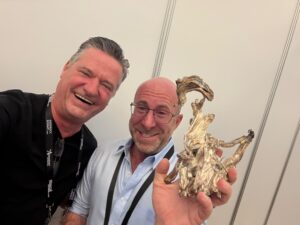
Even more remarkable, the sale was handled openly and collaboratively by Budil, Rob Lavinsky and Wayne Thompson, a break from the secrecy that usually surrounds transactions of this magnitude. Collectors and the public alike could watch as a once-lost masterpiece entered the Pinnacle Collection. The Pinnacle Collection frequently lends important pieces to Dallas and Houston museums, which means these two silvers will once again be enjoyed by the public in the near future.
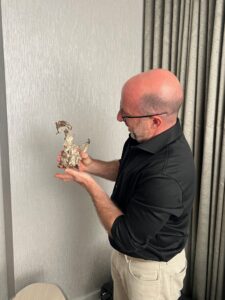
From a miner’s accidental step into a flooded drift, to decades hidden away as family heirlooms, to a record-breaking sale in Denver, the story of the Olsens’ silvers is nothing short of extraordinary. Their journey shows why Kongsberg remains one of the most storied names in mineralogy. These specimens are geological marvels, historical witnesses, and now icons of the mineral marketplace. With both pieces once again in the public sphere, and future museum showings on the horizon, the lost twins of Kongsberg will continue to inspire awe for generations to come.
Frequently Asked Questions
What is Kongsberg silver?
Kongsberg silver is native silver and silver-bearing mineral material recovered from the historic mines near Kongsberg, Norway. The district is known for producing exceptional specimens, including intricate wires, branching formations and unusual crystal shapes.
Why is Kongsberg silver so valuable to mineral collectors?
Kongsberg silver is prized for its distinctive natural formations, historical importance and exceptional specimen quality. Large, intricate pieces are particularly rare, and their condition, size, provenance and documented history can significantly influence their value.
How much did the lost Kongsberg silver twin sell for?
The second of the two remarkable Kongsberg silver specimens sold for $10 million at the 2025 Denver Hard Rock Summit. The sale established a record for the highest price ever achieved at a public mineral show.
Kongsberg Silver: Final Thoughts
From a miner’s accidental discovery in a flooded mine to decades spent hidden in private collections, the journey of the Kongsberg silver twins is remarkable. Their rediscovery reunited two exceptional specimens with an important chapter in Norway’s mining history. After nearly 80 years apart, the lost twins are once again part of the public mineral world, where collectors and museum visitors can appreciate their extraordinary size, detail and preservation.
This story previously appeared in Rock & Gem magazine. Click here to subscribe. Story by Dr. Stuart Mills and Pam Freeman