
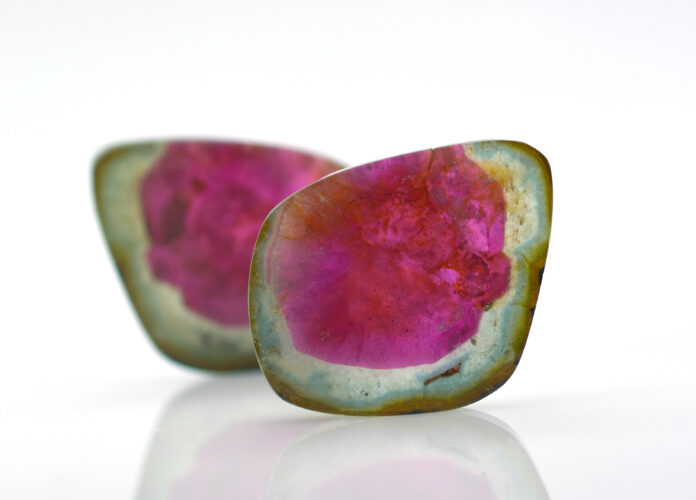
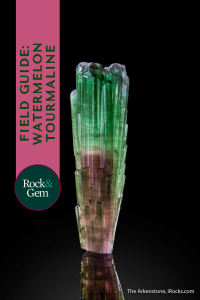
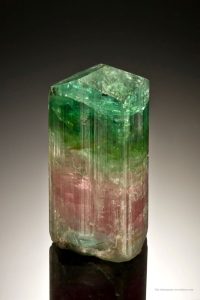
Watermelon tourmaline may be the most popular variety of tourmaline found. The name tourmaline means “stone of many colors” in Sinhalese. Watermelon tourmaline exhibits its characteristic bi-color appearance resembling the fruit favorite with a pink or red center surrounded by a green outer layer. Its Mohs scale of hardness of 7 to 7.5 makes it a popular and durable jewelry favorite.
Key Takeaways
- Watermelon tourmaline is a striking bi-colored variety of tourmaline with a pink or red center surrounded by a green outer layer.
- Watermelon tourmaline forms in lithium-rich granite pegmatites, where changing mineral chemistry creates its distinctive color zoning.
- Major sources of watermelon tourmaline include Brazil, Afghanistan, the Democratic Republic of the Congo, California, and Maine.
- With a Mohs hardness of 7 to 7.5, watermelon tourmaline is durable enough for many types of jewelry.
- Watermelon tourmaline is prized by collectors, jewelers and some crystal enthusiasts for its beauty, rarity and symbolic heart chakra associations.
Formation & Color
Watermelon tourmaline is a variety of concentrically color-zoned tourmaline and is distinct from longitudinal bi-color or polychrome zonation also commonly observed in tourmalines. The name was coined by George Robeley Howe (1860-1950) of Norway, Maine, when describing specimens from the Havey Quarry in Poland, Maine.
Watermelon tourmaline is generally the mineral species elbaite, fluor-elbaite or liddicoatite, which are all species of the tourmaline group. They form primarily in granite pegmatites, which are rich in elements like lithium, manganese and boron. As these elements cool and solidify, watermelon tourmaline begins to crystallize from the residual magma.
The color zoning seen in watermelon tourmaline occurs because of a changing chemical environment during formation. Initially, the crystal grows with a high concentration of manganese, which gives the inner core its pink-to-red color. As the fluid’s chemical composition shifts, elements like iron or chromium become more prevalent and form the outer green layer. Its striking color zoning provides a visual record of the changing conditions under which the crystal formed.
Where It Is Found
Watermelon tourmaline’s most notable deposits are found in Minas Gerais, Brazil. It is also found in Africa (particularly Namibia and Nigeria), Afghanistan, Sri Lanka, Australia and the United States (California and Maine). The most famous mineral specimens come from the Tourmaline King Mine and Himalaya Mine in San Diego County, California; the latter was one of the largest producers of gem and specimen-grade tourmaline in North America throughout the 20th century. Recently, exceptional watermelon tourmaline has been mined in the Goma region of the Democratic Republic of the Congo.
Watermelon Tourmaline History
It wasn’t until the 19th century that watermelon tourmaline began to be recognized scientifically as part of the tourmaline family. By the late 1800s, mineralogists classified tourmaline into two different varieties: elbaite and schorl. These days, the tourmaline group comprises 44 different mineral species!
Watermelon Tourmaline Uses
Watermelon tourmaline has become popular in high-end and artisanal jewelry markets since each stone is distinct. It is also popular with metaphysical believers. It is considered to be a powerful heart chakra stone with the green layer bringing in the nurturing and healing energies of nature and the pink layer bringing love, compassion and emotional healing.
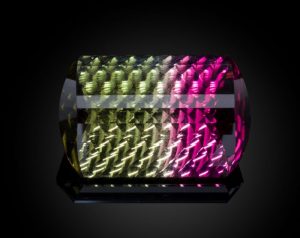
Courtesy Arkenstone, iRocks.com
Frequently Asked Questions
What is watermelon tourmaline?
Watermelon tourmaline is a variety of tourmaline with a pink or red center surrounded by a green outer layer, resembling the colors of a watermelon. Most specimens belong to the tourmaline species elbaite or fluor-elbaite.
Is this gemstone natural?
Yes. Natural watermelon tourmaline forms inside granite pegmatites as changing mineral chemistry creates its distinctive pink and green color zoning. Synthetic versions are uncommon compared to treated or imitation gemstones.
Where is watermelon tourmaline found?
Watermelon tourmaline is found in Brazil, Afghanistan, the Democratic Republic of the Congo, Nigeria, Namibia, Sri Lanka, Australia and the United States, particularly California and Maine.
Is watermelon tourmaline good for jewelry?
Yes. Watermelon tourmaline has a Mohs hardness of 7 to 7.5, making it durable enough for rings, pendants, earrings and other jewelry when cared for properly.
This gemstone stands out for its remarkable pink-and-green color zoning, durable hardness and fascinating geological history. Whether you admire it as a collector, wear it as jewelry or simply appreciate the science behind its formation, this unique variety of tourmaline remains one of nature’s most eye-catching gemstones.
Love learning about gemstones, minerals and fossils? Subscribe to Rock & Gem for expert field guides, collecting tips, lapidary projects and the latest discoveries from the world of rocks and minerals. Story by Dr. Stuart Mills and Pam Freeman.