
Tourmaline is the name for a group of minerals prized by collectors and widely used as gemstones. Tourmaline gets its name from the Sri Lankan words tur mali, which means stone of many colors. Ancient Egyptians believed tourmaline grabbed all the colors of the rainbow as it worked its way up through the earth.
Key Takeaways
- Tourmaline is a group of minerals known for its wide range of colors and popularity with mineral collectors and jewelry makers.
- Tourmaline has a Mohs hardness of 7 to 7.5 and typically forms elongated, striated crystals.
- Trace elements such as iron and manganese contribute to tourmaline’s varied colors.
- When heated, tourmaline can develop an electrical charge and exhibits piezoelectric properties.
- Tourmaline is an October birthstone and occurs in locations around the world, including Brazil, Madagascar and the United States.
Tourmaline Colors
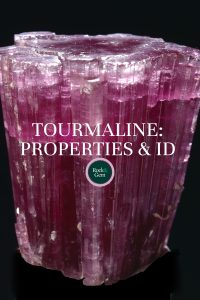
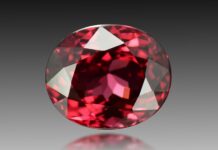
One reason for tourmaline’s popularity is its wide array of colors – over 100! The mineral colors are caused by traces of different chemicals. For example, iron produces blue (indicolite) and green colors and manganese produces pink and red colors. Sometimes tourmaline colors are enhanced by heat treatment.
There are five major tourmaline species:
1. Dravite
2. Elbaite – Named after Elba, Italy. Most gem varieties occur in this species. (ex: Rubellite – Pink, Paraíba – named after Paraíba, Brazil, Watermelon Tourmaline – red center and green rind)
3. Liddicoatite
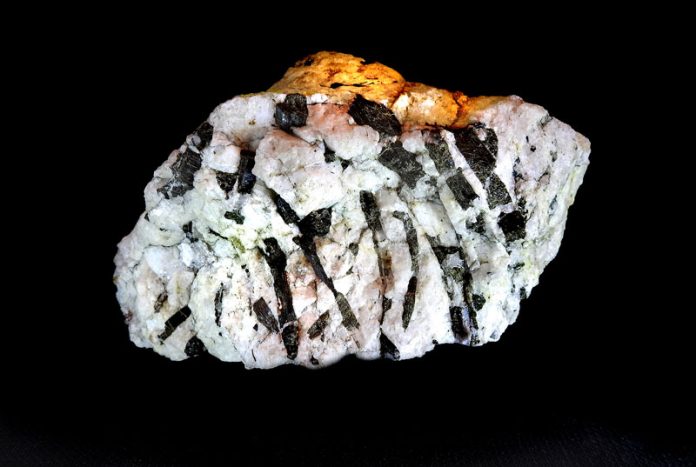
4. Schorl – Black (colored by iron)
5. Uvite
Richard Gross
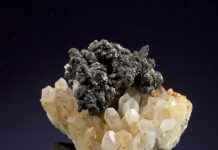
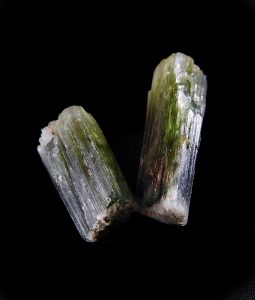
Tourmaline may form beautiful, elongated crystal clusters that are highly sought after by collectors. It is one of the most prized minerals and stunning specimens can be among the most aesthetic examples in the mineral kingdom.
Tourmaline Facts
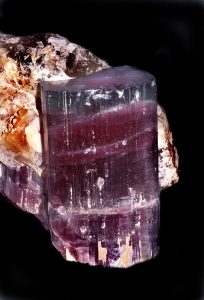
Tourmaline has a Mohs hardness of 7.5 and crystallizes in the trigonal system. Most crystals are striated, elongated, and prismatic. Vitreous luster and conchoidal fracture are also characteristic. Chatoyancy (cat’s eye effect) is found in some tourmalines.
Besides its use in jewelry, tourmaline becomes electrically charged when it’s heated. Piezoelectric properties can make tourmaline useful in the manufacture of various industrial gauges.
Richard Gross
Tourmaline Meaning & Birthstone
In metaphysical beliefs, tourmaline is thought to give confidence, relieve nervousness, promote self-assurance, increase physical energy, enhance the immune system, help negate negative thoughts and relieve tension.
Tourmaline is the gemstone for the eighth anniversary and a birthstone for October.
Where to Find Tourmaline
Afghanistan; Australia; Brazil; China; Congo; India; Italy; Kenya; Madagascar; Mexico; Morocco; Mozambique; Myanmar; Namibia; Nepal; Nigeria; Pakistan; Russia; South Africa; Sri Lanka; Sweden; Tanzania; Thailand; United States of America; Urals; Zambia
Frequently Asked Questions
What colors does tourmaline come in?
Tourmaline occurs in a wide range of colors, including black, green, blue, pink, red and purple. Some crystals display multiple colors in the same specimen, as seen in watermelon tourmaline, which has a pink or red center surrounded by green.
What is the hardness of tourmaline?
Tourmaline has a Mohs hardness of 7 to 7.5, making it a relatively durable mineral for jewelry and a good choice for everyday wear with proper care.
What is tourmaline used for?
Tourmaline is widely used as a gemstone in rings, necklaces, earrings and other jewelry. Mineral collectors also prize its colorful, elongated crystals. Its electrical properties have applications in certain industrial instruments.
Where is tourmaline found?
Tourmaline occurs in many countries, including Brazil, Afghanistan, Madagascar, Mozambique, Pakistan and the United States. Brazil is particularly well known for its gem-quality tourmaline, while U.S. localities include California and Maine.
This story previously appeared in Rock & Gem magazine. Click here to subscribe! Story by Richard Gross and Pam Freeman.