
A gold alloy is created by combining pure gold with other metals to improve its strength, durability and color. Gold alloys are the foundation of modern jewelry making. They allow jewelers to choose materials suited for casting, fabrication and everyday wear.
Gold in its natural form is a soft, yellow metal that’s easy to shape and manipulate. As beautiful as pure gold is, it’s not practical for most jewelry applications. It lacks the durability needed for everyday wear. To overcome this, gold is often alloyed with other metals, which enhances its strength and other useful properties.
Gold Alloy Key Takeaways
- A gold alloy combines pure gold with other metals to improve strength, durability and workability.
- Karat measures gold purity, with higher karats containing more pure gold but less hardness.
- Casting and rolling gold alloys are designed for different jewelry-making techniques.
- Copper, silver, nickel and palladium give gold alloys their distinctive colors and working properties.
- Recycled scrap gold should be carefully refined and refreshed with new alloy to maintain consistent quality.
- Understanding metallurgy helps jewelers choose the right alloy and avoid common fabrication and casting defects.
What Is Karat? Understanding Gold Purity
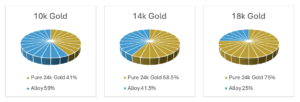
What is karat? Karat is a measure of gold purity, referring to how much of the metal in an alloy is pure 24k gold. Unlike other precious metals such as silver or platinum, gold has a variety of acceptable purities, with six legal purities in the U.S. and eight worldwide. The higher the karat, the more gold is present in the alloy, and the softer and more malleable the metal will be. On the other hand, lower-karat gold alloys contain a higher percentage of other metals, making the metal harder and more rigid.
When discussing karat, it helps to visualize it using a pie chart with 24 total parts of pure gold and each segment corresponding to one karat. The total 24-karat gold is divided into 24 equal parts, each part being one karat.
The karat is a ratio, often written as a decimal. This is calculated by using fractions with 24 as the denominator. For example, in 14k gold, the alloy consists of 14 parts gold out of the 24 total parts. This means 14k gold is approximately 58.3% pure gold (14/24 = 0.583), often rounded to .585 or stamped as 585. The remaining 41.7% is made up of other metals like copper or silver, depending on the alloy.
Types of Gold Alloy for Jewelry
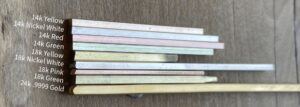
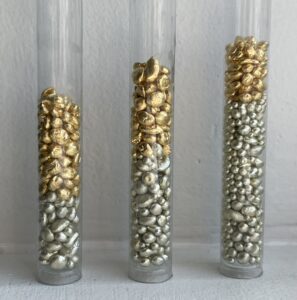
An alloy is a combination of two or more metals that are fused to create a new material with distinct properties. Jewelers often buy pre-alloyed gold in the form of casting grains, bars or sheets, which are ready to use. However, some artisans prefer to create their own alloys by mixing pure gold with a master alloy, which contains the necessary components for creating a specific type of gold. There are two main categories of gold alloys: casting alloys and rolling alloys.
Casting Gold Alloy
Casting alloys are designed to be melted and poured into molds. These alloys are typically used for casting jewelry in a single step, with the metal cooling and solidifying into the desired shape. Casting alloys are engineered to be homogeneous, filling the mold evenly and ensuring a smooth surface that requires minimal finishing. For manufacturers, this means reduced processing time and fewer defects, such as porosity or rough surfaces
Rolling Gold Alloy
In contrast, rolling alloys are designed for the fabrication of jewelry through processes like hammering, wire drawing and rolling. These alloys must be malleable and ductile, allowing them to be repeatedly worked into sheets or wire without cracking. The strength and rigidity of rolling alloys are derived from the mechanical processes they undergo, rather than the initial alloy composition. The repeated compression of the metal during fabrication increases its density, resulting in a stronger final product.
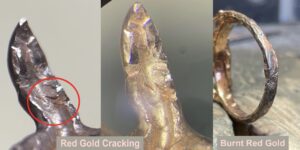
Mid: The same prong in a different light to highlight the ripping and tearing of the metal.
Right: This red gold ring was rejected because of poor casting. The metal is burnt and pitted. This could be from a disproportionate pocket of copper in the casting, and/ or this alloy does not contain a grain refiner, causing uneven crystalline growth in the metal.
Gold Alloy Colors
Gold alloys come in a variety of colors, each determined by the metals mixed into the gold. The most common colors are yellow, white, red and green, with each having a unique alloy composition and working characteristics.
Yellow Gold
Yellow gold is the most traditional and widely used color for jewelry. It is typically alloyed with copper and zinc to enhance its strength and durability while maintaining its characteristic yellow hue. Yellow gold alloys tend to have the best working prop-erties, as they have been the subject of the most research and development. As a result, yellow gold is generally easier to work with, especially for intricate designs.
Red and Pink Gold
Red and pink gold get their warm hues from copper, which adds both strength and color. However, because copper is more brittle than gold, red and pink gold alloys can be more challenging to work with, particularly when soldering or forming. They also tend to burn and oxidize easily, creating blackened surfaces when overheated. For best results, it’s recommended to use a master alloy that includes a “grain refiner” to help control the crystallization of the copper and improve the alloy’s overall workability.
White and Palladium Gold
White gold is created by adding metals like nickel, palladium or platinum to gold. Nickel-based white gold is harder and more rigid, but it can be prone to porosity, cracking and other issues. In addition, many white gold alloys require rhodium plating to achieve a bright white finish. Palladium white gold, on the other hand, is softer, more malleable, and has a natural gray tone, requiring no rhodium plating. It is an excellent choice for those with nickel allergies and for creating a distinct grayish-white hue.
Green Gold
Green gold is niche and not widely used in mass-produced jewelry. However, designers and high-end craftspeople often use green gold as an accent metal, as the contrast is striking. Green gold is created by adding silver to the gold. The green color is strongest in the 18k purity.
Challenges of Working with Colored Gold Alloys
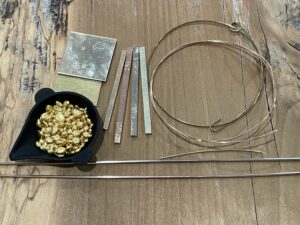
While gold’s various colors can be beautiful, they can also introduce unique challenges. The alloys used to create each color have different properties and understanding these differences is crucial for successful jewelry making.
- Red gold tends to be more brittle and prone to cracking, making it better suited for casting rather than fabrication.
- White gold can be difficult to work with because of its hardness and the issues caused by nickel. It’s also important to note that the white appearance is often achieved through rhodium plating, which can wear off over time.
As a jeweler, it’s essential to choose the right gold color and alloy based on the piece you’re creating, its intended use and the challenges each alloy might present.
Is Reusing Scrap Gold Worth it?
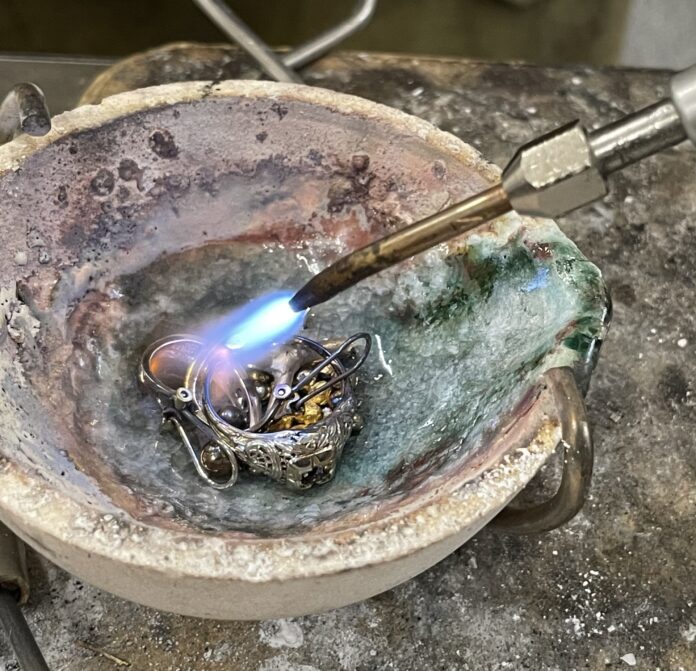
Reusing scrap gold can be an eco-friendly and cost-effective practice, but it’s not as simple as melting down old jewelry and using it again. When recycling gold, it’s essential to ensure the metal is free from solder and other contaminants. Pieces with multiple types of gold or solder seams can complicate the process, as it’s difficult to determine the exact composition of the metal.
To create a usable alloy from scrap gold, it’s best to add new gold and master alloy to rejuvenate the material. This ensures a more predictable and controllable outcome, whether you’re creating casting or rolling alloys. When working with customer scrap, many jewelers will add around 50 percent new gold and alloy to ensure the final product is of the desired quality.
While it might seem cheaper to use customer-provided scrap gold, the reality is that it often costs more in the long run with the time and materials required to refine and melt the gold. Many jewelers prefer to buy fresh stock because it saves time and reduces the risk of issues like brittleness or inconsistent karat content.
The Science Behind Gold Alloy
Metallurgy is an extensive field rooted in chemistry and materials science. As a jeweler, understanding the different properties of gold alloys will help you make more informed decisions and create superior pieces. The more you understand about how gold behaves when alloyed with other metals, the better equipped you’ll be to work with it effectively.
From karat purity to the complexities of color and alloy composition, knowledge is the key to elevating your jewelry. With a solid foundation in gold’s properties, you’ll be able to choose the right materials for your creations, avoid common pitfalls and produce pieces that are both beautiful and durable.
Gold Alloy: Frequently Asked Questions
What is a gold alloy?
A gold alloy is a mixture of pure gold and one or more additional metals, such as copper, silver, zinc, nickel or palladium. These added metals increase the gold’s strength, durability and workability while also creating different colors.
Why isn’t 24k gold used for most jewelry?
Pure 24k gold is soft and bends or scratches easily. Alloying it with other metals creates jewelry that is more durable for everyday wear while maintaining the beauty of gold.
What is the difference between casting and rolling gold alloys?
Casting gold alloys are formulated to flow smoothly into molds during casting, while rolling gold alloys are designed to withstand fabrication techniques such as hammering, rolling and wire drawing without cracking.
What gives gold its different colors?
The metals added to pure gold determine its color. Copper creates red and pink gold, silver produces green gold, while nickel or palladium creates white gold. Yellow gold typically contains copper and zinc to maintain its classic appearance.
Can scrap gold be reused for jewelry?
Yes, but recycled gold should be cleaned of solder and contaminants before reuse. Many jewelers mix scrap gold with new gold and master alloy to ensure consistent quality, strength and karat purity.
Understanding gold alloy is about much more than knowing its color or karat. Every alloy has unique characteristics that influence how it casts, forms, solders and wears over time. By learning how alloy composition affects strength, durability and workability, jewelers can choose the right material for each project and avoid common manufacturing problems. Whether you’re fabricating a custom design or casting a finished piece, a solid understanding of gold metallurgy is the foundation for creating jewelry that is both beautiful and built to last.
Love learning about gemstones, lapidary and jewelry making? Subscribe to Rock & Gem magazine for expert techniques, collecting insights and earth science delivered to your inbox and mailbox. Story by Mark D. Farrell.