
Gemstone fractures may seem surprising because many people think of gemstones as nearly indestructible, but every gem has its limits. Even diamond—the hardest natural material on the Mohs hardness scale—can chip or split when struck in the right direction. From everyday wear to an accidental drop, gemstones can develop breaks that affect both their appearance and durability.
Fortunately, those breaks can reveal far more than damage alone. The shape, location and luster of a fracture can provide valuable clues about a gemstone’s identity. This can reveal whether it is natural or synthetic, and even whether it has been treated or enhanced. For gemologists, collectors and jewelry enthusiasts alike, understanding gemstone fractures is an important part of evaluating and caring for gemstones.
It’s important to learn to recognize the different types of gemstone fractures—including cleavage, parting and irregular fractures. This can help you more accurately identify gemstones, spot potential durability issues, and better appreciate the unique characteristics of each specimen.
Gemstone Fractures: Key Takeaways
- Every gemstone, including diamond, can break under the right conditions despite its hardness.
- Gemstone breaks are classified as cleavage, parting or fracture, depending on how they form.
- Fracture patterns and luster can help identify gemstones and distinguish natural stones from imitations.
- Breaks may reveal treatments such as dyeing, coatings or diffusion that are not visible on an undamaged surface.
- Examining fractures with a loupe or microscope can uncover clues about a gemstone’s durability, authenticity and history.
Types of Gemstone Breaks
Breaks in gemstones fall into three categories: cleavage, parting and fracture. Each forms differently and can provide valuable clues about a gemstone’s structure, durability and identity.
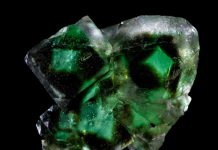
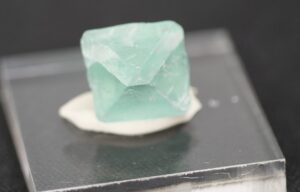
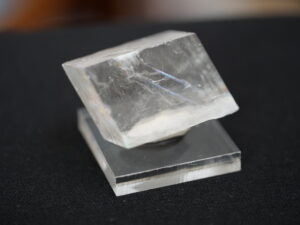
Cleavage is breakage that occurs along a gemstone’s weaker atomic planes. Much like peeling the layers of an onion, a cleavage break generally reveals a smooth, flat surface. Calcite and fluorite often display obvious cleavage, sometimes with step-like textures or straight internal breaks known as cleavage planes.
Parting is breakage that occurs parallel to a twinning plane. Twinning planes form when part of a growing crystal changes orientation during its formation. Parting may sometimes be seen on the base of a star ruby or star sapphire cabochon.
A fracture is any break that occurs away from a cleavage plane or twinning plane. Unlike cleavage and parting, fractures can form in many different shapes and textures depending on the gemstone and how it was damaged.
Why Gemstone Breaks Matter
The type of break a gemstone exhibits can reveal important information about its identity and condition. Cleavage visible within minerals such as calcite and fluorite can help gemologists distinguish natural gemstones from imitations because materials like glass and plastic do not exhibit true cleavage.
Breaks can also reveal a gemstone’s durability. A surface-reaching cleavage plane may indicate a weak area that could split further during setting or if the gemstone is dropped or struck. Likewise, parting and fractures can alert jewelers and collectors to damage that may require special care. For example, fractures beneath a prong or near the culet—the facet at the base of a pavilion—may need repolishing or another repair.
In some cases, breaks can even help identify whether a gemstone is natural or synthetic. A natural star sapphire cabochon may display parting on its base, while a lab-grown star sapphire typically will not, making this feature another useful clue during examination.
Types of Fractures
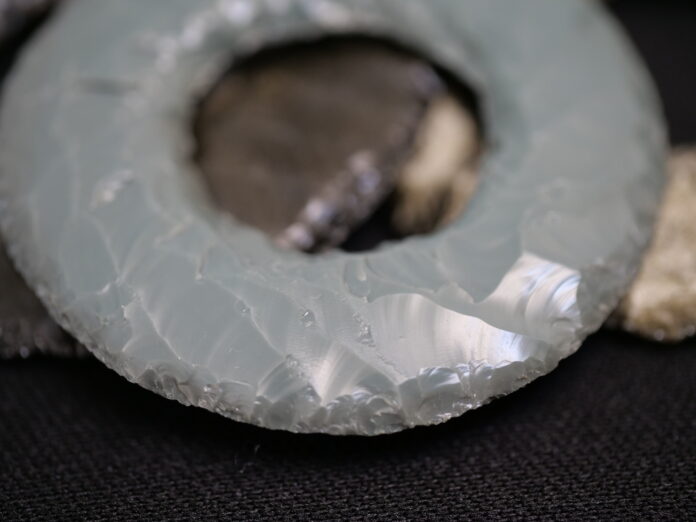
Fractures can appear in different shapes. A “conchoidal” fracture is the most common fracture. It has concentric circles in a shell-like pattern. Glass will exhibit conchoidal fractures, as will gem-quality natural glass, such as obsidian, corundum, quartz and garnet.
If the shell-like pattern of a conchoidal fracture is not obvious, it is called a “subconchoidal fracture.” Topaz might have a subconchoidal fracture or, sometimes, an “uneven” fracture, depending on where the break occurs.
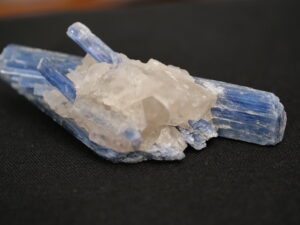
Fractures can also be “rough” (or “hackly”), “splintery” or “granular.” Nephrite jade and some turquoise exhibit granular fractures. Hematite and kyanite crystals may exhibit a splintery fracture.
Fracture Luster
Besides the terms describing the shape of a break, the luster revealed by the break is also important to note. Descriptions of fracture luster include vitreous (“glassy”), “waxy” (like candlewax), “dull,” “resinous” (as with amber), or “greasy.”
Where the fracture is the same in like-colored gemstones, the luster can help with gem identification. For example, sapphire (the blue color of corundum) has conchoidal fracture with vitreous (“glassy”) luster, whereas maxixe beryl, a rare, blue variety of beryl, also has conchoidal fracture, but with vitreous to resinous luster.
Jadeite and serpentine may both have a granular fracture; however, they may have slightly different fracture lusters — jadeite’s is dull and serpentine’s is dull-to-waxy.
Gemstones can sometimes exhibit breaks that do not conform to the usual shapes. If, for example, a gem has a surface-reaching, included crystal, there can be breakage around the part of the crystal that has broken the surface.
How to Examine Gemstone Fractures
When examining a gemstone or gem crystal, start by looking for visible breaks.
Under daylight-equivalent light, inspect the table, girdle and pavilion of a faceted gemstone, or all sides of a crystal, with the unaided eye. Look for obvious chips, fractures or cleavage that affect the gem’s symmetry, compromise its durability or provide clues to its identity.
Next, examine the same areas with a 10x loupe while tilting the gemstone under the light. Higher magnification often reveals smaller fractures that are not visible to the naked eye, such as tiny conchoidal fractures around a tourmaline crystal face, chips along the girdle of a garnet or an uneven fracture on a topaz pavilion facet.
If a gemstone or collection-grade crystal has significant damage, examine the breaks under even greater magnification, if possible. This is especially important with diamonds, which can cleave along weak planes if struck or subjected to sudden impact. Extensive cleavage may require recutting and can be difficult or impossible to repair.
What Gemstone Fractures Reveal
Not every fracture is a cause for concern. Many result from normal wear, while others formed naturally as the crystal grew. Zircon and tabular ruby crystals, for example, often display wear or fractures related to their crystal structure, and these features can help confirm their natural origin. Conversely, a rough crystal that appears completely flawless may deserve closer scrutiny.
Fractures can also reveal weak points that deserve special attention. Cleavage breaks in a diamond or other gemstone may indicate areas that are more susceptible to future damage during setting, everyday wear or accidental impact. Identifying these vulnerable areas allows jewelers, collectors and owners to take precautions that can help prevent additional damage or even the loss of a valuable gemstone.
What Gemstone Fractures Can Tell You
With so many imitation gemstones on the market, it is important to try to determine whether something might be natural or not. Some fractures can be time-savers in identification. A strand of pearls might be beautiful, but conchoidal fractures with vitreous luster around the drill holes usually indicate not natural pearls, but glass or plastic imitations.
Also, fractures might reveal whether a gemstone has been coated, surface-dyed or painted. These treatments do not usually penetrate deep into a gemstone and where there are breaks in the gem’s surface, the underlying color might be visible and quite different from the treatment.
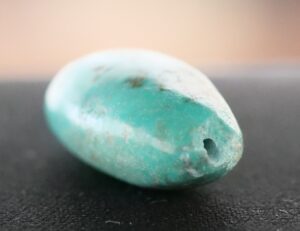
Dyed or color-enhanced turquoise, if it breaks, can reveal a chalky and almost crumbly fracture at the area of the break that reveals a much lighter color.
Diffusion of corundum with titanium is a type of color-enhancing treatment that only penetrates the gem to around 0.10 to 0.50mm. Any chip or break, if deep enough, can reveal the part of the gemstone that has not been diffused, ruining the uniformity of the gem’s color.
Like other treatments, titanium diffused corundum must be disclosed so that the wearer knows that any break in the gem might cause the underlying color to appear, and repairing the gem could be impossible or cost-prohibitive.
Using Gemstone Fractures to Identify Unknown Gems
When handling an unidentified gemstone, look for visible fractures or cleavage that might give clues about the gemstone’s hardness. Faceted, natural sapphire, a Mohs 9, should have few facet abrasions and maintain a vitreous luster. However, imitation sapphire (plastic or glass) will not be as durable and facet edges, the girdle area, and the culet are more likely to show wear, including scratches and dull patches.
Demantoid and tsavorite, both green grossular-andradite garnets, have slightly different hardness (demantoid is Mohs 6.5-7and tsavorite is 7.0-7.5). Upon inspection, demantoid garnet might show more fractures than tsavorite, helping to differentiate it from the other green gemstone.
Identifying the shape and luster of breaks in a gemstone is only part of the process of gemstone identification. Other steps include testing for refractive index (RI), pleochroism, spectrum, fluorescence and observing inclusions. An identification is made when all the evidence is gathered.
Breaks can also be useful signs of whether a gemstone is being worn or stored carefully enough, whether it has been surface-treated, and whether it might have early damage that signals potential bigger damage if left unaddressed.
Gemstone Fractures: Frequently Asked Questions
What is a gemstone fracture?
A gemstone fracture is a break that occurs anywhere other than along a cleavage plane or a twinning plane. Fractures vary in shape and luster and can help identify a gemstone.
What is cleavage in gemstones?
Cleavage is a break that follows a gemstone’s weaker atomic planes, creating smooth, flat surfaces. Some minerals, including calcite, fluorite and diamond, exhibit distinct cleavage.
Can diamonds fracture?
Yes. Although diamonds rank 10 on the Mohs hardness scale, they can chip or cleave if struck in certain directions because hardness and toughness are different properties.
Why do gemologists examine fractures?
Fractures can reveal a gemstone’s identity, indicate treatments or enhancements, expose weak areas and help distinguish natural gemstones from synthetic or imitation materials.
Can a broken gemstone be repaired?
Sometimes. Minor chips may be polished away or recut, but extensive fractures—especially cleavage breaks in diamonds—may require significant recutting or cannot be repaired economically.
Although gemstone fractures may seem like flaws at first glance, they often provide valuable insight into a gemstone’s history and composition. From identifying natural gemstones and detecting treatments to recognizing potential durability concerns, breaks can reveal details that might otherwise remain hidden. By learning to recognize cleavage, parting and fracture patterns, collectors, jewelers and enthusiasts can make more informed decisions about buying, caring for and appreciating the remarkable materials created by nature.
Want to deepen your gemstone knowledge? Subscribe to Rock & Gem magazine for expert insights, collecting tips and discoveries delivered to your inbox and mailbox. Gemstone fractures story by Maureen Pratt.