
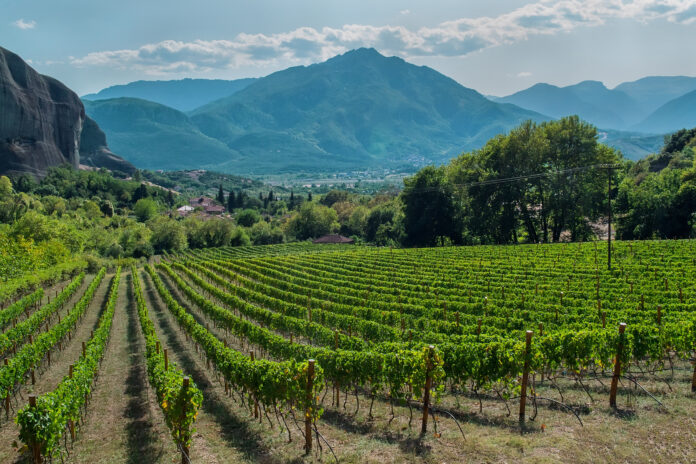
Minerality in wine is all the buzz at wine tastings today. You’re likely to find “flinty” sauvignon blancs, “chalky” Rieslings and syrahs that “express the essence of limestone soil,” and you’ll also notice winery names like Basalt, Rhyolite, Syncline and Alluvium. Labels attribute certain wine tastes to “gray-blue Devonian slate” or “200-million-year-old Jurassic soil.”
You haven’t mistakenly wandered into happy hour at a geologist’s convention. You’re just seeing firsthand the impact of geology in viticulture and on the controversial wine-tasting topic of minerality.
Minerality in Wine Key Takeaways
- Minerality in wine describes flavors and aromas often compared to flint, chalk, wet stone or slate.
- Many wine lovers connect minerality to vineyard soils, but the science is more complex.
- Soil strongly affects grape growing through drainage, heat retention and vine stress.
- Different grape varieties thrive in different soil types, from gravel and clay to limestone and slate.
- Researchers argue that rocks and minerals themselves are not directly tasted in wine.
- Perceived minerality may come from aromatic compounds, acidity and fermentation influences instead.
- The term minerality remains popular as a tasting descriptor and marketing concept
Minerality in Wine & the Wine-Soil Connection
The Christian monks, who launched France’s first big winemaking effort in the Middle Ages, realized that grapevines thrived at some locations and not others. Legend says they determined the best sites for planting by tasting the soil. This made sense at a time when grapes were thought to consist only of matter that originated in soil. Over centuries, the idea that soil directly impacts wine taste became accepted.
Wine experts have long used this traditional wine-soil connection in their concept of terroir. This is French for ‘soil’ or ‘earth’ and now refers to the collective environment that gives wines their distinctive flavors.
ah_fotobox/Adobe Stock
How Soil, Grapes & Wine Shape Minerality
Wine is simply defined as an alcoholic drink made from fruit, most often grapes, through a fermenting process in which yeast consumes sugar to produce ethanol and carbon dioxide. Not so simple, however, are wine tastes which vary widely with the complex interactions of climate, grape varieties, viticultural techniques, wine-making styles, and, as some continue to believe, types of soil.
Geologists know that soil is the key to every vineyard’s water-drainage and heat-retention properties, factors critical to successful grape cultivation. Grapevines extract atmospheric carbon dioxide and combine it with water from the soil to make flavor precursors in grapes. Fermentation converts these precursors into aromatic compounds that determine a wine’s taste. Among these tastes is minerality, loosely defined as a “stoniness” or “wet stone” characteristic that has been traditionally attributed to vineyard soils.
Vineyard Soil Basics Behind Minerality in Wine
Geologically, soils are classified as gravel, sand, silt or clay. Gravel soils have the largest particle size, the greatest porosity, and the lowest levels of water and heat retention. Clay soils have the smallest particle size, the least porosity, and the greatest water and heat retention. Sandy and silty soils have intermediate-sized particles and properties. Most vineyard soils are a mix of these basic soil types. Loam, for example, consists of sand, silt and clay, while alluvial soils usually combine all four soil types.
As the monks of the Middle Ages observed, certain grape varietals do best in specific soils. Gravel soils are common in France’s Bordeaux region, where the cabernet sauvignon and merlot varietals predominate, and its Rhone Valley, where syrah and viognier are planted. Sandy soils are found in Chile’s Maipo Valley (cabernet sauvignon and carménère) and Italy’s Piedmont districts (nebbiolo). Silty soils are common in the cooler-climate districts of Germany and Austria (Riesling), while clay-based soils are found in Australia’s Barossa Valley (Syrah) and California’s Napa Valley (Cabernet Sauvignon and Chardonnay).
Vineyard Soil Types Linked to Minerality
Calcareous soils, often rich in fossils, have high levels of calcium carbonate and calcium-magnesium carbonate from weathered limestone and dolomite rock. Marl, a calcareous clay, is common in parts of France’s Bordeaux region and Spain’s Rioja region (Tempranillo). France’s Chablis district (Chardonnay) and Italy’s Tuscany districts (Sangiovese) are known for Kimmeridgian marls rich in Jurassic-aged, fossilized shells. Soils are also classified by their primary rock components. Sedimentary soils consist of particles of limestone, shale, flint or sandstone. France’s Loire Valley (sauvignon blanc, cabernet franc, gamay) is known for its flint-based soils.
Slate-rich metamorphic soils are typical of Germany’s Mosel region (Riesling), while schist-based soils are found in Alsace, France (Gewurztraminer), and gneiss-based soils are largely limited to Austria (grȕner veltliner, Lemberger).
Igneous soils consist of intrusive or extrusive rock particles. Granite (intrusive) soils are common in France’s Beaujolais region (Gamay), while Italy’s Sicilian vineyards (Nero d’Avola) and Spain’s Canary Islands (malvasía volcánica) are known for their basalt-based (extrusive) soils.
Does Soil Affect Minerality in Wine?
The lingering question of minerality— whether or not soils impart tastes to wines— was recently addressed by geologist and wine aficionado Alex Maltman, Professor Emeritus of Earth Sciences at Aberystwyth University in Wales, England.
In his acclaimed book Vineyards, Rock and Soils: The Wine Lover’s Guide to Geology, Maltman states categorically that while limestone, volcanic rock, slate and flint might look good on wine labels, they cannot be tasted in wine. Virtually all rocks and minerals are insoluble and thus tasteless. Furthermore, grapevines take up mineral nutrients not as mineral compounds and rocks, but only as ions, mainly those of calcium, potassium, and magnesium. All mineral nutrients together comprise less than 0.02 percent of total wine weight, far too little to be tasted.
Maltman concludes that any perceived minerality tastes in wine are because of microorganisms and organic, aromatic compounds such as lipids and carotenoids, and not geological soil components. Nevertheless, the tasting term “minerality” will likely endure, even if only as a metaphor. It seems more comforting to attribute the “wet rock” taste of a delightfully crisp, dry Riesling to a vineyard’s limestone soil than to lipids, carotenoids and other obscure organic, aromatic compounds.
Frequently Asked Questions
What is minerality in wine?
Minerality in wine is a tasting term used to describe flavors or aromas reminiscent of flint, chalk, wet stone, slate or salinity. It is commonly used for crisp white wines such as Riesling and Sauvignon Blanc.
Does soil affect wine flavor?
Soil can affect wine flavor indirectly by influencing drainage, water stress, heat retention and vine health. These factors shape grape development, which can change the final taste of wine.
Can you taste minerals in wine?
Most researchers say minerals from rocks and soil are not directly tasted in wine because vines absorb nutrients as ions in very small amounts.
Why do some wines taste flinty or chalky?
Those sensations are often linked to acidity, sulfur compounds, fermentation byproducts and aroma perception rather than literal pieces of flint or chalk.
Which wines are often described as mineral?
Riesling, sauvignon blanc, chablis-style chardonnay and some sparkling wines are commonly described as having minerality.
Is terroir the same as minerality?
No. Terroir refers to the total growing environment—including climate, soil, slope and farming practices—while minerality is a tasting descriptor.
Minerality in Wine Conclusion
Minerality in wine remains one of the most intriguing and debated terms in the tasting world. While vineyard soils clearly influence grape growing through drainage, heat retention and vine health, many experts argue that rocks and minerals themselves are not directly tasted in the glass. Whether viewed as science, metaphor or a bit of both, minerality continues to give wine lovers a memorable way to describe crisp, complex and expressive wines.
This story about minerals in wine previously appeared in Rock & Gem magazine. Click here to subscribe. Story by Steve Voynick.