
Wire wrapping is one of the earliest forms of handmade jewelry, dating back to 2000 B.C. This timeless technique uses tension and shaping—rather than heat or solder—to secure and frame both found and crafted elements.
What Is Wire Wrapping?
Wire wrapping is a jewelry-making technique that uses wire to secure stones, beads, or other elements without soldering. By bending, coiling, and weaving wire, artists create both structural settings and decorative designs.
Wire Wrapping Key Takeaways
- Wire wrapping is a no-solder jewelry technique using tension
- Common techniques include prongs, coiling, weaving, and filigree
- Beginners only need a few basic tools to start
- Skill improves with practice and experimentation
The History of Wire Wrapping
“Wirework was discovered in ancient tombs,” explained Judi Wild, wire instructor at the William Holland School of Lapidary. The William Holland School of Lapidary Arts is widely known for hands-on jewelry and lapidary training. “Wire wrapping is used to make a much more elegant piece than its individual materials would indicate. No heat, glue or solder; just tension and shaping of the wire make the piece come together.”
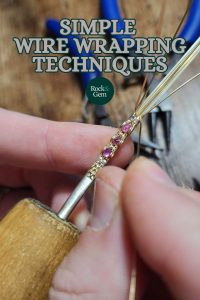
Wild explained that wire-wrapping techniques have changed over time. It continues to change and yet stays the same as pieces include polished cabochons as well as other mediums such as glass, intarsia, gemstones, beads and shells. The ongoing changes in wire work keep it fresh, new and modern.
Wild started as a student of wire work at William Holland, learning the foundations of traditional wire wrapping that she now teaches. And while different styles help capture the types of stones one wants to wrap, she also prepares her students to create professional fine jewelry-level wire wrapping.
Popular Wire Wrapping Techniques
From beginner to advanced designs, wire wrapping includes a wide range of techniques that allow artists to shape, secure and decorate their pieces.
Securing with Prongs
Prong wire wrapping is a common technique used to secure gemstones in handmade jewelry. This method creates a stable “seat” for the stone while allowing light to pass through, enhancing its appearance. Prongs are especially popular in rings and pendants where both durability and presentation matter.
Fractal Wire Wrapping
Fractal wire wrapping is a more primitive, structural approach to holding a stone in place. These designs are often built around a gear-like base with evenly spaced notches that guide the wire. The wire wraps around the foundation, crisscrossing along the edges of a cabochon to secure it. This versatile technique can be seen in pieces ranging from hobbyist creations to professional jewelry.
Filigree Wrapping
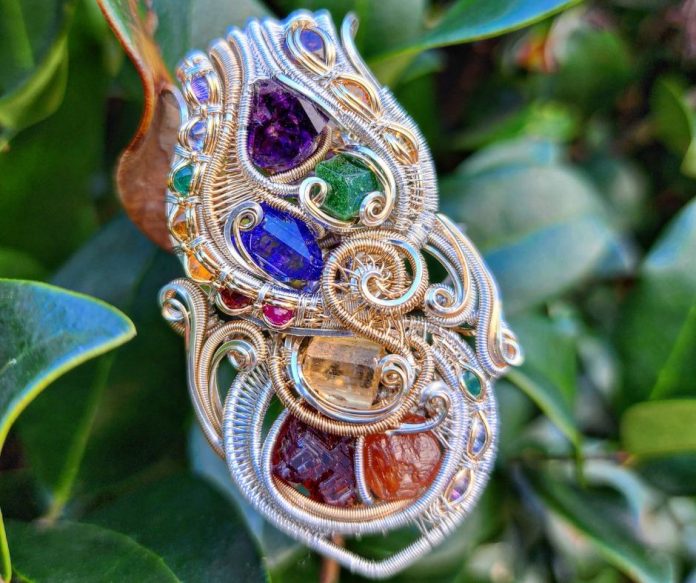
Filigree wire wrapping focuses on creating delicate, ornamental designs using fine wire. This technique often incorporates round and half-round wire to form flowing, lace-like patterns around a central gemstone. Filigree adds elegance and movement, making it a popular choice for decorative and artistic pieces.
Herringbone Patterns
Herringbone wire wrapping uses an overlapping pattern that resembles traditional basket weaving. This technique is often applied when wrapping around beads or stones with pre-drilled holes. The repeating pattern creates visual interest and is a great way for beginners to explore how wire moves and layers.
Coiling for Foundation
Coiling is a foundational wire wrapping technique that involves wrapping a fine wire tightly around a thicker base wire. Some artists use tools like a drill for consistency, while others coil by hand for more control. Coiling adds texture, strength and detail, and can be used to enhance both structural elements and decorative features.
Wire Weaving Techniques
Wire weaving is a versatile technique that uses thin, flexible wire to bind and connect thicker base wires. This method allows artists to create intricate patterns, flowing shapes and even freeform designs. Wire weaving can be used with or without gemstones and is often seen in more complex, sculptural pieces.
Freestyle Wire Wrapping
Freestyle wire wrapping highlights the artist’s creativity and individual style. Rather than following a set pattern, this approach allows the design to evolve organically as the piece develops. Many experienced wire artists use freestyle techniques to create signature looks that make their work instantly recognizable.
Try experimenting with each technique to discover which wire wrapping style suits your jewelry best!
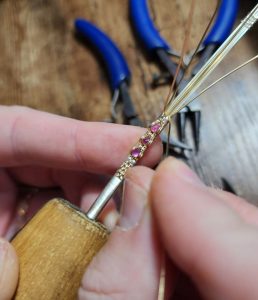
Courtesy Inna Sergeeva
How to Learn Wire Wrapping
Wild explained that she wants students to understand the mechanics behind how a piece is assembled. Beginning students in her classes wrap rings, bracelets, earrings and pendants as a way of learning about the diversity of wire and its uses. Each student leaves the course with a foundational knowledge of wire wrapping techniques that help them build skills and success in design. Students also leave with as many as fourteen different pieces. Those who are more serious learners return year after year to acquire greater skills and expertise.
Building skills has taken years for wire artist Goose Duncan, owner of Spirit Armor. Duncan began wrapping while living in Colorado, where he met and learned from a friend. From the beginning, Duncan has learned by collaborating with other wrappers. Today, he meets with other wire wrappers to share ideas, experiment and get feedback. “Like any art form, the goal is to develop your own style,” Duncan explained. “Basic techniques and the way you use them become a style. It makes your work recognizable.”
How to Improve Your Wire Wrapping Skills
While there are lots of online videos about wire wrapping techniques, Wild and Duncan both suggest in-person learning. It is the immediate feedback available in person that is of real value in learning to wrap wire. Together, wire collaborators consider form, function and the desired outcome for a piece. Duncan says that not being afraid to ask for help is also essential to gaining skills.
Early on, Duncan recognized the value of daily practice, using his efforts to build skill and understanding of the capacity of wire as well as develop his use of gems. He observed that some are afraid to add more wire to a piece, but he finds it useful as a tool in design development. “I probably add a hundred pieces of wire that help create a sense of flow and depth.”
Both Wild and Duncan expressed the need to understand when a piece is finished. This skill comes with time and experience. Wire is a forgiving medium and there are many ways to address challenges in a piece. It may mean taking a piece completely apart or it may mean going forward and figuring out how to work within and outside the foundational aspects of a piece. A wire artist may discover that choosing the stone and the style changes as the piece itself evolves – as if the artist, stone or stones and wire are in a deeper creative conversation.
Wild adds, “I want my students to leave understanding what a properly finished piece looks and feels like. Someone shouldn’t feel any wire ends, a finished piece should be smooth and have a high level of professionalism.”
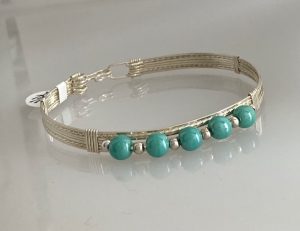
Courtesy Judi Wild
Types of Wire for Wire Wrapping
There are many different types of wire wrapping materials, including sterling silver, gold-filled, gold, copper, steel and Argentinian silver. These wire options include round, half-round, which is domed with a flat side, square, twisted square, flat and textured flat.
Followed by all these options are wire hardness and gauges. The higher the gauge number, the finer and smaller the wire. Hardness comes in variations such as deadsoft, half-hard and full-hard and indicates how firm the wire will be for bending.
Tip: Start with dead-soft copper wire—it’s easy to shape and forgiving for beginners.
“I use different gauge wire – square, round and half-round for each piece,” said Duncan. Square, 20-gauge wire often provides the main framework for pendants. Duncan uses four base wires to create the front and back foundation of a piece. From there, he builds with half-round on top of the base to incorporate the stones. He uses wire to accent to how the gems hang. Duncan is attentive to the colors of the gems themselves, explaining that they are part of the visual flow of any piece – not just the wire but the wire in combination with a series of stones.
Essential Tools for Wire Wrapping
In terms of tools, Wild suggests that beginners consider purchasing a smooth-jawed flat-nose plyer, quality flush cutters and medium to fine round-nosed plyers. “You can do a lot with these three tools,” she said. “They are an excellent place to start. Most hobby craft stores sell wire in square and round forms as a starting point as well.” Wild also suggests finding books with demonstrations and close-up images. Books can provide a good foundation and more basic information about tools, wire weights and shaping.
Finally, Wild says she wishes she’d thought to keep a notebook when she started to keep track of her work and growth as an artist. She now uses a notebook to note the date, what she’s wrapped, the wire and the stones she used.
Wire Wrapping FAQs
What is wire wrapping used for?
Wire wrapping is primarily used to create handmade jewelry such as pendants, rings, earrings and bracelets. It allows artists to secure gemstones, beads and other elements without soldering, using only wire and hand tools.
Is wire wrapping good for beginners?
Yes, wire wrapping is beginner-friendly because it requires minimal tools and no heat or soldering. Simple techniques like coiling and basic wraps are easy to learn and help build foundational skills.
What type of wire is best for wire wrapping?
Copper wire is often recommended for beginners because it is affordable and easy to work with. As skills progress, many artists use sterling silver, gold-filled or other specialty wires depending on the design.
Do you need special tools for wire wrapping?
Basic wire wrapping can be done with just a few tools, including round-nose pliers, flat-nose pliers and flush cutters. These tools allow you to bend, shape and cut wire with precision.
Can you wire wrap without stones?
Yes, wire wrapping can be used to create decorative designs without gemstones. Many artists use weaving and coiling techniques to make intricate, sculptural pieces using only wire.
This story about wire wrapping techniques previously appeared in Rock & Gem magazine. Click here to subscribe. Story by Deb Brandt.