
Sand collecting is an easy way for kids to become rockhounds and explore Earth science. The next time you visit a beach, river, or lake, take a close look at the sand beneath your feet. A small scoop can contain clues about distant mountains, ancient oceans, living creatures, and the forces that shape our planet.
More than 200 years ago, English poet William Blake suggested that you could “see a world in a grain of sand.” With a strong magnifying glass or microscope, young collectors can discover that he was right. Every grain has a story to tell.
The American Federation of Mineralogical Societies (AFMS) Sand & Sediment Badge helps young rockhounds investigate those stories through hands-on activities. By studying different types of sand, learning how to collect and catalog samples, and exploring where sand comes from, kids can discover that even the smallest pieces of Earth are full of wonder.
Key Takeaways: Sand Collecting
- Sand collecting is a fun way for kids to explore geology, minerals, and Earth science.
- Sand is a sediment made of grains between 0.0625 and 2 millimeters in size.
- Different types of sand can reveal clues about their origins, including mountains, oceans, coral reefs, and volcanic landscapes.
- A sand collection can begin with just a small labeled sample from a place you visit.
- The AFMS Sand & Sediment Badge teaches young collectors about sand identification, collecting, trading, and science.
Sand Collecting and the AFMS Badge Program
The American Federation of Mineralogical Societies (AFMS) has some 600 affiliated rock clubs across the U.S. If you belong to one, hopefully your club has a youth program that uses the AFMS Badge Program. It offers activities toward earning any of 21 badges in everything from minerals to meteorites, fossils, and field trips. The Sand & Sediment Badge was initiated by Lori Carter and the International Sand Collectors Society and includes 10 activities that will help you decipher the stories told by a grain.
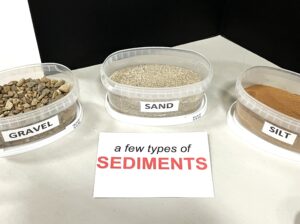
What is Sand?
Sand is a sediment. It comes in many colors and varieties, with the commonality being grain size. Specifically, for a sediment to qualify as sand, each grain must fall in a range of 0.0625 to 2.0 millimeters. How small is that? Between a coarse grain of salt and a small grain of rice. Any sediment with a smaller grain size is considered silt or clay. If the grain size is larger, you’re looking at gravel. The first two units in the Sand & Sediment Badge will help you sort out these differences and appreciate what makes sand distinct from other sediments.
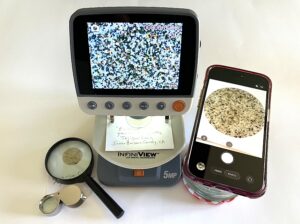
What Can Sand Tell Us About Earth?
Not all sand is created equally. It hails from varied sources, and different varieties of sand tell different stories.
Quartz beach sand may tell of a journey that began at a mountain composed of granite. As the granite was exposed to the elements, it weathered and decomposed into grains of minerals like quartz, feldspar, mica and hornblende. These grains were washed down through rivers on a journey to the sea. The grains grew ever smaller, ever more rounded, with only the hardest grains piling up as minerals in beach sand.
Sand from an island in the middle of the Pacific, surrounded by coral reefs, is often composed of bits of shells, coral and the “tests” (or skeletons) of tiny creatures known as foraminifera. All were battered and beaten and rubbed against one another by countless pounding waves. The result? Soft white sand fringes the island. Such sand is called biogenic sand since it came from living biological creatures.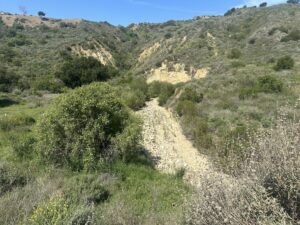
Resources for Young Sand Collectors
- Ellen Prager & Nancy Woodman’s Sand is part of the National Geographic Society’s “Jump into Science Series” for young readers. It follows a “sand sleuth” bird seeking answers. What is sand? Where does it come from? How does it get to the beach?
- The International Sand Collectors Society website hosts great information about sand, the hobby of collecting it, and how to become a psammophile, or a lover of sand, and it connects you to other psammophiles.
Inorganic mineral sand. Biogenic sand. Angular sand. Rounded sand. Well-sorted sand. Sand from mineral precipitates. Gemstone sand. Even magnetic sand. In earning the Sand & Sediment Badge, you’ll enjoy the opportunity to learn about these sorts of sand and many more.
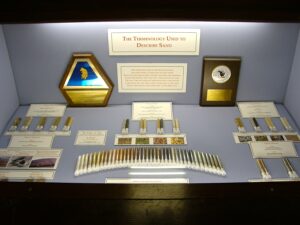
How to Start a Sand Collection
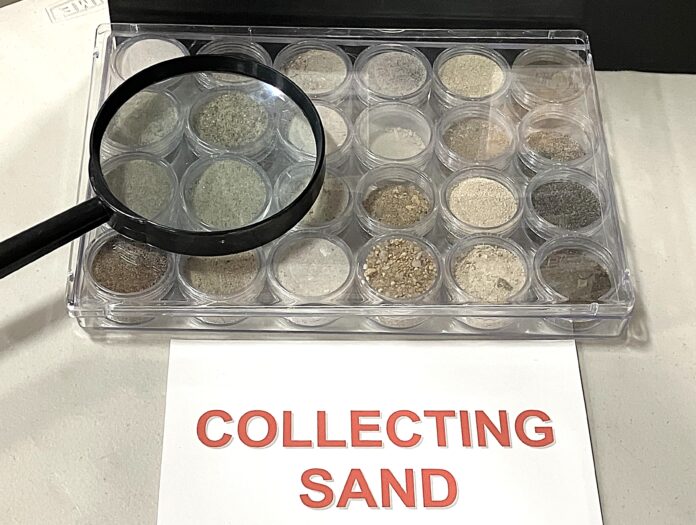
If you’re like most rockhounds, you want to learn, and you also want to collect. Sand collecting is easy. You just stoop and scoop. You don’t need a lot. A single tablespoon or two will do. Just make sure that collecting is allowed wherever you go. For example, no collecting is allowed in national parks.
The only time you’ll likely need to collect a larger quantity of sand is if you get into trading. This is a great way to expand your collection with sand from different parts of the world and also to make new friends.
The Sand & Sediment Badge provides great suggestions on this aspect of the hobby while also offering guidelines on collecting, storing, cataloging, and displaying a sand collection.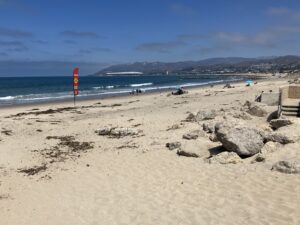
Why Is Sand Important?
To some, sand is serious business. It is vital in the construction industry, where it is used to produce concrete, asphalt, bricks, stucco, plaster and glass. If you’re sitting in a building right now, you’re literally surrounded by sand, and if you travel down a highway, you’ll be riding on a ribbon of sand. Thirsty? The water you drink from the tap likely went through a filtration process that included sand. Sand is everywhere, and the Sand & Sediment Badge encourages you to explore these and other uses.
Join Other Young Rockhounds Through the AFMS
The sand lessons and other badge lessons are free for anyone to explore for personal, noncommercial use on the AFMS website. However, it’s much more fun to explore these activities with friends in a group setting. The Badge Program was built to be used by AFMS-affiliated clubs. To earn a Sand & Sediment Badge, you must be enrolled in one. To find a club near you, use the handy interactive map on its homepage.
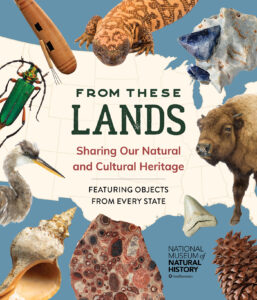
Sand Spotlight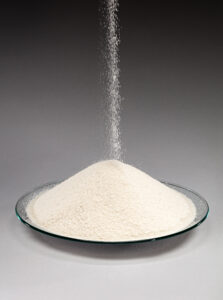 Gypsum sand (CaSO4 •2H2O) collected before 1938 from White Sands National Park, New Mexico. White Sands National Park is the largest gypsum sand dune field in the world. These sparkling dunes were once an ancient seabed full of the mineral gypsum. Geological uplift 70 million years ago exposed the seabed, then rainwater dissolved the gypsum and flowed to the flat lake bed, where the gypsum was deposited. When the lake dried up 10,000 years ago, strong winds broke the crystals into fine sand and pushed them into massive dunes. Gypsum becomes less water-soluble at higher temperatures, making the arid desert climate of this area of New Mexico perfect for gypsum sand to accumulate. – Photo by James D. Tiller and featured in From These Lands by the National Museum of Natural History at the Smithsonian Institution
|
FAQs: Sand Collecting for Kids
What is sand collecting?
Sand collecting is the hobby of gathering, studying, organizing, and sometimes trading sand samples from different locations. Collectors enjoy learning where sand comes from and what it reveals about Earth.
How do you start a sand collection?
Start with a small sample from a place you visit, such as a beach, riverbank, or lake shore. Place it in a labeled container with information about where and when it was collected.
What can you find in sand?
Sand may contain mineral grains such as quartz and feldspar, pieces of shells and coral, tiny fossils, volcanic material, gemstones, or magnetic minerals.
Is all sand made from rocks?
No. Many sands come from weathered rocks, but some are made from biological materials such as broken shells, coral fragments, and the skeletons of tiny marine organisms.
How do kids earn the AFMS Sand & Sediment Badge?
Kids can complete Sand & Sediment Badge activities through an AFMS-affiliated rock club youth program. The activities teach about sand types, collecting, identification, and the science behind sediments.
Final Thoughts About Sand Collecting for Kids
Sand may seem ordinary, but every grain has a history. A handful of sand can reveal information about ancient rocks, changing landscapes, ocean life, and the natural processes that shape our planet.
The AFMS Sand & Sediment Badge gives young collectors a chance to explore those stories while building science skills and connecting with other rockhounds. The lessons and activities are available for personal, noncommercial use through the AFMS website, but the experience becomes even more rewarding when shared with a club or group of curious collectors.
Whether you collect sand from a favorite vacation spot, trade samples with other collectors, or simply examine the grains under a microscope, you are discovering a hidden world right beneath your feet.
Want to discover more hidden treasures of Earth? Subscribe to Rock & Gem magazine for more stories about minerals, fossils, gems, collecting adventures, and the science behind the rocks and natural wonders around us. Story and photos (unless indicated) by Jim Brace-Thompson