
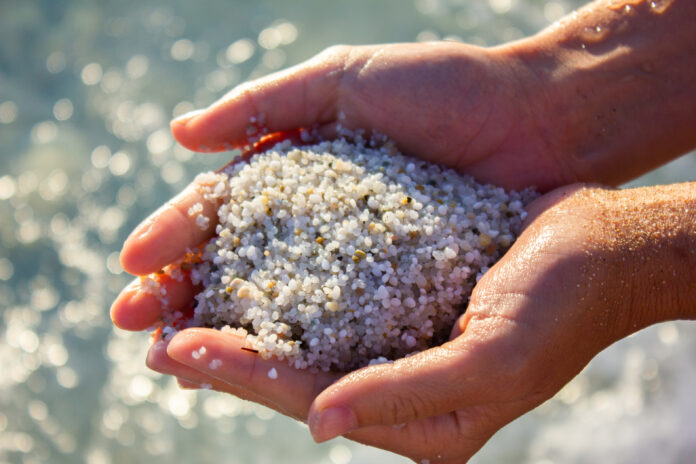
Minerals in beach sand are more diverse than many people realize. Most beaches are made up largely of quartz. However, waves and currents can concentrate heavier minerals such as magnetite, garnet, ilmenite and rutile. In certain locations, beach sand even contains valuable deposits of gold, diamonds, nephrite jade and amber that have supported mining operations and attracted collectors for centuries.
Around the world, minerals in beach sand have yielded tons of gold, millions of carats of diamonds, numerous fine specimens of nephrite jade, huge amounts of amber and much of the world’s titanium. Some beaches are famous not for valuable minerals but for their striking colors, including white, black, green and even purple sands that reflect the geology of their surroundings.
Key Takeaways
- Beach sand contains far more than quartz and shell fragments—it can also hold valuable minerals and gemstones.
- Gold-bearing beach sands at Nome, Alaska, have produced millions of ounces of placer gold.
- Namibia’s coastal beaches are among the world’s richest diamond-producing deposits.
- Baltic Sea beaches are famous for amber, while California’s Big Sur beaches are known for nephrite jade.
- Heavy minerals such as ilmenite and rutile found in beach sand supply much of the world’s titanium.
- Beach sand colors—including white, black, green and purple—reflect the minerals and rocks from which the sand formed.
Gold Minerals in Beach Sand at Nome, Alaska
While beaches today draw hordes of summer vacationers, in 1900 the Bering Sea beaches at Nome, Alaska, attracted more than 20,000 adventurers and miners in a wild search for placer gold minerals in beach sand.
Nome’s gold occurred along a narrow, 30-mile-long tidal beach where the traditional mining-claim system was largely ignored. The beaches were wide open to everyone and miners initially worked with gold pans, then sluices and rockers, later with pumps and hoses, and finally with dredges. Nome’s location, just 125 miles south of the Arctic Circle, limited mining to the brief summer season.
Dredge miners still recover gold at Nome today. Over its 123-year history, the Nome Mining District has produced 3.6 million troy ounces (111 metric tons) of gold, most of it from the beaches. The Nome gold rush is memorialized in the song North to Alaska and the 1960 John Wayne movie of the same name.
Diamond Minerals in Beach Sand in Namibia
Beachcombers sometimes whimsically imagine the water-polished bits of colorless quartz glittering in the shoreline gravels at their feet to be diamonds. But imagination is not necessary when finding minerals in beach sand in the southwest African nation of Namibia, where the sands are yielding millions of carats of diamonds.
Baltic Beaches Rich in Amber
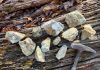
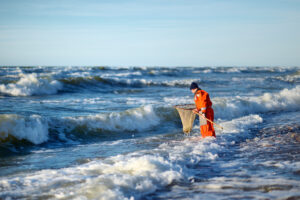
The oldest known instance of systematic beach mining took place along the southern shore of the Baltic Sea some 16,000 years ago when Paleolithic beachcombers began collecting amber, a fossilized tree resin that had eroded free from sediments of the Baltic seafloor. Currents then swept this amber south to wash ashore on the beaches of what are now Poland, Lithuania and Kaliningrad, Russia.
During Roman times, Baltic amber was traded throughout Europe and North Africa. Today, it is the Baltic region’s iconic gem material. With amber now selling at record prices, recreational and commercial collectors continue to recover gem-quality material from the beaches. Baltic beach amber is a renewable resource and collecting is most productive following storms that regularly wash quantities of new gem material onto the beaches.
MNStudio/Adobe Stock
California’s Jade-Rich Beach Sand
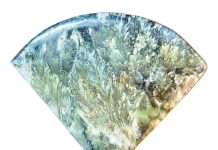
The beaches near California’s coastal community of Big Sur are popular collecting sites for nephrite. One of the two types of jade, nephrite, occurs in veins within metamorphic rock along the tectonic subduction zones of the central California coast. Exposed by beach erosion, these veins are the source of the jade found in the beach cobbles at Big Sur.
Most of Big Sur’s jade is forest-green in color and exhibits varying degrees of translucency. Beachcombers collect jade from the beach cobbles, while scuba divers search for it on the sea bottom. The rarest and most valuable specimens are those of botryoidal jade with its smooth, bubble-like surfaces.
The annual Big Sur Jade Festival attracts beachcombers, lapidaries and jade carvers from across the country. Would-be jade collectors must be aware that some beaches are off-limits and that collecting restrictions apply.
Titanium Minerals in Beach Sand
The minerals in beach sand in Australia and South Africa provide much of the world’s titanium, a space-age alloying metal and the source of “titanium white,” an opaque, white pigment widely used in such products as paints, plastics and processed foods. Both ilmenite (iron titanium oxide) and rutile (titanium oxide) occur in concentrated layers of heavy, dark particles within beach-sand deposits. More than 80 million tons of titaniferous beach sands are mass-mined each year to yield 800,000 tons of ilmenite-rutile concentrate.
Why Some Beaches Have White, Black, Green and Purple Sand
Other beaches are notable for their unusual colors. White-sand beaches, most common in tropical climates, usually consist of grains of iron-free quartz, bleached coral, or aragonite (calcium carbonate) from shells. The coloring components of Hawaii’s well-known black-sand and green-sand beaches are, respectively, bits of dark basalt and peridot (magnesium silicate). And in Canada, the distinctive purple sands of several Saskatchewan and Manitoba lake beaches consist primarily of tiny grains of almandine-pyrope garnet.
Minerals in Beach Sand FAQs
What minerals are commonly found in beach sand?
Most beach sand contains quartz, feldspar and shell fragments, but some beaches also contain heavier minerals such as magnetite, ilmenite, rutile, garnet and zircon. Certain locations are known for gold, diamonds or nephrite jade.
Can you find gold in beach sand?
Yes. Gold can accumulate in beach sand where waves concentrate heavy minerals. The beaches near Nome, Alaska, are among the world’s most famous examples and have produced millions of ounces of placer gold.
Why is some beach sand black or green?
Black sand beaches are typically formed from volcanic basalt that has been broken into fine grains. Green sand beaches get their color from the mineral olivine, also known as peridot.
Can diamonds be found in beach sand?
Yes. Namibia’s Atlantic coast contains diamond-bearing beach sands where natural erosion and ocean currents have concentrated diamonds over millions of years.
Why are some beaches white?
White beaches are usually made of nearly pure quartz or calcium carbonate from coral and shells. These materials contain very little iron, giving the sand its bright color.
Is it legal to collect minerals from beach sand?
It depends on the location. Some public beaches allow limited recreational collecting, while others—especially protected parks or private lands—prohibit removing sand, rocks or minerals. Always check local regulations before collecting.
Final Thoughts on Minerals in Beach Sand
Beach sand is far more than crushed rock and seashells. Around the world, beaches have yielded gold, diamonds, jade, amber and titanium-bearing minerals that have shaped local economies and attracted generations of collectors. Even beaches without valuable deposits reveal fascinating geology through their colorful sands and unique mineral composition. Whether you’re a rockhound, beachcomber or simply curious about geology, understanding the minerals in beach sand offers a new appreciation for what lies beneath your feet.
This story about minerals in beach sand previously appeared in Rock & Gem magazine. Click here to subscribe. Story by Steve Voynick.