
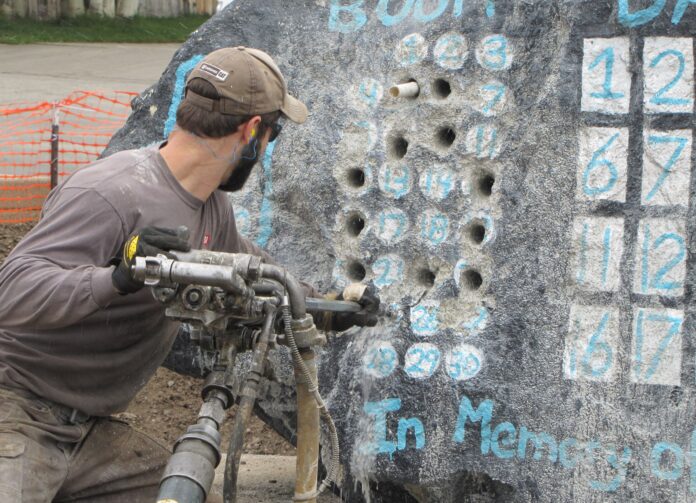
Hardrock mining contests are competitive events where miners demonstrate traditional underground drilling skills, including jackleg drilling, single-jacking and double-jacking. Held primarily at western mining festivals, these contests preserve historic mining techniques. They showcase the strength, coordination and teamwork required in underground mining.
Drilling holes into solid rock would not be fun for most people. But hardrock miners do exactly that for weekend recreation. Why? They do this to gain prestige, win big cash prizes and celebrate mining history. This also measures their skills against those of their peers. It’s also entertaining for tourists who flock to mining-town summer festivals across the West.
Working-skill competitions are an honored tradition among several professions; cowboys have their rodeos, farmers their tractor pulls, loggers their chainsaw competitions and miners their drilling contests. Seventeen drilling contests are staged annually in eight western states. These give the non-mining public a chance to observe modern and traditional underground mining skills in action. It’s also a way to learn about the remarkable physical effort that made frontier-era hardrock mining possible.
Key Takeaways
- Hardrock mining contests showcase traditional underground drilling skills like single-jacking, double-jacking and jackleg drilling.
- These competitions originated in the late 1800s and became popular community events across western mining towns.
- Modern contests preserve historic mining techniques while celebrating strength, precision and teamwork.
- Events often include additional skills such as hand-mucking and spike-driving.
- Mining festivals today help keep hardrock mining history alive through demonstrations, competitions and public participation.
Hand Drilling in Early Hardrock Mining
The term “hardrock mining” refers specifically to the extraction of underground ore by drilling and blasting solid rock. When hardrock mining began in the American West in the 1860s, the only drilling technique that existed was manually hammering chisel-like hand steels. This is a centuries-old method known as “hand-drilling” or “hand-steeling.”
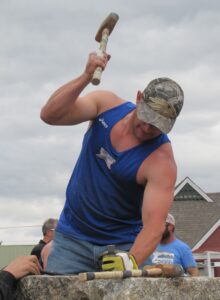
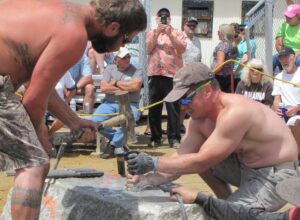
Hand-drilling had two basic techniques. In “single-jacking,” a miner held the hand steel in one hand and swung a four-pound sledge with the other. Considerably faster was “double-jacking,” in which a “shaker” gripped the steel with both hands while a “hammer man” rhythmically pounded away with an eight-pound sledge.
In the brief moment between hammer blows, the shaker would “shake” or rotate the steel a quarter-turn to reposition its cutting edge within the deepening hole. Since the shortest steel afforded the best control, drillers “changed out” progressive lengths of steels as the hole deepened.
Hand-drilling was the most laborious and time-consuming step of the underground mining process. In difficult underground conditions, double-jacking a single, three-foot-deep hole could take a half-hour. And to blast a rock face required at least 14 holes, which required a long shift of manual drilling.
Deceptively simple in concept, hand-drilling demands flawless coordination, great strength and stamina, and unerring accuracy with the heavy hammers. Hand drilling was a specialized skill in which early miners took great pride.
The Rise of Hardrock Mining Contests
Drilling competitions held on the surface before public audiences began about 1880. By 1900, these contests had evolved into major community events. These events attract miners along with their families, gamblers and others in non-mining professions.
In 1901, the wife of a Nevada silver miner explained the contests’ broad appeal. “Drilling contests have everything,” she wrote, “technique, beauty, endurance, speed and danger. If the hammer descends a fraction of an inch out of line with the drill, a man’s hands may be crushed.” This risk of injury undeniably added to the popularity of the contests.
In the underground, miners drilled at different angles, in poor light and with unstable footing. During surface competitions, they drilled vertical “down holes,” in daylight, with good footing and room for full hammer swings. In competition, the best double-jack teams could drill well over three feet in their allotted 15 minutes.
Drilling-contest popularity peaked around 1900 when competitions, often held on national holidays, drew huge crowds. Substantial cash prizes attracted the best drillers. A winning double-jack driller in a big contest in Butte, Montana, or Bisbee, Arizona, could take home $300 ($10,000 in 2025 dollars). This was an amount equal to six months of hard-rock mining wages at the time.
How Mechanical Drills Changed Hardrock Mining
Ironically, by 1900, hand-drilling itself had become obsolete. It was used only in small mines unable to afford the powerful, mechanical drills that had revolutionized the mining industry. Powered by compressed air, these new drills could “make hole” much faster than the best double-jack teams. Consequently, the ranks of hand-drillers declined, along with interest in drilling contests. And the new mechanical drills— 400-pound behemoths that were bolted onto steel columns—were not suited for competitions.
Nevertheless, hand-drilling contests managed to survive into the 1950s in a few larger mining camps. By then, these contests had unfortunately devolved into informal, often rowdy events that had little appeal to non-mining audiences.
The Revival of Mining Drilling Contests
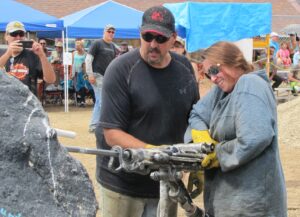
But drilling contests then underwent an unexpected revival after “jackleg” drills had replaced the heavy, mechanical column drills. With their pneumatic, telescoping leg, jacklegs weighed “only” 130 pounds and were operated by miners endowed with, like the hand-drillers before them, strength, coordination and skill. And the compact, mobile jacklegs, needing only an air compressor and hoses, were easy to set up on the surface for public drilling exhibitions.
By the mid-1950s, jackleg-drilling contests had caught the interest of both miners and the public. Simultaneously, a boom in western tourism was spurring the growth of mining-town summer festivals that turned out to be the perfect venue for the revived drilling contests. And the side-by-side contrasts of modern mechanical drilling and traditional hand-drilling gave visitors a fascinating and intriguing historical perspective on mining.
Both educational and entertaining, these revived contests had great potential to promote the mining industry—but only if they were modernized. Reorganization followed the model of professional rodeo. First, competing miners began paying entry fees for a crack at big cash prizes. Next, competition rules were standardized. Then, hand-mucking and spike-driving events were introduced, and the contests were generally “cleaned up” to attract family audiences. The final step was enlisting the material and financial support of mining companies.
Modern Jackleg Drilling Competitions
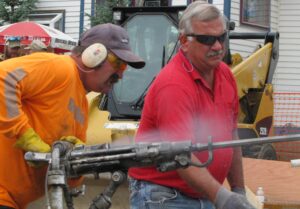
Today, the jackleg-drilling events take place around a “drilling rock,” usually granite, that stands six feet high and can weigh more than 30 tons. Competition begins when a contestant picks up the 130-pound jackleg and wrestles it to the drilling rock. The miner plants the airleg in the dirt, “collars” the twisting carbide bit into the rock, then slams the operating lever forward. The arena erupts with a deafening roar (spectators are provided with earplugs) as the miner literally “rides” the thundering drill into the rock. If all goes well, a miner can drill through four feet of granite in less than one minute.
Single-Jacking and Double-Jacking Skills
The speed and power of the jacklegs are a striking contrast to the hammers and steels of the hand-drilling competitions. Fighting both the granite and the clock with only muscle, hammers and hand steels, single-jack drillers deliver about 100 hammer blows per minute, always shaking the steel in the fraction of a second between each blow. In their allotted five minutes, single-jack competitors can drill through eight inches of granite.
Since 1/32nd of an inch can mean the difference between winning or losing hundreds of dollars, hand-drillers seek every competitive edge. Some use steels machined from special alloys, while others employ custom-molded hammer grips.
Double-jacking is perhaps the ultimate demonstration of teamwork and trust. The shaker holding the steel must have absolute confidence in the hammer man’s accuracy with the heavy, eight-pound sledge. Double-jack drillers trade places every 30 seconds and can “change out’ as many as ten steels of increasing lengths in their allotted 10 minutes. Winning teams can drill through more than 20 inches of granite. Because of the risk of injury, double-jacking is always the last event held in all drilling contests.
Spike Driving and Hand-Mucking Events
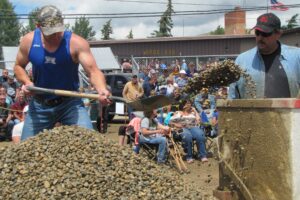
In mining parlance, “muck” is the broken rock produced by blasting, which frontier-era miners hand-shoveled into small ore cars. In today’s hand-mucking events, miners compete to be the fastest to shovel one ton of gravel into an antique ore car, then hand-tram the loaded car along a mine-gauge railway to a dumping point.
Underground miners once spiked timbers into “sets” to support the overhead ground. In today’s spike-driving competitions, miners see who is fastest using traditional, short-handled miners’ axes to drive eight-inch spikes, three into a “down” timber and three into an overhead timber.
In addition to demonstrating operating skills, drilling contests also reflect the social changes that have come to the profession of mining. Not only do women now work as miners, they also compete in drilling contests and do well in all events, including single-jacking, double-jacking and jackleg drilling.
Many contests encourage audience participation in the hand-mucking events, which always include special competitions for kids. Some contests even allow adventurous spectators to try their hand at jackleg drilling, noncompetitively, of course, and with the close guidance of an experienced miner.
After enjoying mining-town drilling contests, visitors can also tour local museums packed with mining history and mineral collections or take advantage of field-collecting opportunities in nearby historic mining districts. And competing miners are always ready to talk about minerals. Many have fine personal collections and are familiar with local collecting sites.
Mining Festivals Keep Hardrock Mining History Alive
Today, hardrock mining contests continue to serve as both entertainment and education at mining-town festivals across the western United States. These events connect modern audiences with the physical skill, precision and endurance once required in underground mining, while honoring the traditions that shaped frontier mining communities.
Visitors not only watch jackleg drilling, single-jacking and double-jacking competitions, but often gain hands-on exposure to mining tools and techniques under the guidance of experienced miners. Many festivals also include hand-mucking events, spike-driving contests and opportunities for audience participation, making the experience both interactive and memorable.
Beyond the competitions themselves, these festivals often highlight local mining history through museum exhibits, mineral collections and guided tours of historic mining districts. Together, they help preserve the legacy of hardrock mining while introducing new generations to the skills, culture and ingenuity that defined it.
Frequently Asked Questions
What is a hardrock mining contest?
A hardrock mining contest is a competitive event where miners demonstrate traditional drilling and underground mining skills such as jackleg drilling, single-jacking and double-jacking.
What is single-jacking in mining?
Single-jacking is a hand-drilling method where one miner holds a steel drill while striking it with a sledgehammer to break rock.
What is double-jacking?
Double-jacking involves two miners working together—one holding and rotating the steel drill while the other strikes it with a heavy hammer.
What is a jackleg drill?
A jackleg drill is a pneumatic mining tool used in modern drilling competitions, designed to drill through rock quickly with air-powered force.
Are mining drilling contests still held today?
Yes, mining drilling contests are still held at various mining festivals across the western United States, often as part of heritage and tourism events.
Conclusion
Hardrock mining contests offer a rare and compelling glimpse into the skill, strength and teamwork that once defined underground mining in the American West. From jackleg drilling to traditional single-jacking and double-jacking, these competitions preserve techniques that helped build frontier mining communities. Today, they continue to bridge history and modern recreation, keeping the legacy of hardrock mining alive for both miners and visitors alike.
This story about hardrock mining and drilling contests appeared in Rock & Gem magazine. Click here to subscribe. Story and photos by Steve Voynick.