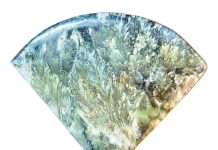

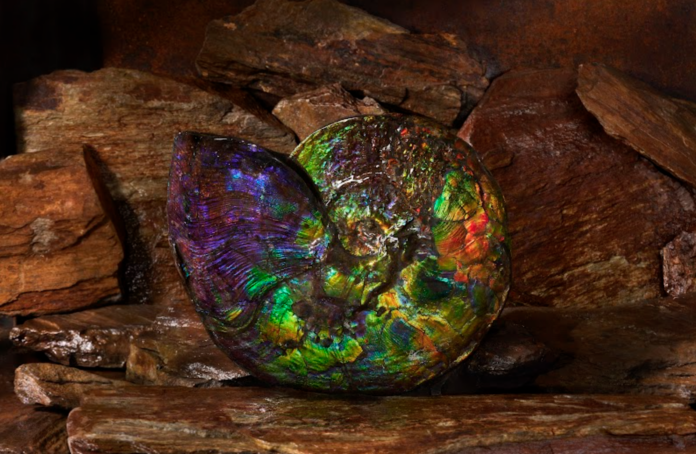
Ammolite is a rare and radiant gemstone born from ancient life—specifically from fossilized ammonites that lived more than 71 million years ago in a vast inland sea that once covered what is now southern Alberta, Canada. Over time, the spiral shells of these ammonites were buried and preserved in layers of sediment, where their original aragonite structure survived an extraordinary transformation. Instead of fading into stone, they evolved into something luminous: ammolite, a gemstone that captures and refracts light in shifting flashes of green, red, blue, and violet.
Key Takeaways
- Ammolite is a rare organic gemstone formed from fossilized ammonites found primarily in southern Alberta’s Bearpaw Formation.
- Its vivid iridescence comes from preserved aragonite layers in ammonite shells, which refract light rather than contain pigment.
- Only a small percentage of ammonite fossils—about 3–5%—contain gem-quality ammolite.
- This is one of the rarest gemstones on Earth, with nearly all commercial production coming from a small region in Canada.
- Each specimen is unique, displaying natural patterns such as dragon skin, mosaic, or feather-like formations.
- Indigenous Blackfoot traditions recognize ammolite as Iniskim, or “Buffalo Stone,” with deep cultural and spiritual significance.
- Modern stabilization techniques make ammolite durable enough for use in fine jewelry while preserving its natural beauty.
How Ammolite Forms from Ammonite Fossils
While most fossils are shades of stone— greys, blacks and browns—Ammolite stands apart. It owes its spectral glow to aragonite, a crystal form of calcium carbonate. In rare cases, the aragonite layers in an ammonite shell remain intact during fossilization. These wafer-thin layers bend light through interference, much like opal or butterfly wings.
What you’re seeing is an ancient structure, not pigment. The colors are an optical illusion caused by the way light refracts through microstructures in the fossil shell: nature’s hologram.
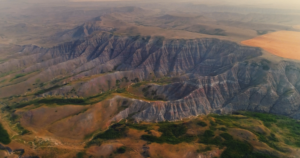
And nature’s limited edition. Ammolite is found almost exclusively in the Bearpaw Formation, a Late Cretaceous marine deposit stretching primarily through a small pocket of Canada. Within its layers, mineralization worked a specific kind of magic: preserving the nacreous aragonite in a way few other places on Earth can replicate.
Today, 3 to 5% of ammonite fossils discovered contain gem-grade Ammolite. Each of those is expertly polished and stabilized to ensure it makes the journey from quarry to collector as a durable, radiant gemstone. There are only three operating mines in the world dedicated to Ammolite, with KORITE being the largest, holding approximately 95% of the known reserves.
Ammolite is also one of the few organic gemstones officially recognized by CIBJO, the World Jewellery Confederation, since 1981, placing it in rare company alongside amber and pearl. Yet its vivid, iridescent color play far surpasses both, making it truly exceptional.
The Bearpaw Formation and Ammonites in Alberta
The Bearpaw Formation is a landscape rich with hidden history. Rolling prairie conceals ancient seabeds, and fossilized marine reptiles, crustaceans, and ammonites lie just below the surface.
When you stand at the edge of the mine, you are standing atop 70 million years of history. It’s humbling to think these fossils predate the Rockies themselves.
The region is a place where prehistoric history is vividly preserved. Beyond the science that explains Ammolite’s remarkable formation, rich stories and cultural significance have grown alongside this rare gemstone. Its unique beauty and heritage inspire a sense of wonder where fact and folklore intertwine in captivating ways.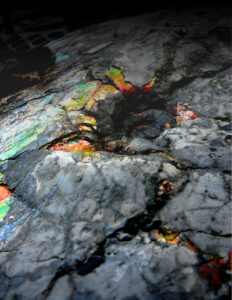
Ammolite in Blackfoot Tradition: Iniskim
Long before gemologists took notice, the Indigenous peoples of the region recognized Ammolite as something special. The Blackfoot Confederacy, call it Iniskim, or “Buffalo Stone.”
According to folklore tradition, a Blackfoot woman received a vision during a time of famine. In that dream, she was shown a shimmering stone that would help bring back the buffalo. The next day, she found that stone along the riverbed. The buffalo returned, and Ammolite has been revered ever since.
“Our people view Iniskim as sacred,” says Beth Day, Chief, co-owner of KORITE and a member of the Blackfoot Tribe. “It connects us to our ancestors, the land, and the spiritual world. We don’t just see a fossil—we see a story, a gift.”
It continues to be used in traditional ceremonies and medicine bundles today. Its resurgence in the gemstone world has even led to collaborations between Indigenous artisans and gem cutters to preserve the cultural and spiritual significance behind the stone.
Why Ammolite Is a Fragile Fossil Gemstone
Ammolite is an organic gemstone, ranking between 3.5 and 4.5 on the Mohs hardness scale. It is valued for its vivid iridescence and unique composition while preserving its natural beauty. Ammolite industry leaders have perfected capping processes, transforming Ammolite into a durable, wearable gem.
This process bonds the fossilized shell to a natural backing that provides solid structural support. The gem’s surface is then sealed beneath a clear protective cap made of quartz, which safeguards the stone against moisture, UV light, and everyday wear while showcasing its vibrant iridescence.
Thanks to these advanced techniques, Ammolite is not only a stunning and rare gemstone but also can be worn and treasured in fine jewelry. Each piece remains uniquely alive with color and pattern—an enduring connection to Earth’s ancient past.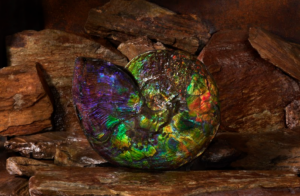
Why Ammolite Is One of the Rarest Fossil Gemstones
Because of its rarity and its limited, finite deposits found only in this corner of the world, Ammolite is considered one of the rarest gemstones on Earth. Its unique composition and singular origin set it apart from other iridescent minerals, with minimal top-grade material extracted each year.
Each piece is unique, not just in color but in pattern. Some swirl like oil on water. Others display the mosaic-like “dragon skin,” while others resemble wisps of feathers or intricate floral patterns. These natural designs are shaped by millions of years of pressure and mineralization.
This means no two Ammolite gemstones are ever alike. Each one tells a story, a ghostly narrative painted in iridescent hues and intricate textures.
Collectors worldwide seek it not just for its beauty, but for its origin story. After all, it’s not every day you wear a piece of an extinct sea creature wrapped in millennia of earth and mystery.
Collecting Ammonite Fossils
For collectors, this is more than wearable art. Museum-quality specimens—large, intact ammonites encrusted in iridescent Ammolite—are prized centerpieces in natural history museums and private collections worldwide. These specimens showcase full spiral shells alive with a spectrum of rainbow colors and intricate detail.
Smaller hand specimens are also highly sought after by fossil enthusiasts and gem collectors alike. These range from polished cross-sections that reveal striking internal patterns to natural fragments that glow with greens, reds, and golds in their raw state.
Some collectors seek stones that display specific patterns, while others focus on size, completeness, or vivid chromatic shifts. Whatever the goal, each specimen offers a tangible connection to an ancient ocean and a story locked in stone.
Tips for High-Quality GemstonesBuy from a reputable source: Ensure authenticity by purchasing from trusted suppliers, such as KORITE, the world’s largest producer. Color Variety: Look for stones displaying multiple vivid colors across the spectrum. Brightness and Play: Seek intense iridescence and movement of color as the stone is rotated. Patterns: Unique natural patterns like dragon skin, mosaic, or feathering can increase desirability. Stability: Choose stones that have been professionally stabilized for long-term enjoyment. |
Feng Shui and The Dragon Stone Legend
In the 1990s, Ammolite gained renewed interest in Asia when Feng Shui master Edward Kui Ming Li declared it the Most Influential Stone of the Millennium, capable of enhancing chi (life force energy). Demand quickly soared in Hong Kong, Taiwan, Japan, and other Southeast Asian countries.
Known as the Seven Color Prosperity Stone, it displays vibrant hues across the full spectrum—reds, greens, blues, purples, and more—each representing different aspects of prosperity and positive energy in Feng Shui. This rare gemstone is believed to harmonize the flow of chi, activating wealth, health, and happiness.
Many Feng Shui experts and energy practitioners believe Ammolite has absorbed the Earth’s and the universe’s positive cosmic energy over millions of years underground. This ancient energy enhances its ability to balance and uplift life force, resonating with natural and cosmic cycles alike.
Ammolite is often used according to the Bagua map to enhance specific areas of life, making it a powerful tool for manifestation. Its iridescence and organic origin provide a meaningful connection to Earth’s ancient past and the flow of universal energy.
From a stone of ancient death to a vibrant source of life, Ammolite breathes energy into modern homes, offices, and talismans alike.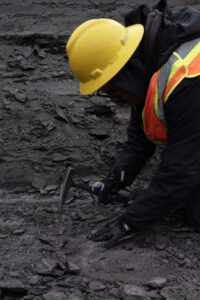
Frequently Asked Questions
What is ammolite?
Ammolite is an organic gemstone formed from the fossilized shells of ancient ammonites. Over millions of years, the aragonite in the shells was preserved and transformed into a rare, iridescent material that reflects vibrant colors.
How are ammonites related to ammolite?
Ammolite is derived directly from ammonites. When these marine creatures died, their spiral shells were buried in sediment. Under specific geological conditions, the shell material fossilized and, in rare cases, became the gemstone known as ammolite.
Where is ammolite found?
Almost all commercial ammolite comes from the Bearpaw Formation in southern Alberta, Canada. This region contains Late Cretaceous marine sediments where ammonite fossils were uniquely preserved.
Why is ammolite so rare?
Only a small percentage of ammonite fossils contain the preserved aragonite structure needed to form gem-quality ammolite. Combined with its limited geographic source, this makes it one of the rarest gemstones in the world.
Is ammolite used in jewelry?
Yes. Ammolite is stabilized and capped with protective layers (often quartz) to enhance durability. This allows it to be used in rings, pendants, and other fine jewelry while preserving its natural color play.
What makes ammolite so colorful?
Its colors are not caused by pigments but by light interference within microscopic layers of aragonite. This creates an optical effect similar to opal or butterfly wings.
Is ammolite considered a fossil or a gemstone?
It is both classified as an organic gemstone because it originates from fossilized biological material—ammonite shells—rather than being purely mineral in origin.
The Fossil Gemstone That Defies Time
Ammolite captivates with its vibrant colors and rare origin, wrapped in an unmistakable air of mystery. A fossilized ghost. A resurrected relic. A gemstone that defies the rules of decay.
When the veil between worlds feels thin, Ammolite reminds us that not everything stays buried. Some things shimmer back to life.
So the next time you see a flash of spectral green in a pendant or a swirl of red like dragon breath in a ring, remember: you’re holding a fragment of Earth’s ancient story — a shimmering testament to resilience, beauty, and the mysteries that endure through time.
This story about ammolite appeared in Rock & Gem magazine. Click here to subscribe. Story and photos from Amarjeet Grewal.