
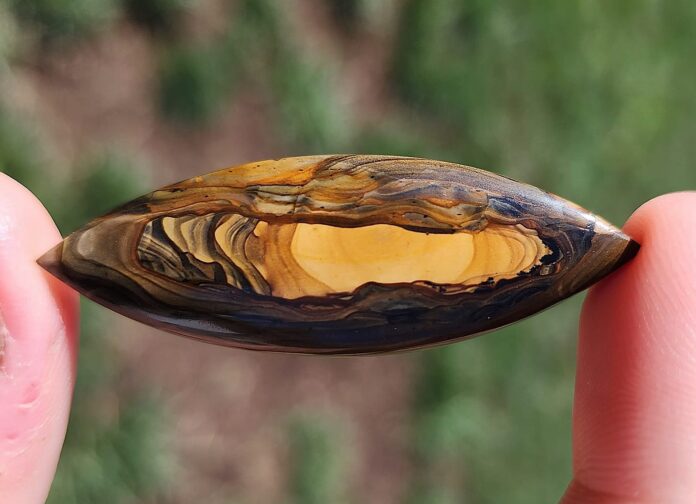
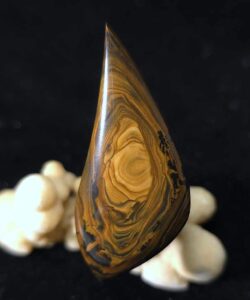
Royal Sahara jasper, discovered in the early 2000s in the Sahara Desert of Northern Africa, is prized for its scenic patterns and earthy brown desert tones. Formed over millions of years in nodule deposits, this striking material often reveals banding and dendritic inclusions that resemble ancient landscapes. For lapidaries, it offers both a challenge and a reward—from selecting quality rough to achieving a high polish.
Key Takeaways
- Royal Sahara jasper is a dense, nodular-forming jasper from the Sahara Desert
- Buying slabs or windowed pieces reduces risk when selecting material
- Use fresh blades and take care—this material is hard and can chip
- Slow, steady grinding produces the best cabbing results
- High polish is achievable with fine grits and finishing compounds
What Is Royal Sahara Jasper?
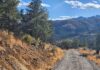
During an excursion to Africa, George and Janet Sechler found a piece of rock on the ground that showed similarities to picture jaspers like Biggs or Deschutes. Because of the vast conditions of the Sahara Desert, extreme temperatures, and many unwelcome creatures roaming around, it must have taken an immense amount of effort and dedication to find the source location.
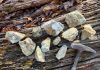
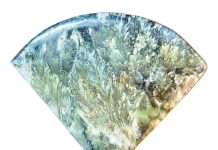
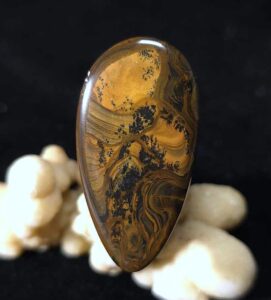
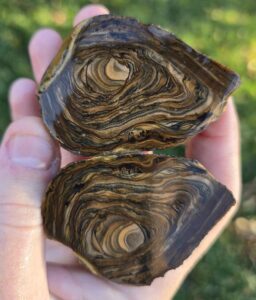
Through their hard work, the source of this magnificent material was found throughout an ancient creek bed. These jaspers develop through millions of years in the form of nodules. The majority of what is found can range from fist-sized nodules to less than an inch. Much of this jasper is reminiscent of the Sahara Desert itself, with tight, picturesque banding and dendrites like those of ancient trees.
 Buying Royal Sahara Jasper
Originally, this jasper was available online under the name of Oasis Prospecting Company. With the website going down in recent years, it is now available to find on eBay under the same name. Much of the material available elsewhere can be found occasionally through online retailers or trade shows in scarce quantities.
Because the material forms as nodules, it can be difficult to tell what’s inside. When purchasing suitable material, it can often be a gamble to see what’s inside because of the dense rind. I think it’s best to look for slabs or windowed chunks (pieces broken off to see inside). That way, you can see what you’re purchasing. However, I find the excitement of cutting your own nodules and revealing the treasure within to be far more satisfying.
How to Cut Royal Sahara Jasper Nodules
If you have never worked with this material before, I suggest using a fresh blade before making your first cuts. This material is very dense on the Mohs scale of hardness (6.5-7), so proceed with care. Additionally, it doesn’t have a set direction to cut for a pattern, so use your best judgment when slabbing. Once you have your preform cut out, you’re ready to start the cabbing process.
 Cabbing Royal Sahara Jasper Tips
Cabbing this material is generally straightforward. Considering the dense consistency of this jasper, I would start on an 80-grit to slowly shape your preform. With occasional chipped edges, this stone holds its own nicely, so don’t worry and keep grinding until you’re ready to move forward.
Next, there are two options I would like to consider for this material. The first would be to move onto a 60-grit soft resin wheel. This allows me to eliminate any harsh scratches, especially if using a fresh wheel. Otherwise, you can use a 220-grit steel wheel to do the same. From experience, I suggest taking your time with the edges. Standard of many other jaspers, this also tends to chip easily. Each of these options should be sufficient to continue forward.
From there, I would move on to the 140 resin to remove any remaining scratches. It’s important to slow down and dry often. It can be very difficult to remove these scratches on finer grit wheels. Once smoothed out without any heavy scratches, you’re ready to move forward.
 Finishing and Polishing Royal Sahara Jasper
By this part of the process, the 280-grit should help smooth out any existing scratches and help smooth everything over. Following the 280, finalize by getting any remaining scratches off on the 600. By this stage, it should start to bring out a gentle shine. If no more scratches remain, you can continue with your routine polishing stages. I make my way up to the 14k to get a beautiful polish. Additionally, you can further enhance it by using cerium oxide with a leather buff or by using Zam polishing compound on a felt tip. That should give it another added polish to finish it off!
Frequently Asked Questions
What is Royal Sahara jasper?
Royal Sahara jasper is a dense, nodular-forming jasper discovered in the early 2000s in the Sahara Desert of Northern Africa. It’s prized for its scenic banding, earthy tones and dendritic patterns that often resemble desert landscapes or ancient trees.
How hard is Royal Sahara jasper?
Royal Sahara jasper ranks about 6.5 to 7 on the Mohs hardness scale. This makes it durable for lapidary work, but also tough on blades and equipment, so using sharp tools and proper technique is important.
Is Royal Sahara jasper good for beginners?
It can be worked by beginners, but it’s not the easiest material to start with. Its density and tendency to chip mean beginners should take their time, use fresh blades and practice careful grinding and polishing techniques.
What is the best way to buy Royal Sahara jasper?
Because it forms in nodules, the interior patterns aren’t always visible. Many lapidaries recommend buying slabs or “windowed” pieces so you can see the quality before purchasing, rather than taking a gamble on unopened nodules.
How do you cut Royal Sahara jasper?
Use a fresh saw blade and cut slowly due to the stone’s density. There’s no set direction for revealing patterns, so orientation is often based on experience or experimentation.
Does Royal Sahara jasper chip easily?
Yes, like many jaspers, it can chip—especially along edges. Careful handling and gradual shaping during the cabbing process help minimize damage.
How do you polish Royal Sahara jasper?
After progressing through finer grits (up to around 14,000), a high polish can be achieved using compounds like cerium oxide or Zam on a leather or felt buff for a glossy finish.
This story about Royal Sahara jasper previously appeared in Rock & Gem magazine. Click here to subscribe. Story by Ben Kaniuth.