
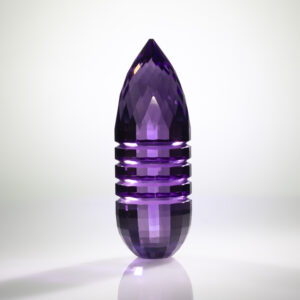
The briolette gemstone design continues to grow in popularity among independent and hobby faceters. Based on the number of colleagues requesting briolette designs and the volume of briolette gemstones shared on social media, interest in this classic cut is clearly on the rise. The design in this post is from Andrew Ian Brown’s new gemstone faceting design book, Gemstone Faceting Designs Briolettes.
Key Takeaways
- The briolette gemstone is a classic, fully faceted design experiencing renewed interest among modern faceters.
- Briolette designs feature high facet counts and require precise alignment, making them more challenging than standard cuts.
- Larger rough material is often needed to successfully facet a briolette gemstone design with clean meet points.
- Materials like quartz, agate, and jade are excellent choices for experimenting with briolette faceting.
- Historically associated with wealth and nobility, the briolette cut dates back to 16th-century India.
- Careful planning is essential when creating briolettes intended for jewelry settings, especially pendants.
 Snake Scale Drop: A Briolette Design
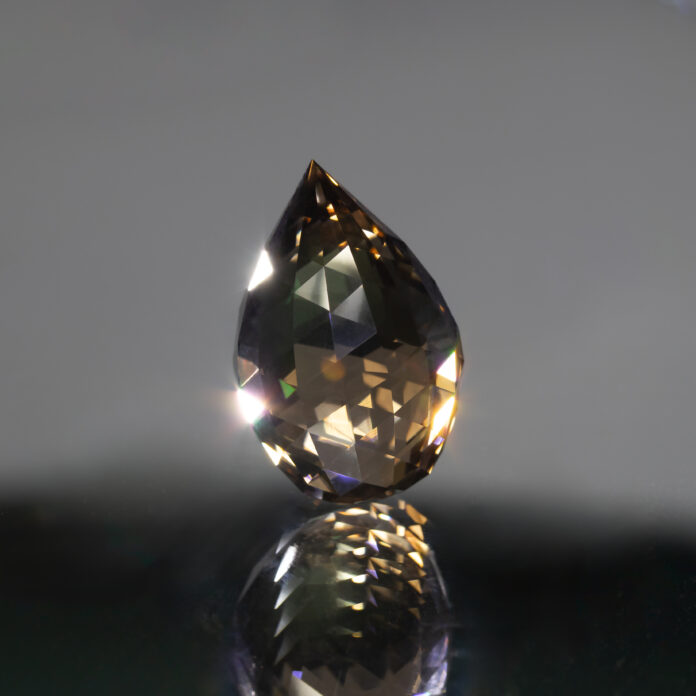
The Snake Scale Drop 1.5:1 design is a beautiful squat briolette for jewelry or as a collector gemstone. The directions are straightforward and easy to follow; however, the facet count is 216 and requires a larger gemstone if you want to see your meet points. It would be a challenge to facet this on a small stone. The one we faceted was 41 ct and 25 mm high. At this size, it would make a great drop pendant. A larger stone would go into the collector category.
The finished gemstone is a smokey quartz from Hallelujah Junction, Nevada. Quartz is a great choice for this design because of its low cost for larger rough materials. There is no concern about light return and dispersion in a traditional briolette design. Synthetic and opaque materials like agate and jade are also possible choices for beautiful briolette gemstones.
Briolette Gemstone Designs & History
The Snake Scale Drop 1.5:1 design is one of over 200 briolette designs in Andrew’s new gemstone design book. We are in the process of faceting four different designs from his new book, but I doubt that we will be able to stop there.
Andrew gives us a brief history of this cut in his new design book and talks about this gemstone design being associated with wealth and nobility. The design originated in the 16th century in India and reached popularity in the 17th century. The design started to wane in the 18th century. The most famous briolette gemstone is the Briolette of India, a 90.36-carat colorless diamond. I highly recommend this new gemstone design book for all faceters interested in exploring the briolette design.
 Briolette Faceting Tips
Here are some faceting tips for briolette designs.
1. Be careful transferring from the pavilion to the crown. Briolette designs are not as forgiving as traditional designs on a misaligned transfer.
2. Experiment with mixing and matching crowns and pavilions from different designs. This can create an original gemstone. Make sure the symmetries of both designs match at the girdle if you want it to look seamless. If they do not match, you can add a transitional girdle facet tier.
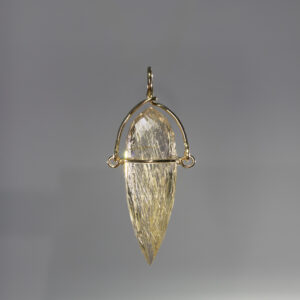
3. If you are faceting a briolette pendant for jewelry, remember to speak with your jeweler about how to set the gemstone before starting. Not every jeweler is comfortable setting briolette gemstones.
Frequently Asked Questions
What is a briolette gemstone?
It is a pear-shaped stone covered entirely in triangular facets, typically without a table, creating a sparkling, symmetrical design.
Is a briolette cut difficult to facet?
Briolette faceting requires precise alignment and careful transfer from pavilion to crown, as the design is less forgiving than traditional cuts.
What materials work best for briolette faceting?
Quartz is a popular choice due to its affordability in larger sizes, but agate, jade, and other opaque or synthetic materials can also work well.
Why are larger stones recommended for briolettes?
Because of the high facet count, larger stones make it easier to see and achieve accurate meet points during the faceting process.
What is the history of the briolette cut?
This cut originated in India in the 16th century and became popular in Europe in the 17th century, often associated with wealth and nobility.
How are briolette gemstones used in jewelry?
Briolettes are commonly used as drop-style stones, especially in earrings and pendants, where their full-surface faceting can catch and reflect light from all angles.
As interest in faceting grows, the briolette gemstone is poised for a resurgence in modern jewelry. With its intricate patterns and variety of briolette designs, this classic cut is both a rewarding challenge for faceters and a distinctive choice for collectors and jewelry makers alike.
This story previously appeared in Rock & Gem magazine. Click here to subscribe. Story by Mark Oros.