
How are geodes formed? Geodes form when mineral-rich water flows into cavities inside rock and slowly deposits dissolved minerals over long periods of time. As conditions change and the water evaporates or cools, crystals such as quartz, calcite, or selenite begin growing inward from the cavity walls. They gradually line the hollow space with a sparkling interior.
Most geodes are small enough to hold in your hand. In rare cases, the same process continues on a far larger scale. When conditions remain stable for thousands or even millions of years, these underground chambers can develop into massive crystal-lined cavities known as giant geodes.
Key Takeaways – How Are Geodes Formed?
- Geodes form when mineral-rich water enters cavities in volcanic or sedimentary rock and slowly deposits dissolved minerals over long periods of time.
- As conditions change, minerals such as quartz, calcite, or selenite crystallize inward from the cavity walls. This creates a hollow, crystal-lined interior.
- Most geodes remain small because the conditions for crystal growth rarely last long enough to produce large formations.
- Giant geodes form when a sealed underground cavity remains stable for thousands to millions of years, allowing uninterrupted crystal growth.
- Temperature changes, mineral saturation, and processes like Ostwald ripening may influence how crystals grow and evolve inside geodes.
- The Pulpí Geode in Spain is one of the largest known examples. It shows that geodes can grow to room-sized crystal chambers under the right conditions.
What Is A Geode & How Are Geoded Formed?
A geode is a hollow rock formation lined with crystals that form when mineral-rich water enters a cavity in volcanic or sedimentary rock. Over time, minerals dissolved in groundwater. These minerals are commonly silica, calcite, or sulfate compounds. They precipitate out of solution and grow inward from the cavity walls. As the process continues, crystals gradually fill or line the empty space, creating the sparkling interior that geodes are known for.
Geodes typically form in gas bubbles in volcanic rock or voids in sedimentary layers, where mineral-rich fluids can circulate and remain stable long enough for crystal growth to occur.
Where Do Geodes Form?
Geodes typically form in two main geological settings: volcanic rock and sedimentary rock. In volcanic environments, gas bubbles become trapped in cooling lava, leaving behind hollow cavities. Over time, these voids can become lined with crystals as mineral-rich fluids seep through the surrounding rock.
In sedimentary environments, geodes form when underground voids are created by processes such as the dissolution of fossils, shells, or mineral deposits. Groundwater carrying dissolved minerals then flows into these spaces, slowly depositing crystals along the inner walls.
In both cases, the key ingredient is mineral-rich water moving through a stable cavity that remains undisturbed long enough for crystal growth to occur.
Why Some Geodes Become Giant
The key to super-sized geode growth lies in a combination of time, chemistry, and stable underground conditions. Most geodes remain small because the conditions needed for sustained crystal growth rarely last long enough. However, in rare cases, mineral-rich groundwater continues to circulate through a sealed cavity for thousands or even millions of years.
In some environments, temperature fluctuations over long geological periods may also influence crystal growth. During cooler periods, conditions can favor crystal stability and growth, while warmer periods may encourage partial dissolution of smaller crystals. This repeated cycle can support processes such as “Ostwald ripening.” This is sometimes described as “cannibal chemistry.” Smaller crystals dissolve, and their material is redeposited onto larger ones, allowing the biggest crystals to grow even larger.
Other researchers suggest that subsurface hydrothermal systems may play a more important role than surface climate alone. In these cases, a steady supply of mineral-rich fluids is the critical factor. The long-term stability of the cavity allows crystals to continue growing uninterrupted.
In either case, the result is the same. With the right balance of space, chemistry, and time, geodes can expand into extraordinary, room-sized crystal chambers like the Pulpí Geode.
The Pulpí Geode: A Giant Crystal Cave in Spain
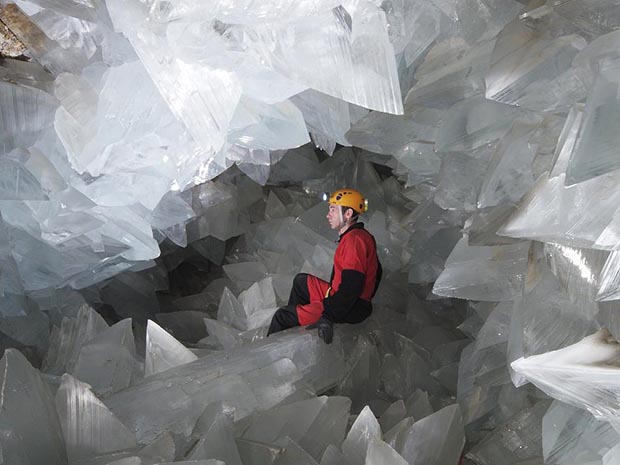
One of the best examples of a giant geode is the Geoda de Pulpí. It was discovered 165 feet underground in an abandoned silver and lead mine in southeastern Spain’s Almería province. Measuring about 26 feet long, 6 feet wide, and 5.5 feet high, it is large enough for people to enter and explore its crystal-lined interior.
Inside, the walls are covered with ice-clear selenite crystals, some reaching lengths of up to six to seven feet. The geode formed under exceptionally stable underground conditions, allowing mineral-rich fluids to slowly deposit gypsum crystals over an extended period of time.
The Pulpí Geode is a real-world example of how are geodes formed using the same processes described above—long-term stability, continuous mineral supply, and slow crystal growth combining to produce an unusually large subterranean chamber.
Enjoy this popular YouTube video tour of Geoda de Pulpí, which is narrated in Spanish.
Frequently Asked Questions – How Are Geodes Formed
How are geodes formed in simple terms?
Geodes form when mineral-rich water fills a cavity inside rock and slowly deposits minerals over time. These minerals crystallize on the inside walls of the cavity, eventually creating a hollow rock lined with crystals.
What are geodes made of?
Geodes are typically made of an outer rock shell (often volcanic or sedimentary rock) and an inner lining of crystals such as quartz, calcite, amethyst, or selenite.
Where are geodes usually found?
Geodes are commonly found in volcanic regions where gas bubbles form in cooling lava, as well as in sedimentary environments where natural voids are created and later filled with mineral-rich groundwater.
Why are some geodes so big?
Some geodes become large when underground cavities remain stable for extremely long periods and continue receiving mineral-rich water. This allows crystals to grow continuously over thousands or even millions of years.
What is the largest known geode?
One of the largest known geodes is the Pulpí Geode in Spain, which contains massive selenite crystals and is large enough for people to enter and explore.
Geodes are a reminder that some of Earth’s most striking beauty forms slowly and quietly beneath the surface. From small crystal-filled pockets to rare giant chambers, they all share the same remarkable process of mineral-rich water, time, and stability working together.
This story about how are geodes formed appeared in Rock & Gem magazine. Click here to subscribe Story by Jim Brace-Thompson.