
Lapidary business tips can help artists and vendors successfully balance the creative side of their work with the business of selling it. Whether you work in lapidary, jewelry or other craft arts, it’s important to know how to manage both sides of your business. Here are 10 vital areas to consider, including artwork, commissions, bios, photos, shows, marketing and more.
Key Takeaways: Lapidary Business Tips
- Build a strong body of work that reflects your unique style and skills.
- Create professional bios, artist statements, photographs and portfolios.
- Choose shows, galleries and other venues that fit your artwork and business.
- Present your work professionally with an organized, attractive booth or display.
- Use marketing, networking and customer communication to build your business.
- Keep your workspace, inventory, records and schedule organized.
- Participate in gem and mineral societies to build skills, connections and community.
- Share your knowledge through demonstrations, articles and lectures.
1. Lapidary Business Tips for Building Your Body of Work
First and most important is to create a body of work that showcases your talents and sets you apart. It may take some time to accumulate a body of work that represents your aesthetic and quality. Tips: Focus on what makes your artwork unique and develop the best techniques. Organize your artwork in themed collections. Further your education by taking classes and by traveling and visiting museums.
The physical and especially the emotional life of an artist is not easy. An optimistic attitude helps overcome many low points. Tip: Surround yourself with great partners, friends and fellow artists who will be your source of support and encouragement.
Don’t be afraid to experiment with different art forms. There may be disappointments, stumbles or rejections, but for those who persist, you will enjoy the journey and become captivated by the beauty and potential of the gem and jewelry arts. Tip: Show your sketches and drawings; customers love to see the process of creation.
Commissions are requests to create specific pieces of art. Commissions may be challenging but also rewarding and stimulating. Calculate the time needed, come up with a reasonable proposal quote, and then adhere to the schedule. Tip: Send photos of the work-in-progress to the clients, but be prepared for new thoughts or directions sparked by their comments.
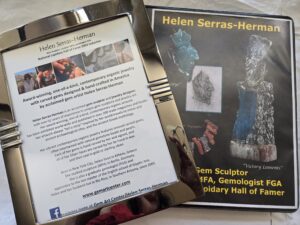
Photo © HSH
2. Business Tips to Create Your Bio, Artist Statement & Portfolio
Writing your bio is almost as important as creating your artwork. An artist’s bio varies from a résumé, which is mainly for career steps and credentials. Tip: Start with a one-page bio, set chronologically, and describe your achievements to date. Your bio should give a narrative snapshot of your life and work, including studies, shows, artistic journey, awards and publications.
An artist statement is different than a bio; it is a short text, often requested on art and craft show applications or on your website. Tip: Write a description of your work revealing your creative process, inspiration and themes for current or future projects.
Photographing your work nowadays is much easier with high-quality cameras on cell phones or good digital cameras. Create a digital portfolio on your phone, tablet, or website, but edit for the best shots. Tips: Have some of your work photographed by professional photographers for high-quality images. Print a few high-resolution photos and create a physical portfolio of your artwork along with printed copies of your bio if you want to visit art galleries for interviews.
3. Lapidary Business Tips for Choosing Shows
The first step is to register your business in your state and have a tax license. You will have to collect and pay sales tax annually or biannually, usually done online. Tip: Keep a photo of your current license on your cell phone for tax-free inventory purchases.
One of the toughest decisions to make is which rock and gem shows to participate in and showcase your work. Wholesale shows target trade customers, such as galleries and jewelry stores and require buyers to have a business license to enter the show. Retail shows, including gem-and-mineral shows and art-and-craft shows, are open to the public, usually with an admission ticket. Booth fees range depending on the size, location and fame of the show.
To start, maybe look for low-cost retail show options. Ask for recommendations from other vendors, but keep in mind that each vendor’s products are different, so until you participate in that show you don’t know how your merchandise will be received. Tip: Try a show three times before making a final decision whether to return or not, unless it is a financial disaster.
Gem and mineral shows often set up guest exhibit cases, at no cost, except for your time and effort. That is a great way to enter a show, feel its pulse and showcase some of your work, even though you can’t sell from that case. Tip: Offer to set up an exhibit case following a specific theme.
It is important to develop your connection with the show’s customers. An old jewelry retail rule is that the sales associate has 15 seconds to approach and greet the customer at the counter. Tip: If you are busy with another customer, make initial contact and state that you will return as soon as you finish.
Gallery Representation: Shows or Galleries?
If your artwork is accepted in a gallery, the commission fees are about 30 to 50% off your retail price; don’t be shocked. The gallery or shop has all the running expenses, and you don’t have to be present and interact with customers daily. The alternative is to be on the road, incurring booth fees often paid months in advance, travel expenses, driving to the show and booth set-up and tear-down. The shows versus gallery representation decision can only be made by you. A balance between both may be a good idea. Tip: Offer an art demonstration at the gallery on a promotion day.
Accepting credit cards at the show is a safe and secure way of payment. It is easy to set up a credit card processing service with merchant service companies, banks or Square®. The fees are usually balanced with the additional income.
4. Create an Effective Show Booth
Your show booth is your temporary store and its appearance will propel your good image or define it as cluttered or messy. Group similar items together and use printed signs versus handwritten, unless calligraphy is your strength. Tips: Choose a color scheme for your tablecloth covers, bases and fixtures that represent you and are a good background for your artwork. Invest in the best showcases and lighting you can afford that are easy to set up. Use background banners, photos, laptops, tablets or monitors to feature your special work. And remember to replace worn-out jewelry fixtures.
5. Lapidary Business Tips for Choosing Shows
Artists are usually the chief promoters of their artwork. Tip: Be present at shows, engage with customers, but keep it short and keep your eyes around the booth for security.
Communication with your existing customers and searching for new ones is an ongoing effort. Options include mail invitations and postcards, printed and online ads in magazines or catalogs, e-mail newsletters, press releases, your website and social media. Tip: Remember to respond promptly to all inquiries.
Writing articles about your art and craft can bring vital awareness to your business. Tip: Sharing your knowledge and expertise is always appreciated and may set you apart.
6. Organize Your Workspace
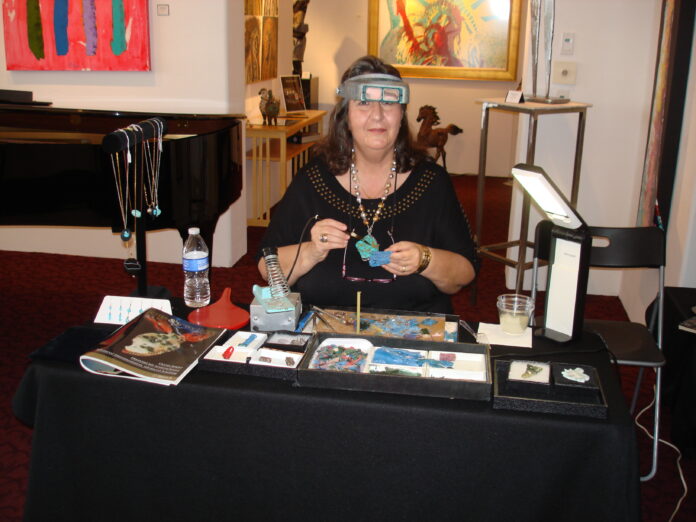
A well-organized workspace is vital to artwork creation. Try to clean up everything at the end, so that old ideas don’t mix with the new ones, and all tools are cleaned and returned to their proper place. Tip: Organize your lapidary tools in drawers sorted by grit size to prevent contamination, and place polishing wheels back into plastic bags. Sort and label metal findings and separate natural gemstone beads and pearls from any glass or imitation ones.
7. Manage Your Inventory & Records
Aim to keep accurate records of your inventory purchases and collection items. These records are necessary to establish prices for your artwork and provenance for your minerals, fossils, and other collectibles. Tip: Make it a practice to label everything as soon as you buy your items with cost, date and description.
Create an inventory system that works for you, both for your finished artwork and the cost of goods. Tip: It can be simple numbering, such as Inv # 001, or for a specific collection such as Carvings Inv # C-002, or Jewelry as Inv # J-003. I prefer to hand-write everything first and then enter the records into computer files.
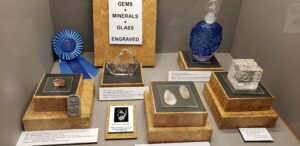
Photo © HSH
8. Manage Your Time
One of the most difficult tasks for artists working from their home studio is managing time. The more venues you participate in to sell your work, the more paperwork, contracts, travel arrangements and communications you have year-round. It is very easy to get sidetracked. Tip: Try to establish a do-not-disturb time for your art creation and a time schedule that best works for you.
9. Join Societies, Network & Volunteer
Many gem and mineral societies are established to offer members the opportunity to gain knowledge and skills. Most clubs organize field trips to collect specimens, invite guest speakers to their monthly meetings and hold annual shows and auctions. The more fortunate clubs have workshops and offer classes on lapidary and jewelry arts, usually with lower fees than other institutions. Look for local societies near you.
The level of expertise at most of these local clubs is amazing. While most enter a club at the hobbyist level, many members are specialists in their fields eager to share their knowledge and experiences. Tip: Build relationships with members, exchange ideas and working tips and volunteer to give back a little bit of your knowledge, time and energy.
10. Share Your Business Tips & Expertise Through Lectures
Lectures are events where you showcase your artwork and demonstrate your expertise. Giving a well-organized presentation is an engaging form of communication. Tip: Create a PowerPoint presentation with good photos of your art and information and try not to read from a manuscript.
Potential customers become engaged when they hear the artist articulate about their work. Tip: Tailor your talk to your audience and bring a few art pieces to show. Although most audience participants may not purchase anything on the spot, be prepared by carrying a few boxes, bags, a receipt book, credit card processing machine and business cards.
FAQs About Lapidary Business Tips
How do I start a lapidary business?
Start by developing a strong body of work and determining how you want to sell it. Register your business as required in your state, establish a system for tracking inventory and expenses, and explore shows, galleries, online sales and other opportunities that fit your work.
How can artists promote their work?
Artists can promote their work through websites, social media, email newsletters, postcards, advertising, articles, press releases, shows and personal connections. Consistent communication with existing customers is also important for building repeat business.
How can I prepare for a craft show?
Choose shows that fit your artwork and target customers, then plan your booth, displays, lighting, signage, inventory and payment system. Visit a show beforehand when possible and ask other artists and vendors about their experiences.
Why should artists join a gem and mineral society?
Gem and mineral societies can provide opportunities to learn new skills, meet experienced collectors and artists, participate in field trips and workshops, and connect with potential customers and fellow artists. Many clubs also organize annual shows and other events.
Business Tips to Start a Business Around Your Art
Being a successful artist involves more than creating beautiful work. It also requires organization, communication, marketing and a willingness to learn the business side of the craft. Whether you sell at gem and mineral shows, work with galleries, accept commissions or develop other opportunities, thoughtful planning can help you make the most of your creative skills. Take it one step at a time, find what works for you and remember that building an art business is an ongoing process.
Want to explore more of the science behind rocks, minerals and gemstones? Subscribe to Rock & Gem for collecting tips, mineral identification, lapidary techniques, rockhounding destinations and more. Story about lapidary business tips by Helen Serras-Herman.