
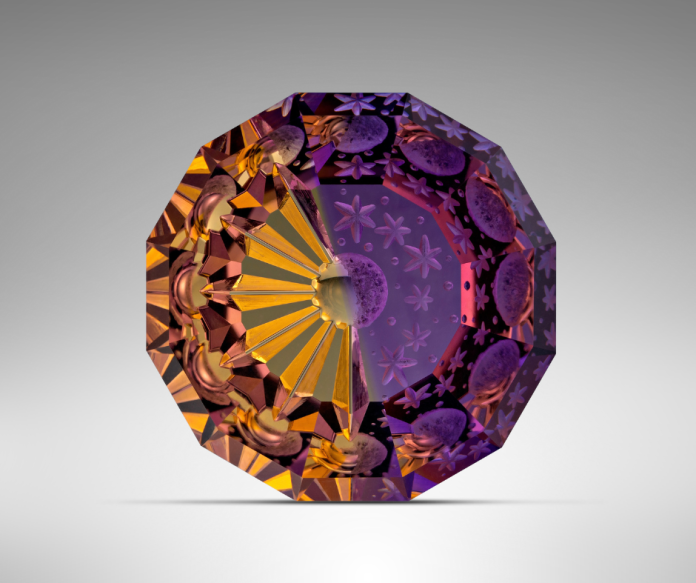
The term lapidary renaissance may sound old-fashioned, but look around you. Do you see what is happening? There is a resurgence in the lapidary arts taking place in the United States. Everything in the rock and gem world is evolving quietly, quickly and with quality. The combination of changes may in the future be called a lapidary renaissance.
Exactly what are the lapidary arts? These are the activities involved with shaping stones, minerals and gems into decorative items such as cabochons and faceted gems.
Key Takeaways
- Lapidary is the art of shaping and finishing rocks, minerals and gemstones into decorative objects, including cabochons, carved stones and faceted gems.
- The internet has made rough materials, finished gems, instruction and lapidary information more accessible to artists around the world.
- Digital design programs such as GemCad, GemRay and Gem Cut Studio have made gemstone design and optimization more accessible to individual cutters.
- Advances in lapidary equipment, abrasives and other materials allow artists to work with greater precision and create increasingly complex designs.
- Social media and e-commerce have opened new opportunities for lapidary artists to share their work, build audiences and sell their creations without a traditional storefront.
- The combination of technology, global access, new tools and a more collaborative generation of artists is helping drive a renewed interest in the lapidary arts.
Access = Growth

I have been playing and working in the lapidary world for the past ten years. I facet, cab and carve gemstones, sell rough materials to other lapidary artists, teach faceting and carving, along with selling ULTRA TEC faceting machines.
From 1988 to 2000, I worked as a researcher and developer on the National Science Foundation project that kickstarted the birth of the Internet. I am seeing parallels between the amazing digital communications paradigm shift and the lapidary arts’ evolution.
The Internet is the main catalyst driving the current renaissance of lapidary arts. The other major factors propelling lapidary arts forward are design software, new equipment and materials, and the ability for people to work from home.
Now information is at our fingertips. Traveling to buy rough stones and lapidary materials is a luxury and an adventure. People can travel to the Bolivia mine to buy the world’s finest ametrine for gemstone faceting, but they can alternatively receive photos, videos, descriptions, and pricing via WhatsApp minutes after a request. Payment takes just seconds and a purchase can be delivered in days. This replaces the old mine-to-broker-to-exporter-to-importer-to-broker-to-gemstone cutter system and negates the additional markup of price for each of these hand-offs. Being able to conduct business online is significant because it provides lapidary artists and jewelers quick, affordable, and easy access to gemstones and rough from around the world.
|
Photographer: Daniel Zetterstrom Material: Sky blue topaz Design: Guardian 2.0 |
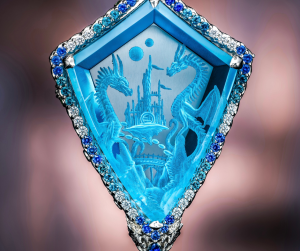 Artist: Jack Hoque
Learning & Sharing
Previous generations of cutters were constrained to years of training through the apprenticeship model of instruction. The internet has freed newcomers by providing access to most of the information needed to get started and the ability to purchase the necessary materials. On a personal note, I can provide remote video faceting training globally. Follow-up questions are answered via email text and messaging. Although in-studio lessons are superior, the ability to provide a live video lesson brings the cost of learning gemstone faceting down significantly.
We can share information easily, but that does not mean that it happens. As with most trades, crafts, and artistic endeavors, processes and techniques have often been secretive. I see that the new generation of artists is more willing to share their knowledge with colleagues and beginners. We are starting to understand that knowledge is power, but only when it is shared. Social media provides rapid sharing and co-development of ideas, allowing quick development of new designs, techniques, and collaborations.
|
Photographer: Jeff Mason Material: Rose de France Amethyst Design: Snowflower |
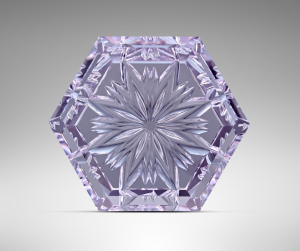 Artist: BD Drummond
Selling Online
Easily available e-commerce gives stone dealers, cutters, and jewelers the ability to sell their materials online. Using social media, we have been able to create profitable and growing businesses. We no longer have to own a physical storefront, visit jewelry store clients, or attend gem and mineral shows. In four years, I was able to amass 60,000 followers on Instagram and Facebook. The result of this social media growth translates into my gemstone faceting business being booked nine months out. The cost of presenting and selling my finished creations is now at a minimum. My faceting students can set up and sell their gemstones six months after their first lesson with minimal sales infrastructure investment.
Digital Lapidary Design
The digital benefits of lapidary are not limited to information and commerce. Over the past years, gemstone designers have used computers to calculate the mathematical equations and geometry necessary to both improve and create better-performing and spectacular gemstones.
Robert Wood Strickland developed the GemCad and GemRay programs that allow any gemstone cutter to use a computer to design and optimize their gemstone creations. The recent addition of the Gem Cut Studio has made creating gemstone designs available to anyone who has a computer, the time to read the manual, and a commitment to practice.
All the basics of math, geometry, and gemstone attributes (such as material hardness and refractive indexes) have been put in the CAD (Computer-Aided Design) programs. The programs/apps shorten the learning curve in gemstone design by months if not years. Of course, knowing the basic principles of these disciplines is beneficial, but no longer an obstacle to generating cutting-edge designs. These programs are tools that put current cutters years ahead of their predecessors.
|
Photographer: Daniel Zetterstrom Material: Mixed Design: Unnamed |
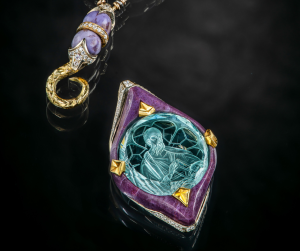 Artist: Chris SER
Precision Lapidary Tools & Materials
Newly developed precision tools have allowed artists to work faster, more accurately, and with finer detail. There are also new materials such as better abrasives for faceting, cabbing, and carving all varieties of rocks and gems. In addition, cutters are using instruments made for different media in their lapidary work. In Henry Hunt’s book, “American Lapidary, Designing the Carved Gemstone,” the author claims that in any artistic endeavor, originality follows the introduction of new tools and techniques. With this break from tradition, we are seeing the new generation of lapidary artists developing new processes and techniques that are innovative and exciting.
|
Photographer: Steven DeVilbiss Material: Citrine Design: Shy Girl |
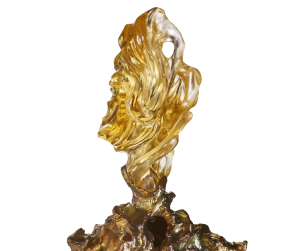 Artist: Naomi Sarna
An Exciting Future for Lapidary Work
All of these innovations and advancements put new and young individuals looking to create their own business in a unique and advantageous position. The ability to build one’s own business is a catalyst in the evolution of the lapidary arts.
We have a new generation of craftspeople and artists who grew up understanding and applying the components of this digital and readily accessible world. They find more rewarding and meaningful employment with the freedom to define their lives on their own terms. The recent development of accessible individual health care and the stay-at-home mentality that COVID-19 instilled also advanced this new breed of independent workers. These shifts enabled people to work in their home studios and within a new business model. Artists can make and sell whatever they want and whenever they want and are no longer restricted by a brick-and-mortar store, corporate structure, or marketing research reports.
Frequently Asked Questions
What is lapidary?
Lapidary is the art and craft of cutting, shaping, polishing and carving rocks, minerals and gemstones. Lapidary artists use techniques such as cabbing, faceting and carving to create decorative stones, jewelry components and artistic pieces.
What are the different types of lapidary work?
Common types of lapidary work include cabbing, which produces polished stones with curved surfaces; faceting, which creates precisely angled surfaces on gemstones; and gemstone carving, which shapes stones into decorative or sculptural forms.
Is lapidary difficult to learn?
Lapidary requires practice and an understanding of materials, equipment and cutting techniques, but access to online instruction and digital resources has made it easier for beginners to get started. Hands-on instruction can also help new artists learn equipment operation and techniques safely and efficiently.
What tools are used in lapidary?
Lapidary tools vary by the type of work being done. Common equipment includes saws, grinding and polishing machines, faceting machines, carving tools and a variety of diamond or other abrasive materials. The specific tools and abrasives depend on the material and the desired result.
Can you make money with lapidary?
Yes. Artists can sell rough materials, cut gemstones, cabochons, carvings, jewelry and other finished work. Online marketplaces, social media and e-commerce have also made it possible for artists to reach customers without operating a traditional storefront.
Driven by Industry Pioneers
A renaissance is driven by a group of pioneers. There are dozens of lapidary artists, engineers, and free thinkers who have laid the path for the new generation of lapidary artists. It’s worth your time to look at some of the groundbreaking lapidary artists in the United States. Enjoy their creations and get inspired.
Years from now, when the next generation of lapidary artists looks back at this era of lapidary advancement, I hope that they see what I am seeing – a revolution, an evolution, and a renaissance. This is what happens when advanced technology, global trade, instant communications, social media, e-commerce, and a new generational shift in the paradigm exist. I invite you to be aware, open your eyes, seek out, and enjoy the magnificent and wondrous creations of our contemporary artists during these innovative times.
This story appeared in Rock & Gem magazine. Click here to subscribe. Story by Mark Oros.