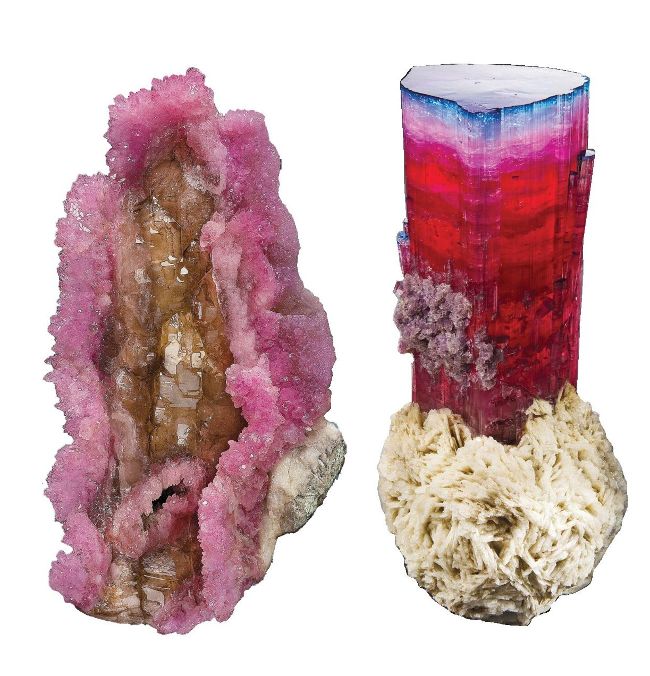
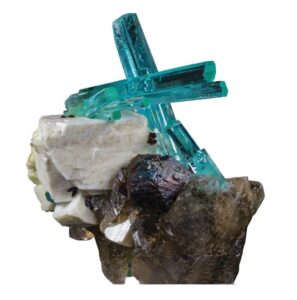
 Arkenstone, iRocks.com
The History of Fine Mineral Collecting
The shocking reality is that they exist at all to enjoy given the rigors of survival. In the days of the European Royalty’s ‘Grand Tours’ around the Continent, fine mineral specimens were gifted as a matter of course, between educated members of the royal class.
Cabinets of ‘natural curiosities’ were in many palaces of the time, and some even survive to the present. The Archduke Stephan von Habsburg-Lothringen (1817-1867) was one of the greatest collectors of all time.
In the early 1900s, the action in the mineral collecting world shifted to the United States, following the energy and dynamism of technology and new wealth. Notables such as Thomas Edison, Andrew Carnegie, and J.P. Morgan (the gemstone ‘Morganite ’ was named in his honor) were among the top collectors of the early 1900s, spending millions in inflation-adjusted dollars. J.P. Morgan’s collection still forms the core of the American Museum of Natural History in NYC to this day. However, after his donation, the era of fine minerals and the appreciation of these treasures of nature withered.
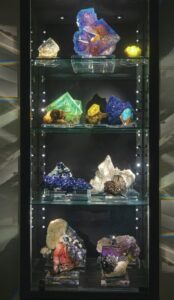 Arkenstone, iRocks.com
Today, we live in a ‘Golden Age’ for this hobby-turned-asset class. Fine minerals are being seen as an art class by top collectors of other forms of beauty, exhibited as masterpieces in homes and museums (such as the Smithsonian, Houston Museum and Dallas’ Perot Museum), and sought after with increasing zeal by top collectors who are building another round of world-class collections as did the industrial royalty of the early 1900s.
Jerome Shaw’s Approach to Mineral Collecting
Jerome Shaw founded and sold a major insurance company and then pursued a second career as a gallery owner (101/Exhibit in Los Angeles) and art investor. A lifetime collector of decorative and fine arts, his collections were exhibited at several major museums.
He went to the gem and mineral shows in Tucson with his collections curator, Nathan Reiskin, to learn more about his new hobby. Cautiously, he went to higher levels of collecting in the field. I met him halfway there. Jerome told me he treats minerals just like any other field of art he has collected over the years. He buys what he likes and what gives him pleasure to look at.
Jerome still treats it as an investment and intends to make a profit in the long run, by following the strategy of spending 80 percent of the money on 20 percent of the specimens to help him keep focus on value over time. He has the space to add the “fun pieces,” but the money is in the specimens that other major collectors would want.
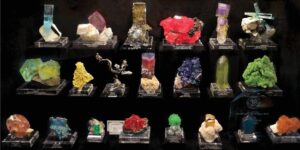 Arkenstone, iRocks.com
Barry Kitt’s Approach to Mineral Collecting
Barry Kitt came into my office like an excited kid in 2010, entranced by having seen his first tourmaline cluster in the Smithsonian and the realization that ‘YES, you can actually own such things!’ He realized that he had the immediate opportunity to gain entry into minerals at the top end of the field. Barry then made the hard-nosed decision that as an investor in other things, he should buy minerals the same way – only the best.
He also considered the trend toward investors looking for investable hard asset categories and he realized that these natural mineral treasures, as an asset class, were virtually unknown by the mainstream investor community. Barry has actually taught me a lot about applying these logical principles to build his small but focused collection that is constantly being upgraded as opportunities arise. He buys pieces that correspond to a uniform size range and meet his own individual assessment of incredible beauty.
To his credit, even after only five years in the field, he has managed to buy, or trade, an incredible number of famous old pieces while also chasing down some of the new “Van Goghs” that come to our market. In February 2015, he exhibited for the first time at the Tucson mineral shows, the largest collection of mineral shows in the world and won the top prize for a mineral collection on exhibit.
Frequently Asked Questions
What is fine mineral collecting?
Fine mineral collecting is the pursuit of naturally crystallized mineral specimens valued for their beauty, rarity, condition and provenance. Collectors may display specimens in private collections or museums, and some focus on acquiring historically significant or exceptional examples.
What makes a mineral specimen valuable?
A fine mineral specimen’s value can depend on its rarity, visual appeal, condition, provenance and significance to collectors. The quality of the specimen and demand among collectors can also influence its market value.
Can mineral collecting be an investment?
Some collectors treat fine minerals as tangible assets and buy specimens with the goal of selling them at a profit over time. However, returns are not guaranteed, and a specimen’s future value depends on factors such as quality, rarity and collector demand.
The role of the internet has been pivotal in educating savvy tangible investment collectors. Market giant Heritage Auctions noticed this asset class and added it as an art class to the auction world. In only 20 years, my rather opaque hobby has turned into a worldwide sport and an emergent asset class.
For more information about mineral collecting, visit www.irocks.com.