
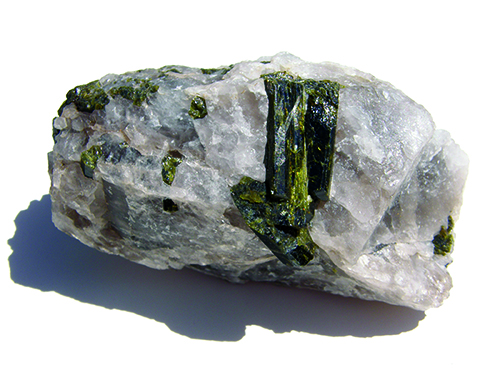
Epidote is a striking green silicate mineral [Ca₂Al₂(Fe³+, Al)Si₃O₁₂(OH)] prized by collectors for its slender, well-formed crystals and distinctive pistachio-green color. It forms durable prismatic crystals with a glassy luster and often appears in dramatic clusters or radiating crystal groups. Found in metamorphic environments around the world, epidote is both common enough for collectors to obtain and beautiful enough to stand out in any mineral display.
Physical Characteristics of Epidote Crystals
This is one terrific silicate mineral for display. It produces well-formed prismatic crystals that are long, slender, striated and translucent with a vitreous (glasslike) luster prized by mineral collectors. It also may form as radial aggregates; that is, as clusters of interconnected crystals radiating out from a central point of connection.
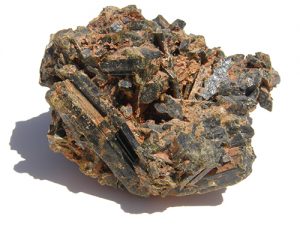
These crystals are relatively hard and durable, with a Mohs hardness of 6 to 7. Its color adds to its appeal. At its best, epidote is a highly desirable pistachio green, but it also ranges from blackish to brownish- or yellowish-green.
How Iron Influences Epidote’s Color
The amount of iron in a particular specimen influences its color. It is also strongly pleochroic, meaning that as you rotate a crystal, it may show different colors. With epidote, these are usually green, yellow, and/or dark brown.
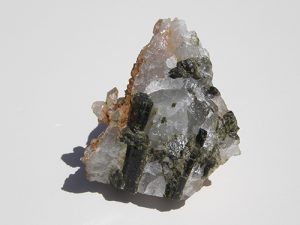
Epidote forms in regional metamorphic environments. For instance, it is found in contact zones where limestone has been intruded by granite or pegmatites and has been altered to marble. It is also found in igneous rocks where constituent minerals have been hydrothermally altered.
Where Epidote Is Found Around the World
This is a fairly common and abundant mineral, so you should be able to obtain a nice specimen for your collection at a reasonable price at most gem shows or rock shops. Just a few of the many well-known localities are found in France, Austria, the Piedmont region of Italy, Norway, Brazil, Pakistan, and—in the United States—Connecticut, Virginia, Alaska, and elsewhere.
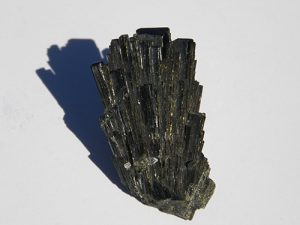
Some especially dark green transparent specimens—especially those from Knappenwand in Austria and from Brazil—have been valued as gemstones for cutting and faceting to be set into jewelry.
FAQ: Epidote
Q: What color is epidote?
A: Epidote ranges from pistachio-green to yellowish, brownish, or blackish-green. Its color often depends on the iron content and can show multiple hues when the crystal is rotated.
Q: Where is epidote found?
A: Epidote occurs worldwide in metamorphic and hydrothermally altered igneous rocks. Notable localities include Austria, Brazil, Italy, France, Norway, Pakistan, and the United States.
Q: How hard is epidote?
A: Epidote is relatively hard and durable, with a Mohs hardness of 6 to 7, making it suitable for handling and display in collections.
Q: Can epidote be used in jewelry?
A: Some dark green, transparent epidote crystals are faceted and used in jewelry, although most specimens are collected as minerals rather than gemstones.
Q: How should epidote specimens be cared for?
A: To preserve epidote’s luster and color, store crystals out of direct sunlight and handle gently to avoid chipping.
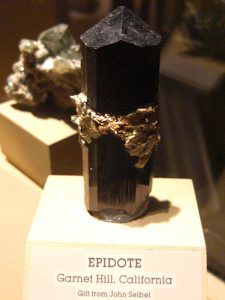
Epidote’s slender prismatic crystals, rich pistachio-green hues, and durability make it a standout mineral for both collectors and display purposes. Whether admired as a single striking specimen or as part of a dramatic cluster, this mineral invites collectors to explore its many forms and localities.
This article was written for Rock & Gem magazine. Story by Jim Brace-Thompson. Click here to subscribe.