
Evil eye beads are jewelry beads decorated with designs representing the human eye. Found in earrings, bracelets, pendants and necklaces, these beads have been viewed as attractive adornments, cultural traditions and protective amulets for thousands of years. Across many civilizations, eye beads have been associated with the “evil eye.” This is a long-held belief that negative forces could bring injury, misfortune or harm. From ancient faience beads to colorful Turkish glass beads, these eye-shaped designs reveal a fascinating history of craftsmanship and symbolism.
Havoc/Adobe Stock
Key Takeaways
- Evil eye beads are decorative beads featuring eye designs that have been used for thousands of years as jewelry, ornaments and cultural symbols.
- The concept of the evil eye dates back to ancient Mesopotamia and Egypt, where eye symbols appeared on buildings, tombs, beads and amulets.
- Early eye beads were often made from faience, an ancient ceramic material created from silica-based mixtures.
- Greek and Roman cultures expanded the popularity of eye symbols, while Roman glassmaking advances made colorful glass eye beads possible.
- Venetian glassmakers later created detailed millefiori eye beads, which became widely traded throughout the world.
- Turkish evil eye beads, known as boncuk or göz boncuğu, remain among the most recognizable examples of this ancient bead tradition.
- Today, evil eye beads continue to be valued as cultural objects, jewelry designs and examples of the long history of human craftsmanship.
Ancient Origins of Evil Eye Beads
Since antiquity, the concept of the evil eye, a manifestation of the universal human fear of negative, supernatural forces, has both fascinated and frightened many cultures. The symbol created to provide protection from the evil eye became the eye itself. Perhaps this was due to the idea that “like repels like.” The first eye symbols were depicted in blue. This color is associated with the sky and the afterlife.
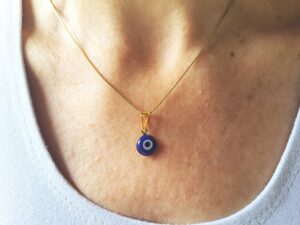
Eye symbols first appeared on tombs and public buildings about 3000 B.C. in Mesopotamia and predynastic Egypt. Next came crudely painted eye beads and amulets intended to provide portable, personal protection against the evil eye. Since then, the proliferation of eye beads has been driven both by advancements in bead-making technology and an enduring, transcultural belief in the evil eye itself.
Elis Cora/Adobe Stock
Early Faience Evil Eye Beads
Faience, the first synthetic bead-making material, was developed simultaneously in Mesopotamia and Egypt. Made by mixing silica with natron, this forerunner of glass was a lustrous, opaque ceramic material with a range of colors.
Faience could be molded into beads or applied as coatings to upgrade inexpensive ceramics. Eye beads decorated with circular patterns representing human eyes became the most popular of all the faience-bead designs. By 1000 B.C., the Phoenicians were trading large quantities of eye beads throughout the Mediterranean. This spread the belief in the evil eye and made eye beads the first jewelry style to transcend civilizations.

The Greeks and Romans
Classical Greek philosophers lent credibility to the concept of the evil eye by writing of the purported ability of the human eye to project harmful rays. The Greeks also created beads with exaggerated eyes intended to more forcefully reflect the imagined harmful gaze back to its source. To ward off the evil eye, eye motifs began appearing on cups, plates and mosaics—even on the prows of ships.
The Romans called the evil eye oculus malus. They produced the first transparent, colored glass that made eye beads even more attractive. Through conquest and trade, the Romans introduced eye beads to Britain and to regions as distant as Scandinavia and India.
Millefiori Beads and the Age of Exploration
In the 1400s, Venetian glassmakers perfected the art of making millefiori (“thousand flowers”) beads. They arranged delicately drawn, needle-thin, multicolored-glass rods in parallel bundles to form cross-sectional patterns that portrayed flowers, animals, human faces and eyes. After being heated to a semi-molten state, these glass rods were drawn into long, half-inch-diameter strands. The miniaturized, cross-sectional color patterns remained intact with remarkable preservation of detail. Brightly colored millefiori eye beads depicted eerily realistic representations of the human eye itself.
European traders carried millions of millefiori eye beads to the New World and throughout Africa and parts of Asia.
Erin/Adobe Stock
Evil Eye Beads Today
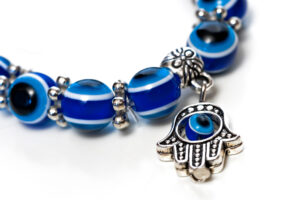
The wearing of eye beads is a global trend today. State-of-the-art bead-making materials and techniques have made possible the inexpensive production of eye beads of all colors. These designs range from basic representations of the human eye to highly detailed, lifelike reproductions. The eye motif itself also appears on all types of modern ornaments and amulets.
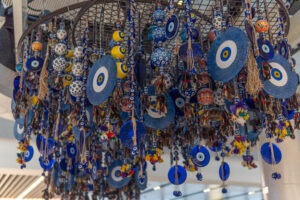
Nowhere are eye beads more popular today than in Turkey, where they are part of the national culture with eye symbols appearing on everything from flowerpots and coffee cups to airline logos and business cards.
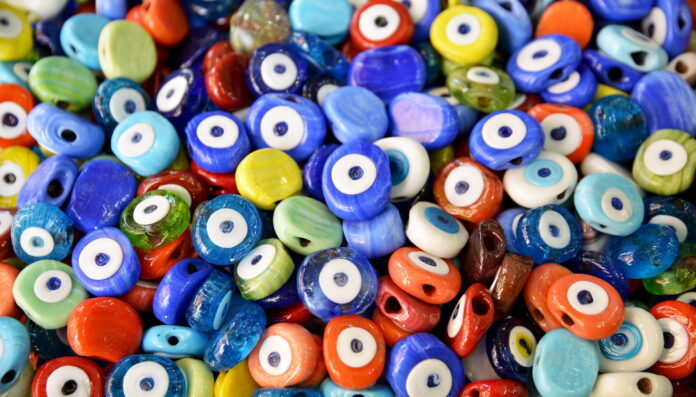
The classic Turkish eye bead, called a boncuk or göz boncuğu, is made of handmade glass and features concentric circles or teardrop shapes in dark and light blue, white and black. The glass in many Turkish eye beads is also specially formulated to contain traces of iron, copper and salt, materials traditionally thought to offer protection from evil.
According to Turkish mythology, a chipped, cracked or otherwise deteriorated eye bead means that an evil eye had projected unusually powerful negative energies which the bead had absorbed to protect the wearer. Damaged beads are not discarded but carefully saved as a purported reminder of the existence of the evil eye.
Frequently Asked Questions
What are evil eye beads?
Evil eye beads are decorative beads featuring eye-shaped designs that have historically been associated with protection from the evil eye. These beads have been made from materials including faience, glass and modern synthetic materials and are used in jewelry, ornaments and amulets.
What is the meaning of evil eye beads?
The meaning of evil eye beads varies among cultures. Traditionally, many people have viewed them as protective symbols intended to guard against negative forces or misfortune. Today, they are also appreciated as examples of cultural heritage, traditional beadmaking and jewelry design.
Where did evil eye beads originate?
The earliest eye symbols and beads are associated with ancient Mesopotamia and Egypt. Here, eye imagery appeared on tombs, buildings, jewelry and amulets thousands of years ago. The tradition later spread throughout the Mediterranean and beyond.
What are Turkish evil eye beads called?
Traditional Turkish evil eye beads are called boncuk or göz boncuğu. These handmade glass beads commonly feature concentric circles in blue, white and black and remain an important part of Turkish culture and craftsmanship.
What materials are used to make evil eye beads?
Historical evil eye beads were made from materials such as faience and glass. Later examples include millefiori glass, while modern versions may be produced from a variety of glass, ceramic and synthetic materials.
Are evil eye beads gemstones?
No. Evil eye beads are generally not gemstones. They are decorative beads made from materials such as glass, ceramic or faience, although some modern jewelry pieces may combine evil eye designs with gemstone settings.
Evil eye beads have endured for thousands of years because they represent far more than a decorative motif. From ancient faience beads of Mesopotamia and Egypt to Roman glass, Venetian millefiori and traditional Turkish boncuk, these objects document the evolution of beadmaking techniques and the widespread human fascination with symbols of protection. Whether collected as historical artifacts, appreciated as examples of traditional craftsmanship or worn as cultural jewelry, evil eye beads remain a fascinating connection between ancient beliefs, artistic expression and the science of materials.
Want to explore more fascinating stories about minerals, gems, fossils and the history of Earth’s treasures? Subscribe to Rock & Gem magazine for expert insights, collecting tips and discoveries delivered to your inbox and mailbox. Story by Steve Voynick.