
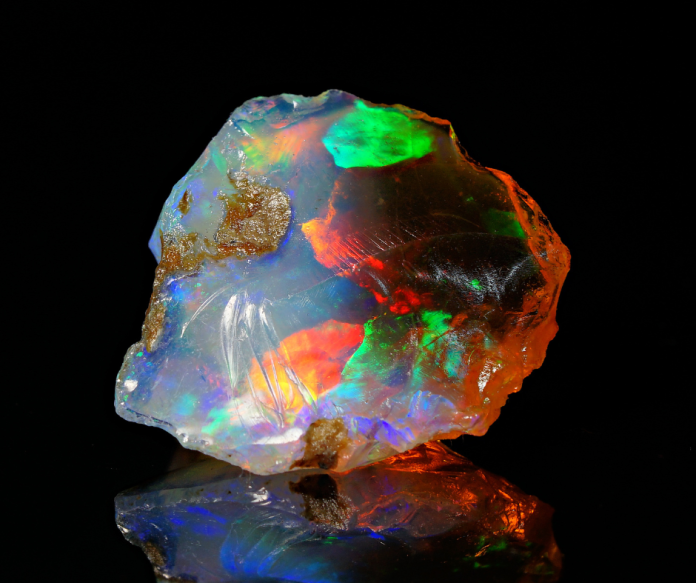
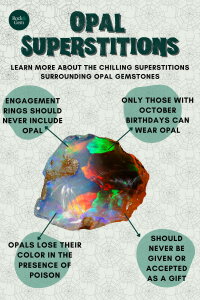
Are opals bad luck? These fiery gemstones have long captivated collectors and jewelry lovers, but they have also been called cursed. For centuries, stories and superstitions have painted opals as harbingers of misfortune, discouraging people from wearing them. From literary tales of deadly opal amulets to persistent myths about who should—or shouldn’t—wear them, these beliefs have overshadowed the true history of the stone. Let’s uncover where the myths began and why opals deserve admiration, not fear.
Key Takeaways
- The belief that opals are bad luck was heavily influenced by a 19th-century literary story, Anne of Geierstein by Sir Walter Scott.
- Readers who didn’t finish the novel misunderstood the role of Hermione’s opal amulet and helped spread the idea that opals were cursed.
- Other opal myths include beliefs that they shouldn’t be purchased for yourself, worn regularly, or stored outside of water.
- Opals are relatively soft and can be sensitive to changes in temperature and humidity, so proper care matters more than superstition.
How the Opal Bad-Luck Myth Began
The question are opals bad luck didn’t appear out of nowhere. One of the earliest and most influential stories comes from 19th-century literature, where a fiery opal amulet played a central role in a tale of mystery, danger, and mistaken superstition. The story of Hermione, her opal, and the tragic consequences attributed to the stone helped cement opal’s reputation as a gem to fear—but the truth is far less sinister.
The Story of Hermione’s Opal Amulet
In the 19th century, Australian opal was gaining popularity, frequently worn by nobility and aristocracy. In 1829, Sir Walter Scott wrote Anne of Geierstein, highlighting a mysterious young woman, Hermione. Set in the Swiss Alps in the 14th century, Hermione was hired by the Baron of Arnheim as a tutor. She wore a fiery red opal set in a gold amulet and strung on a blue ribbon in her hair.
The stone seemed to respond to her moods, displaying a dark red when its mistress was in a foul state, even if the stone was in the darkness of an unlit corridor of the old castle. She was never without the opal amulet. On rare occasions when the ribbon was removed, she was apprehensive. She seemed most frightened when she was near the water, afraid the opal might get wet.
Uncomfortable with Hermione’s eccentricities, local townspeople suspected her of witchcraft.
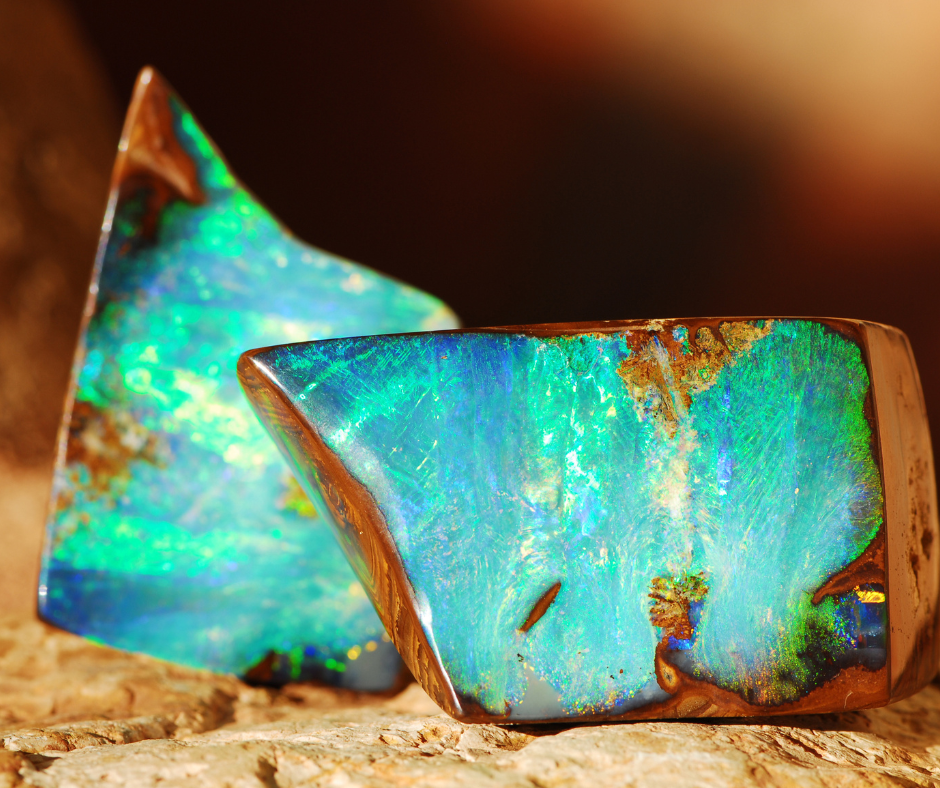
Adorable/Adobe Stock
What Happened to Hermione’s Opal?
Hermione and the Baron were married and had a baby girl, Sybilla. When they entered the church for the baby’s christening, the Baron reached for the holy water and passed a drop to his lady’s finger in blessing. He touched her forehead with the holy water and a droplet landed on the opal. Immediately, a brilliant light flew out of the opal and all the color drained from the gem.
The Baroness fainted and was carried back to the castle. She was laid on her bed in her chamber. The Baron locked the door twice behind him and went to the chapel to pray. Two hours later, the doctor arrived. When the chamber door was opened, Hermione was missing with only a small amount of ash on the bed where she had been.
The Truth About Hermione’s Opal
As the book continues, the story is primarily about Hermione’s granddaughter, Anne, who is Sybill’s daughter. Since Hermione’s death, local lore had built her into a supernatural creature. Hermione makes regular appearances as a spirit or spectral figure. Suspicion follows Hermione’s family tree and Anne’s father is suspected of witchcraft. On the evening before Anne’s wedding, Anne is also seen as a ghost on a bridge wearing… an opal pendant.
As it turns out, Anne used the story about her grandmother’s ghost to sneak out of the castle to help her father’s plight.
At the end of the story, Anne tells her lady’s maid that her grandmother took delight in terrifying the townspeople, who had such a dislike for her grandmother that they put poison into the holy water at the church where her daughter was to be christened. When her husband touched the holy water to his wife’s forehead, a droplet fell onto the opal, which flashed a bright red before it went dark, as a warning to its mistress of the danger. Hermione had been poisoned by the holy water herself, but no one heeded the opal’s message, assuming it was evil, and subsequently let her die an agonizing death.
How Literature Spread Opal Superstitions
This delightful ghost story was written in three volumes. Readers rarely got to the third volume and completely missed the resolution that the opal amulet was the hero of the story. Impatient readers assumed the opal had caused Hermione to die when its fire was extinguished. Within a year, opal sales dropped by more than 50%. People started associating opal in general with a wicked woman and a cursed death. So, they avoided it.
An article from 1892 describes how London jewelry store owners decreased their opal stock as too many ladies would return a beloved piece after other ladies questioned her choice to tempt fate.
Remember, Scott’s writing is fiction. He was not describing an actual stone, but his perception of his current 19th-century fascination with opal. Napoleon had just given Empress Josephine a Slovakian opal called “Burning of Troy” since it was a black opal with red fiery streaks.
FUN FACT: Queen Victoria wore many pieces of jewelry set with opals, including the original version of her Indian Circlet and its coordinating jewels. However, Queen Alexandra wasn’t so sure about the curse and wondered, are opals bad luck? She later had the opals in the circlet replaced with rubies.
4 Common Opal Myths, Explained
Along with the question are opals bad luck, there are many other myths associated with opals. Here are four common myths.
1. Opals Should Only Be Given as Gifts, Not Purchased for Yourself
It’s true that an opal makes a wonderful gift. But many people believe a person should not buy an opal for themselves. Phooey! Opals are very personal stones. A person will often be attracted to one particular stone over another. That is one of the fun things about opal; they are as unique as their wearers. Find one that “speaks” to you and enjoy!
2. Opals Should Only Be Worn on Special Occasions
Sure, you can save your opal for going out, but why wait when you can wear opal every day? If you are particularly hard on your hands, you might want to save them for when you are less likely to damage them (as they are soft and scratch easily). Additionally, opals seem to be more dynamic when you wear them; perhaps they pick up the oils in your skin or they just get lonely when left in a dark jewelry box with no light to bring out their best color.
3. Diamonds Are Needed to Counter Opal Energy
Opal is positive; it is good. It gives energy. Cutting and carving opal allows us to reveal the hidden beauty. Opal is enough without having to add other stones to change its energy. From an aesthetic perspective, diamonds tend to visually wash out a white opal (although it does increase the bling factor and the price tag), while rubies often clash or compete with red color play. Stunning opals with loads of color play can stand alone.
4. Opals Must Be Stored in Water
That’s a tricky one because opal is largely made of water. They are sensitive to drastic changes in humidity and temperature. Putting opals in water insulates them from sudden exposure and buffers raw opals for transportation. You should not need to store set opals in water, but here’s one thing that’s not so lucky. Don’t store your opals (even set opals) in a safe-deposit box without being in water; these boxes are usually dehumidified. Good for paper, bad for opals!
So, Are Opals Bad Luck?
So, are opals bad luck? The short answer is no. Much of the fear surrounding these gemstones can be traced to centuries-old stories, literary tales and misunderstandings. From Hermione’s amulet to Victorian-era cautionary tales, opals were blamed for misfortune that had more to do with superstition than the stones themselves. Today, opals can be worn, gifted and enjoyed without fear. Their color, history and individuality are reason enough to appreciate them.
This story about are opals bad luck previously appeared in Rock & Gem magazine. Click here to subscribe. Story by Cheryl Kasper.