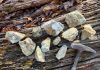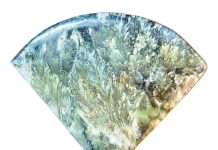

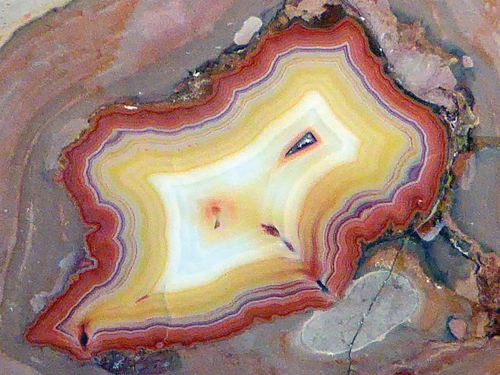
What are agates? At their simplest, they’re colorful, patterned forms of microcrystalline quartz—but the beauty is in the details. Agates form slowly, layer by layer, creating stripes, swirls, “eyes,” and sometimes entire tiny landscapes trapped inside stone. Each one is like a miniature world.
Agates are also incredibly common, which is why rockhounds love them. Beach shores, riverbanks, desert washes, volcanic fields—almost anywhere water or erosion exposes rocks, you might find an agate waiting to be picked up. Because they’re so abundant, they’re usually inexpensive at rock shops and gem shows, making them perfect for kids and beginners.
You can enjoy agates as nature made them, or turn them into lapidary treasures by cutting and polishing them to reveal even more detail.
How Agates Take Shape
Agates begin when silica-rich water seeps into empty spaces inside rocks. These spaces might be:
- Vesicles (air bubbles) in basalt
- Cracks or seams in many types of rock
-
Cavities in limestone
Over time, the silica-rich water deposits tiny quartz crystals. These crystals grow so tightly together that you can’t see them individually—this is called microcrystalline. As the water continues to flow, it leaves behind new layers.
Why all the colors? Trace minerals like iron, manganese, or copper tint the layers red, yellow, blue, or green.
Think of it like filling a bubble with colorful, jelly-like layers that harden over millions of years. That’s an agate!
What Are Agates? Common Types Explained
There are many agate varieties, each with its own personality. Here are some of the most common kinds:
Fortification Agates
Banding forms sharp angles and shapes that almost look like a little fortress or maze.
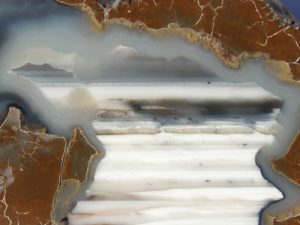
Waterline (or Water Level) Agates
Straight, flat bands form when layers settle like sediment in perfectly horizontal lines.
Eye Agates
Round, bull’s-eye spots that look like tiny eyes peeking from the surface.

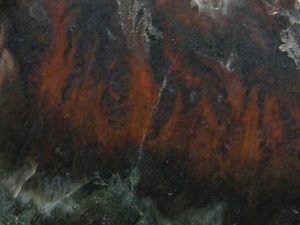
Flame Agates
Bands that swirl upward in shapes that resemble flickering fire.
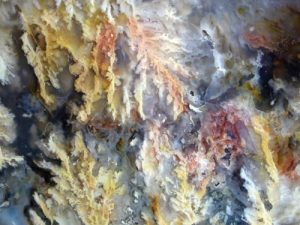
Plume Agates
Feathery, branch-like inclusions that look like ferns, smoke, or underwater plants.
Sagenitic Agates
Filled with needle-like inclusions of other minerals, often forming starburst patterns.

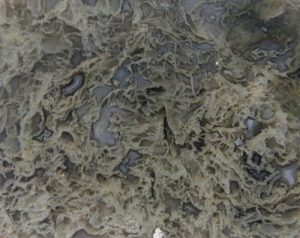
Moss Agates
Green, brown, red, or yellow “mossy” inclusions that spread through the whole stone. These look like forests or algae suspended inside clear quartz.
And the list of what are agates goes on—tube agates, seam agates, shadow agates, enhydro agates (which can trap ancient water), iris agates (which can show rainbows), and more. That variety is one reason collecting agates never gets old.
Fun Agate Facts
- Agates are about as hard as steel (Mohs hardness 7).
- Some glow under UV light.
- Ancient cultures used agates as good-luck charms and protective stones.
- Agates have been collected for thousands of years—some were found in Stone Age sites!
Try This: How Many Can You Spot?
Look through the agates in your own collection. Can you identify different types? Do any have stripes, “eyes,” mossy inclusions, or shapes that remind you of castles or flames?
Agates are some of the most rewarding rocks to learn about, hunt for, and collect. Their endless colors, patterns, and inclusions mean no two stones are ever alike, and every agate has a story hidden inside its layers. Whether you discover them on a day trip, pick them up at a rock shop, or admire them in your growing collection, agates offer a fun and colorful entry point into the world of geology.
This Rock & Gem Kids column about what are agates was written for Rock and Gem magazine. Click here to subscribe! Story by Jim Brace-Thompson