
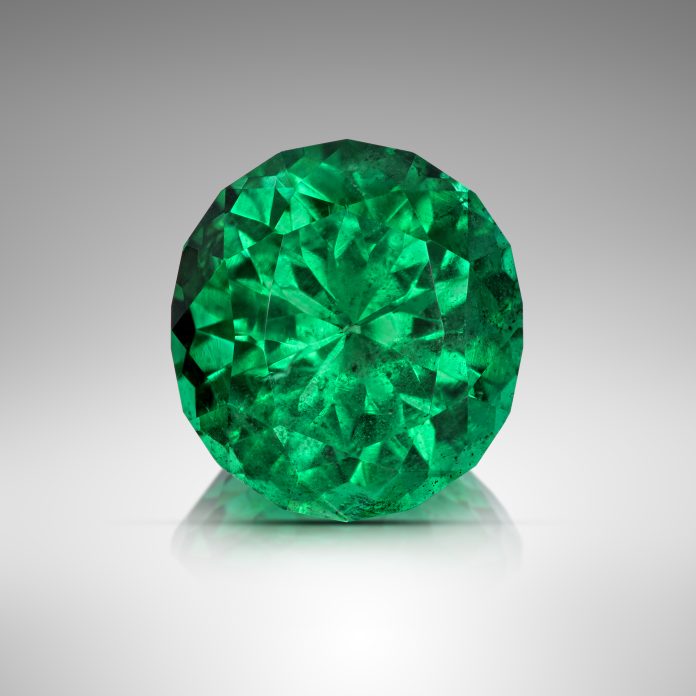
Emerald is the green variety of beryl, colored by trace amounts of chromium and sometimes also vanadium. With a hardness of 7.5 to 8 on the Mohs scale of hardness, this green gemstone is relatively durable but often contains internal fractures or inclusions known as “jardin” (French for garden). These inclusions are considered part of the gem’s natural character. Its striking green hue has made it one of the most prized gemstones throughout human history.
How Emerald Forms in Nature
Emeralds develop in hydrothermal veins or pegmatites where beryllium-rich fluids interact with chromium-bearing host rocks, usually schist, limestone or granite. The necessary mix of elements is rare, making emeralds one of the least common gemstones. Their formation requires both specific chemistry and slow cooling over millions of years. High-quality emeralds must contain Cr³+ — some gemological definitions require its presence. Beryls colored only by vanadium may be called green beryl, though many labs now accept vanadium-colored beryls as emeralds if the color matches. Advanced spectroscopic methods can distinguish between Cr and V sources and identify provenance.
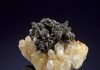
Arkenstone, iRocks.com
Where Emeralds Are Mined
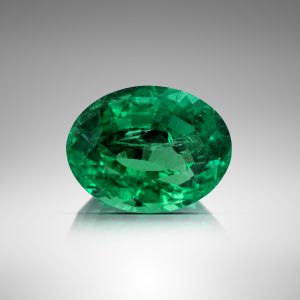
Colombia is the most famous source of high-quality emeralds, particularly from the Muzo, Chivor and Coscuez mines. Other notable deposits occur in Zambia, Brazil, Ethiopia, Afghanistan and Russia, while the occurrences in North Carolina are especially sought after in America. Colombian emeralds are loved for their pure green hue, while Zambian stones tend to have a bluish-green tone and fewer inclusions.
Emerald Varieties and Types
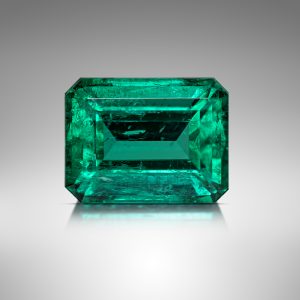
- Trapiche: Found primarily in Colombia, these rare stones have carbon inclusions that exhibit a six-pointed radial pattern.
- Zambian: These gems are often darker and less included. They may show hints of blue.
- Synthetic: Lab-grown emeralds are common. While they mimic the chemical and physical properties of natural gems, they typically lack inclusions.
- Treated: Almost all emeralds are treated (usually with cedarwood oil) to reduce the visibility of inclusions.
- Star: Extremely rare and prized by collectors. The asterism effect is caused by needle-like inclusions (usually rutile, but sometimes other minerals like ilmenite or hematite).
Arkenstone, iRocks.com
Uses of Emerald in Jewelry and Art
From Cleopatra’s adornments to modern engagement rings, emeralds are a favorite jewelry piece. Because of their natural inclusions, emeralds are commonly treated with oils or resins to enhance clarity. In ancient cultures, the gem was ground into pigments and used in religious ceremonies or artwork.
Famous Emeralds and Historic Gems
Several gems are legendary for their size, color or historical importance. The Mogul, a 217.80-carat stone from the 17th century, is intricately inscribed with Islamic prayers and floral motifs. The Chalk, a 37.8-carat Colombian gem, is known for its velvety green color and is set in a stunning diamond ring housed at the Smithsonian Institution in Washington, DC. The Duke of Devonshire weighs 1,383 carats and is one of the largest uncut emeralds in the world. The Patricia, also uncut at 632 carats, is named after the daughter of a New York gem dealer and remains a highlight of the American Museum of Natural History in New York.
Metaphysical Properties
Emerald is associated with renewal, wisdom, and love. It is also said to promote mental clarity, intuition, and protection during travel.
Emerald FAQ
What gives emerald its green color?
Emerald’s green color comes primarily from trace amounts of chromium and sometimes vanadium within the beryl crystal structure.
Where are the best emeralds found?
Colombia is the most famous source, especially the Muzo, Chivor and Coscuez mines. Important deposits also occur in Zambia, Brazil, Ethiopia and Afghanistan.
Are most emeralds treated?
Yes. Most emeralds are treated with oils or resins to reduce the visibility of natural inclusions and improve clarity.
How hard is an emerald?
Emerald ranks 7.5 to 8 on the Mohs scale of hardness. While relatively durable, internal fractures mean it should be worn with some care.
This field guide previously appeared in Rock & Gem magazine. Click here to subscribe. Story by Dr. Stuart Mills and Pam Freeman.