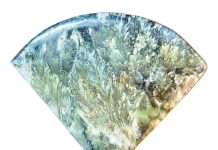

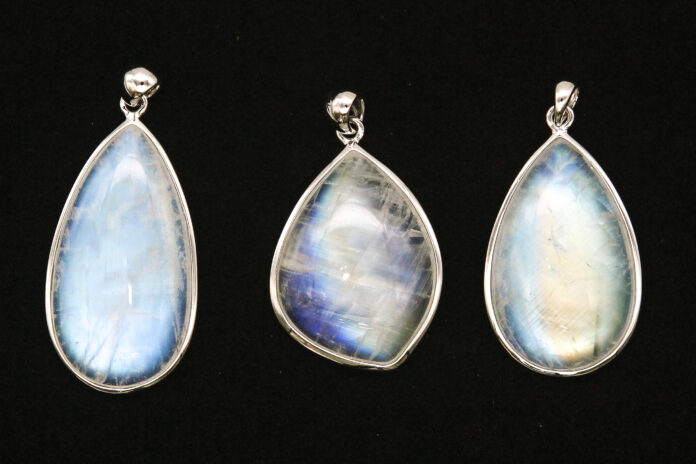
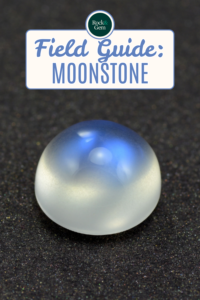
Moonstone is the gem name given to certain white feldspars that display a soft, bluish shimmer—often described as a glowing sheen reminiscent of moonlight. This optical effect, known as adularescence, is caused by the way light scatters within the stone’s internal crystal structure, giving it an ethereal appearance and a longstanding appeal in both jewelry and mineral collections.
How Moonstone Forms in Nature
Moonstone is most commonly the mineral microcline, but can rarely be orthoclase or the plagioclase series. Labradorite, a variety of anorthite, also exhibits a blue schiller. It forms in igneous rocks, granite and syenite. During cooling, orthoclase and microcline (both feldspar minerals) separate from each other in a process called exsolution within a crystal. When light passes through the crystal, the orthoclase and microcline refract differently, resulting in the characteristic shimmer or adularescence.
Where It is Found Around the World
Deposits are found worldwide, with notable sources in Sri Lanka, India, Myanmar (Burma) and Madagascar. Sri Lanka is famous for producing the highest quality blue types. Other significant sources include Brazil, the United States, Tanzania, Switzerland and Norway.
Uses in Jewelry and Beyond
Moonstone is a semi-precious stone. Its primary use is in jewelry. With a low Mohs scale of hardness of 6 to 6.5, it is often cut into cabochons to protect it from chipping and to enhance its natural glow.
Moonstone Varieties & Types
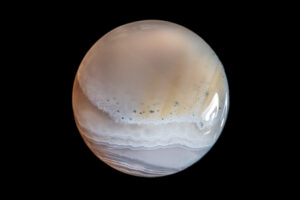
Adularia – Known for its high-quality adularescence, it often exhibits a clear or milky appearance with a blue sheen.
Blue – With its striking blue sheen, blue is prized for its rarity and quality.
Peach or Yellow – These specimens have a warm, subtle glow.
White – Known for its milky adularescence, this is one of the most commonly found varieties.
Rainbow – This is technically a type of labradorite. It features a multicolored adularescence.
Lunar – Often associated with the divine feminine and lunar energy, this stone is believed to enhance intuition, promote emotional balance and foster calmness. It is said to be the stone of new beginnings and to support inner growth and hope.
Does Moonstone Beach Contain Real Stones?
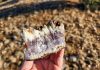
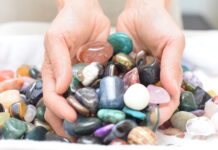
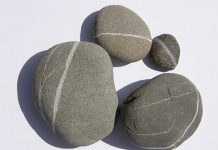
Moonstone Beach in California is known for its shoreline with wave-polished smooth, colorful pebbles, including agate, jasper, jade and moonstone-like chalcedony. While actual moonstone (the feldspar variety) is not commonly found there, the beach’s name reflects the luminous and unique qualities of the stones present.
Frequently Asked Questions
What is moonstone?
This is a variety of feldspar known for its characteristic adularescence—a glowing, floating light effect that appears to move across the surface of the stone.
How hard is moonstone?
It has a Mohs hardness of about 6 to 6.5, making it suitable for jewelry with proper care, especially when cut as cabochons.
Where does moonstone come from?
Moonstone is found worldwide, with notable sources including Sri Lanka, India, Madagascar, Myanmar, Brazil, and the United States.
Is rainbow moonstone true moonstone?
Rainbow is technically a variety of labradorite rather than true potassium feldspar, though it is commonly marketed under the moonstone name.
What is found at Moonstone Beach?
Despite the name, true feldspar is not commonly found at Moonstone Beach. The beach is better known for polished chalcedony and other colorful stones.
This Field Guide appeared in Rock & Gem magazine. Click here to subscribe. Story by Dr. Stuart Mills and Pam Freeman