
How to make turquoise is frowned upon by true collectors, but a fun project for kids and inexpensive bead makers. Here’s how to craft a turquoise look-alike.
What Is Turquoise and Why Make Turquoise At Home?
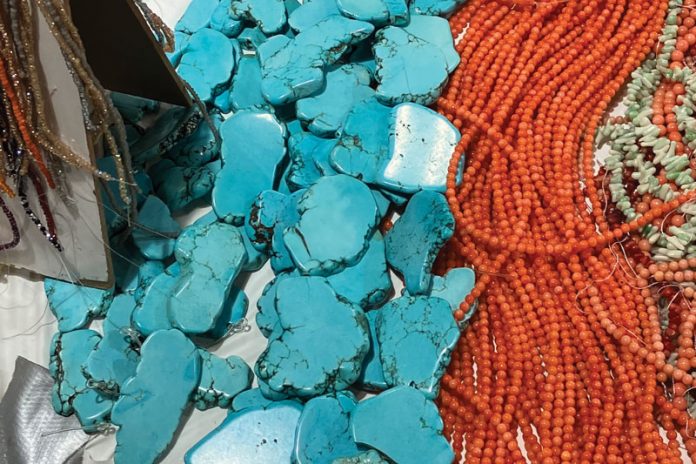
Turquoise is instantly recognized by its bright, waxy robin-egg blue shot through by dark veins. It is prized by collectors and jewelry makers but gets pricey. So how come sometimes it’s expensive and other times you can get a whole string of blue turquoise for cheap? What’s the secret to cheap beads? Often they’re not turquoise! Some common and inexpensive minerals can be dyed to look like rare and valuable stones.
Ancient Popularity of Turquoise
Turquoise is an iconic gemstone from the deserts of the Middle East and the American Southwest. It has been crafted into jewelry for thousands of years. How do we know this? Turquoise was discovered in the tomb of King Tut.
How to Make Turquoise From Howlite
Want to make turquoise? It’s easily done by dyeing inexpensive white rocks with veining to a similar blue. Minerals like howlite and magnesite are famous for how easy they are to transform into artificial turquoise. Howlite is usually soft and it has microscopic pores or open spaces to suck in blue dye. Below are six simple steps showing how to make turquoise at home using howlite, heat and blue dye.
Step 1: Select Howlite for Making Turquoise
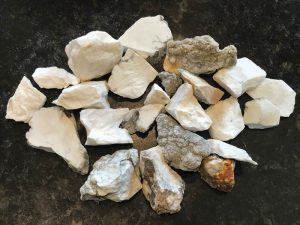
Get one or many specimens of howlite. Softer, porous howlite absorbs dye better when making turquoise, while harder pieces may not turn fully blue. The more pieces you gather, the more options you’ll have.
Step 2: Gather Supplies to Make Turquoise at Home
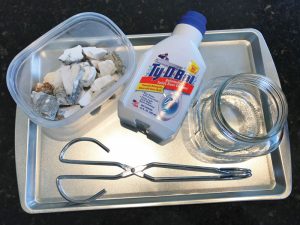
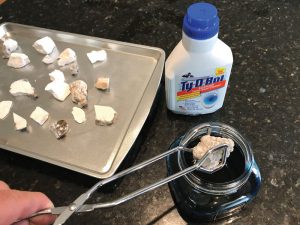
Get a flat baking pan, kitchen tongs, a glass bowl or jar, Ty-D-Bol toilet cleaner or another dye such as blue food coloring or blue cloth dye. Experiment to see what dye works best. All these materials can be purchased at a 99-cent store for around $4.
Step 3: Heat the Howlite to Make Turquoise Dye Absorb
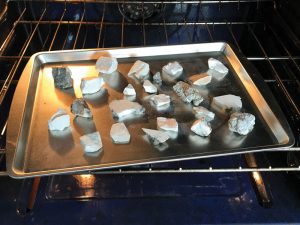
Prepare the howlite by placing it on a baking pan. Heat it in a kitchen oven at 200°F for at least 30 minutes. This opens pore spaces, making them larger than normal.
Step 4: Dye the Howlite to Create Turquoise Color
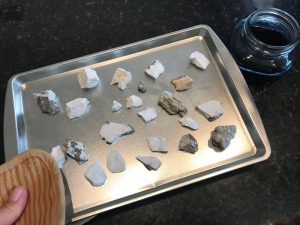
Fill a jar with Ty-D-Bol or another dye. Using oven mitts, remove the baking pan from the oven. Using tongs, drop the hot howlite into the Ty-D-Bol liquid. Make sure the howlite is fully immersed and be careful not to splash the blue dye.
Step 5: Let the Dye Absorb Into the Howlite
Set the bowl or jar aside for several days or weeks. As the howlite cools, its pore spaces will contract. As they do so, they suck in the dye.
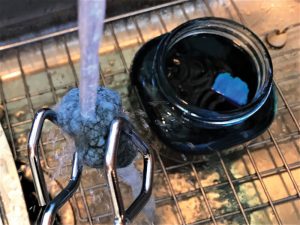
Step 6: Rinse and Dry Your Finished ‘Turquoise’
Move to the kitchen sink with the bowl or jar. With tongs, pull out the pieces of howlite and rinse them under running water from the faucet, then place the specimens on a paper towel or cloth rag and allow them to dry. The result should look like turquoise.
FAQ Tips: Common Issues When Making Turquoise
Why didn’t my howlite turn blue?
Some specimens of howlite are harder and less porous. They may not suck in any dye at all. Try again with softer, more porous specimens.
Why does my dyed turquoise turn white when shaped?
Blue dye only penetrates the surface. When you grind the rock on a wheel to shape a cabochon, you may expose the white interior.
How do I keep the color when making a cabochon?
Make the cabochon from howlite first, then dunk it in the Ty-D-Bol or other blue dye so the color sits on the finished shape.
How dark should artificial turquoise get?
Results vary. Softer howlite absorbs more dye and may produce deeper blues, while harder material may only take a surface tint.
Can I make turquoise look-alike beads at home?
Yes! You can make turquoise from dyed howlite using simple household supplies. This method creates inexpensive, turquoise-look beads for jewelry.
Is Artificial Turquoise Real Turquoise?
Artificial turquoise isn’t geological turquoise. When learning how to make turquoise with dyes, you’re creating a look-alike gemstone. Authentic turquoise forms over millions of years, while dyed howlite is a fast way to create affordable beads and cabochons.
This story about how to make turquoise appeared in Rock & Gem magazine. Click here to subscribe. Story by Jim Brace-Thompson.