
Amethyst has almost universal appeal, making it a favorite among jewelry enthusiasts, gem collectors and spiritual practitioners alike. With hues ranging from deep royal purple to soft lavender, this purple variety of quartz (SiO₂) has been valued since ancient times for both its beauty and symbolism.
The Meaning and Name of Amethyst
Amethyst’s name is derived from the Greek word “amethystos,” which translates to “not drunken.” Legend has it that the young maiden, Amethyst, was on her way to pay tribute to the goddess Diana when she ran into the god Dionysus, the deity of wine and revelry. To protect her from Dionysus, Diana turned her into a pure crystalline quartz. A remorseful Dionysus spilled his wine over the stone, giving it a purple hue. Because of this, Ancient Greeks thought that if you drank wine from a goblet fashioned out of amethyst, you would not become drunk.
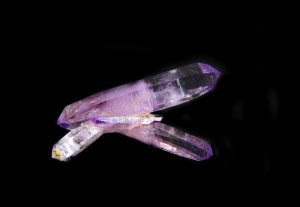
Amethyst Properties and Crystal Structure
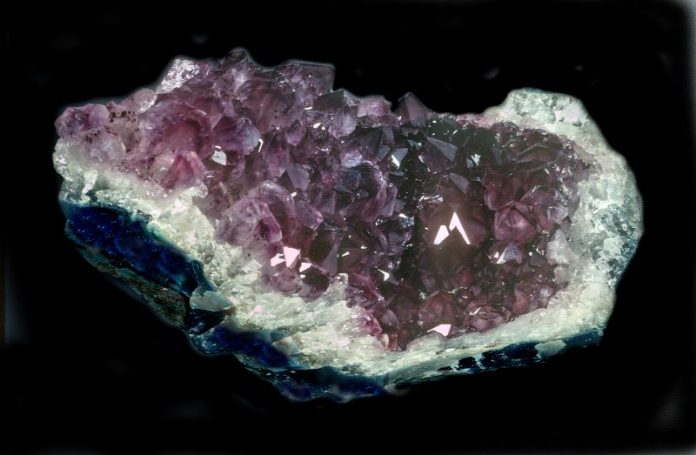
With a Mohs hardness of seven, this purple quartz forms in geodes or cavities within rocks, where silica-rich fluids slowly deposit quartz crystals over millions of years. Their purple color comes from trace amounts of iron and aluminum. When exposed to sunlight, specimens can fade, turning yellow or colorless. They exhibit conchoidal fracture, have a vitreous luster and crystallize in the hexagonal system.
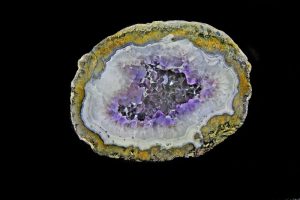
Where Amethyst Is Found
Amethyst occurs in many countries around the world. Historically, most specimens used in the jewelry trade have come from the Rio Grande do Sul, Brazil region. That is also the area where the “cathedrals” and giant geodes are sourced. In the United States, it can be found in Georgia, North Carolina, South Carolina, Arizona, Montana, Colorado and New Jersey.
Care and Handling of Amethyst
Although amethyst is relatively durable with a Mohs hardness of 7, it should still be handled with care. Prolonged exposure to direct sunlight can cause the purple color to fade, sometimes turning pale or yellowish. For this reason, specimens and jewelry are best stored away from bright windows or display lights.
Clean amethyst using warm water, mild soap and a soft cloth or brush. Avoid harsh chemicals, ultrasonic cleaners and steam cleaning, which can damage the crystal or alter its color. When storing amethyst, keep it separate from harder gemstones to prevent scratching.
Amethyst Metaphysical Properties
For metaphysical practitioners, amethyst is said to bring calm and lessen anxiety. It is believed to support the immune system, keep hormones balanced, and help with healthy skin.
Amethyst FAQ
What mineral is amethyst?
Amethyst is a purple variety of quartz composed of silicon dioxide (SiO₂). Its color comes from trace amounts of iron and natural radiation.
How hard is amethyst?
Amethyst has a Mohs hardness of 7, making it durable enough for most jewelry with proper care.
Can amethyst fade in sunlight?
Yes. Prolonged exposure to direct sunlight can cause amethyst to fade, sometimes turning pale or yellowish.
Where is amethyst most commonly found?
Major sources include Brazil, Uruguay, Zambia and the United States, particularly Arizona, Georgia and North Carolina.
What is amethyst believed to help with?
In metaphysical traditions, amethyst is associated with calm, stress relief, balance and spiritual awareness.
Final Thoughts
Amethyst remains one of the most recognizable and widely collected gemstones in the world. From its geological formation in silica-rich cavities to its long history in jewelry and spiritual traditions, this purple variety of quartz bridges science, art and belief. Whether displayed as a dramatic geode or worn as a polished stone, amethyst continues to hold lasting appeal for collectors and enthusiasts alike.
This story previously appeared in Rock & Gem magazine. Click here to subscribe. Story by Richard Gross and Pam Freeman.