
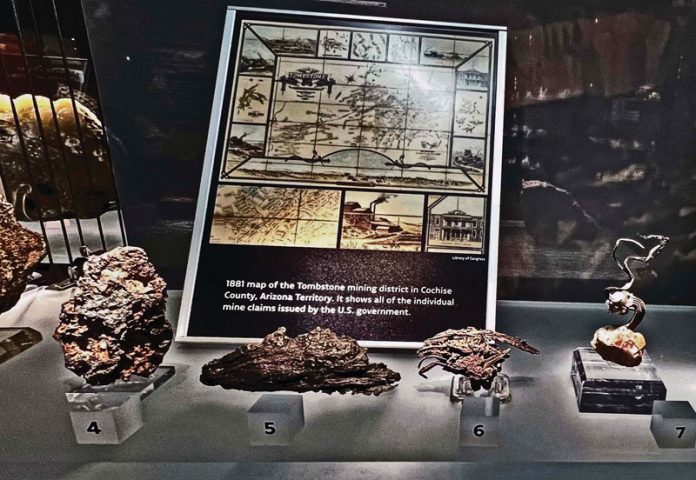
Tombstone silver is a remarkable native specimen that was mined decades ago and is now on display at the Alfie Norville Gem and Mineral Museum at the University of Arizona in Tucson. Its exact provenance remains a mystery, but the specimen’s historical and geological significance continues to capture the interest of collectors and historians alike.
Origins of the Lucky Cuss Mine
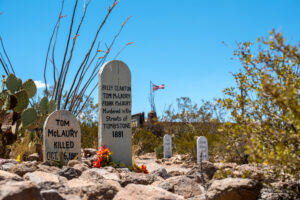
The silver mining specimen was found years ago, maybe in the 1880s, from the Lucky Cuss Silver Mine. This mine is in the Tombstone silver locality, discovered and founded by Ed Schieffelin, but more famous as the O.K. Corral involving Wyatt Earp.
A Rare Tombstone Silver Discovery
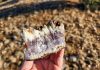
The silver specimen is nearly hand-sized with a series of sub-parallel, long, square silver wires sticking out in opposite directions. The specimen is now credited to the Flagg Foundation, named after Arthur Flagg, the beloved curator of the State of Arizona Mineral Collection and Museum.
Uncovering a Hidden Treasure
In 1964, I was president of the Mineralogical Society of Arizona. One day, we got a letter from the First Interstate Bank telling us the rent was due on a bank box. This was a shock since none of us knew anything about a bank box, and we didn’t have a key for it.
I went to the bank to find out what was what. To see what was in the box, the bank wanted $60 to have the lock drilled. I paid the money, and they did the drilling.
When I opened the box, I sure got a surprise. Carefully wrapped and labeled, was the Tombstone silver!
Preserving a Historic Mineral
I took the specimen to the next club meeting. Everyone was really thrilled. We also hoped someone could tell us something about it, but nobody did. Now the club had a problem. The specimen deserved to be displayed for people to enjoy. It was decided to donate the silver to the Flagg Foundation. The Foundation already had the Wollery collection in wall cases in the State Museum, the perfect place for the Tombstone silver. The Wollery collection remained in the Museum until it was closed and torn down, forcing us to pack the collection and store it for years.
To have some of the Flagg minerals on display, a selection of the better specimens was placed on display in the University of Arizona Flandrau Planetarium Museum, and the specimens remained there until the new Norville University of Arizona Museum was established.
The Mystery of the Tombstone Silver Storage
I had to wonder why Flagg had put this specimen in a bank box. It is certainly valuable, but there has to be another reason. An obvious answer is that a silver or gold specimen would appeal to anyone and could easily have been pocketed and disappeared. But was there another reason? Why this specimen?
The answer might not be the silver specimen, but the Lucky Cuss Mine where it was found. Most mines have a name, and the Lucky Cuss is no exception.
As Ed Schieffelin prospected the area, he was joined by his brother and an assayer named Richard Grid. Ed would have the assayer check his finds. When the assayer checked one of Ed’s samples that proved to be very rich, he said to Ed, “You are a lucky cuss.” That gave Ed a name for his new find, and another mine name was born.
Tombstone Silver Significance in Arizona Mining History
Knowing the mine and who discovered the deposit means the silver might have some historical value. Arthur Flagg put that silver in a bank box for a reason. Could Schieffelin have dug it? More likely, could a later Schieffelin family member have given the silver to Arthur to preserve? That’s a possibility because Arthur was highly regarded and trusted. We will never know the complete answer to our remaining questions because Arthur died over 60 years ago. And therein remains the mystery!
Collecting and Documenting Minerals
There is a lesson to be learned here. Arthur Flagg labeled the specimen, so we know where it was mined. But suppose he had also noted how he got it and from whom? All the questions we now raise would have already been answered. Be sure to learn all you can about your specimens. Document them as completely as you can. Remember, your specimens will be admired and owned by other collectors long after you are gone.
If you visit the Norville University of Arizona Gem and Mineral Museum to see this silver, think of the far-reaching events the discovery of the silver deposit had on future events. A town was born, and millions in silver were mined. A gun fight, and that story has been told countless times. Tombstone lives just as this lovely silver specimen lives, thanks to all who saved it and now share it.
This story about Tombstone silver previously appeared in Rock & Gem magazine. Click here to subscribe. Story by Bob Jones.