
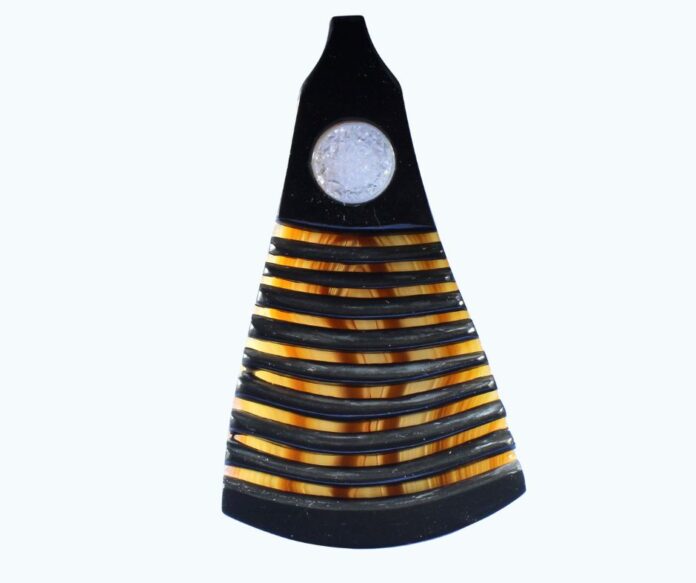
Brazilian agate is prized for its vivid colors and striking banding, making it a favorite among gem cutters and lapidary enthusiasts. In this project, I combined a slab of Brazilian agate with earthy basanite to create a one-of-a-kind doublet. By carefully carving through the basanite to reveal the agate underneath, the finished cabochon showcases depth, texture, and natural beauty. Whether you’re new to doublets or looking for fresh inspiration, this guide walks you through the process from slab selection to the polished final piece.
Step 1: Select and Prepare the Slabs
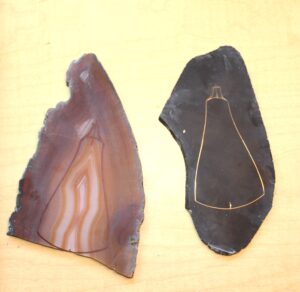
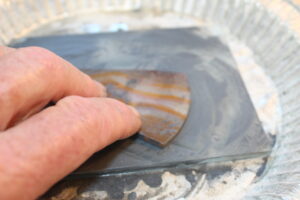
Start by choosing a vibrant slab of Brazilian agate and a complementary slab of basanite. Make sure the basanite is thin enough to carve through, so the agate will show clearly in your design. Flatten both slabs on a plate of glass to ensure a stable, even surface before gluing. This step is crucial for creating a seamless doublet.
Step 2: Glue the Slabs Together
Use Epoxy 330 or another high-quality clear adhesive to bond the basanite and Brazilian agate. Apply a thin, even layer and press the slabs together carefully, ensuring no air bubbles remain. Let the epoxy cure fully before moving on—this ensures your doublet will be strong and durable.
Step 3: Draw and Cut the Cabochon Shape
Choose a cabochon template—this project used Slabs to Cabs template #11. Trace the pattern onto the glued slabs, then cut out a preform shape. The template also helps guide parallel lines if you plan to carve grooves or ridges, which will reveal the Brazilian agate beneath.
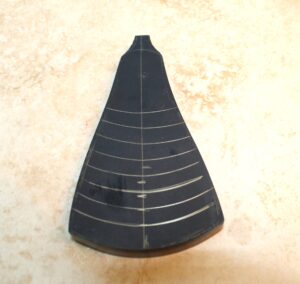
Step 4: Carve the Ridges
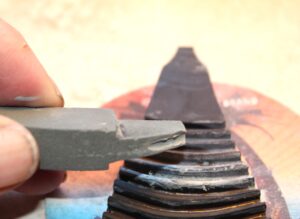
Start with a half-inch thin diamond wheel bur to lightly groove the basanite and expose the underlying Brazilian agate. Then refine each groove with a V-bur, giving clean, defined edges. For the final shaping, use a silicon carving block to smooth transitions and create depth.
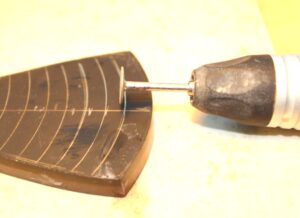
Step 5: Sand and Polish the Grooves
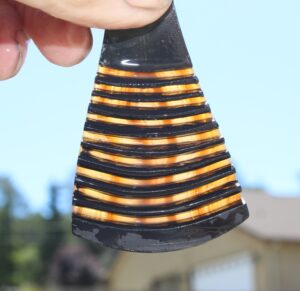
Use shaped wood wheels and progressively finer grits to sand and polish each carved groove. This step enhances the natural color of the Brazilian agate and gives the basanite a smooth, finished look. Take your time—well-polished grooves make the doublet visually striking.
Step 6: Shape the Drusy Accent
If you’re adding a drusy accent, carefully shape a piece of blue lace agate drusy into a rounded cabochon. Check the height frequently—if it’s too tall, grind the back carefully, making sure to leave enough stone to support the crystals. Recessing the drusy slightly can help it sit perfectly in the doublet.
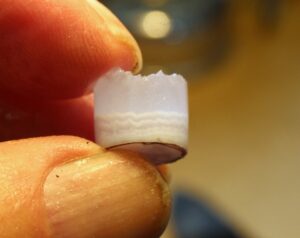
Step 7: Final Adjustments and Mounting
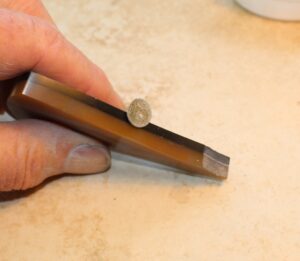
Trim and flatten the base of the doublet to achieve the desired thickness—this project ended up at 8mm. Drill any necessary holes (6.5mm here) and flatten the edges with a wheel bur. The result is a secure, beautifully polished Brazilian agate and basanite doublet ready for setting or display.
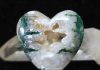
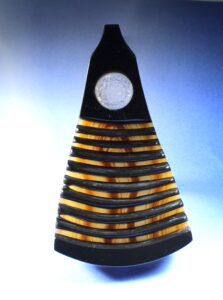 The finished Brazilian agate and basanite doublet highlights the striking contrast and natural beauty of these two stones. By carefully planning each step—from slab selection to carving, sanding, and polishing—you can create a cabochon that showcases depth, texture, and color in a truly unique way. Whether you’re a seasoned lapidary or trying a doublet for the first time, this project demonstrates how Brazilian agate can be combined with other stones to craft one-of-a-kind pieces that are both beautiful and durable. Pin this guide for future reference and let your creativity guide your next gemstone project.
This story about a basanite & brazilian agate doublet was written for Rock & Gem magazine. Click here to subscribe. Story and photos by Bob Rush.