
By Jim Brace-Thompson
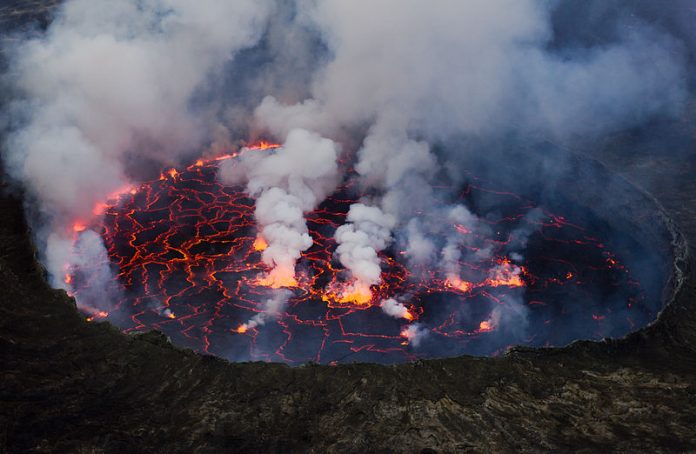
Per a recent article in the journal Science, Mount Nyiragongo in the Democratic Republic of the Congo refuses to leave the headlines. The volcano—considered one of the most dangerous in all of Africa, if not the entire world—burst forth in a deadly eruption on May 22, 2021. As the eruption and lava flow continued, it killed more than 30 people, destroyed thousands of homes, and prompted the evacuation of some 400,000 Congolese citizens.
Blame quickly was placed on government officials who, it is said, decommissioned a volcano monitoring station (Goma Volcano Observatory, GVO) due to lack of funds as a result of the COVID-19 pandemic. However, officials in the Democratic Republic of the Congo blame a “European data monopoly” for hampering efforts that could have saved lives.
Per the article in Science, European partners in the GVO are being accused of “a ‘neocolonial’ attitude” in data sharing prior to the eruption. The accusations were made on behalf of local Congolese staff researchers and technicians. They say they have long been shut out of decision-making due to corruption and squandered financing, both within their own government and on the part of European partners. They also point to “turf protection” by those European partners. They blame all this for the failure to monitor an imminent and deadly geohazard that could otherwise have been forecasted with confidence.
Accusations of one sort or another are now being flung back-and-forth. But when it comes to one of the most deadly volcanoes on Earth, one would hope that politics and “turf” might be put aside in advancing the safety and security of our vulnerable fellow citizens here on planet Earth. At least, that is the hope of this humble reporter.