
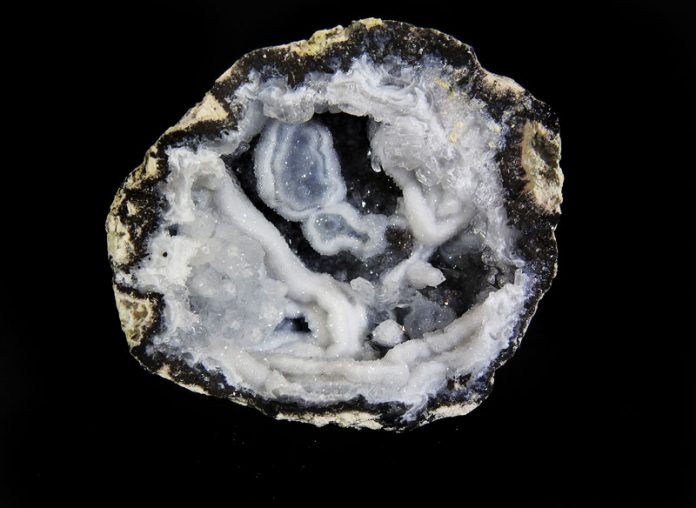
Trancas geodes with crystals are quite different from their famous cousins, the Las Choyas geodes. Trancas geodes, also known as “Chihuahua geodes” were discovered in 1971 in Chihuahua, Mexico.
Key Takeaways
- Trancas geodes are small Mexican geodes discovered in Chihuahua in 1971.
- They are typically 2–4 inches wide with gray to peach-colored outer shells.
- Many contain drusy quartz interiors, sometimes with chalcedony or calcite.
- Some specimens fluoresce green under short-wave UV light due to trace uranium.
- They may form hollow crystal-lined cavities or solid agate “thunderegg” types.
- Collectors value drusy crystal formations more than solid agate centers.
Trancas Geodes With Crystals
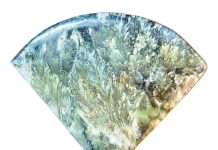
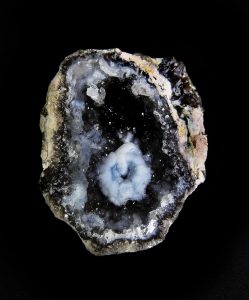
Trancas geodes are generally small – just two to four inches in size. They are not very colorful, with only pale colors typically ranging from gray to blue, but they make up for a lack of color because they often produce fabulous drusy quartz centers.
The centers usually contain clear quartz, chalcedony, calcite, aragonite and sometimes quartz scepters. Trancas geodes may also contain a form of quartz that is rather hard to categorize.
It might be best described as “curved finger-like projections.” Some have described Trancas geodes as miniature caves with stalactites and stalagmites lining the hollow interior. Trancas geodes have a thin outer shell that is usually gray, brown, cream or peach colored.
A fun bonus with Trancas geodes is that they tend to fluoresce green under short-wave UV light because many contain a small amount (not harmful) of uranium.
While most contain hollow centers, some Trancas geodes present as thundereggs with a completely solid or nearly solid agate center. This is not considered as desirable as the drusy quartz centers.
Where to Find Trancas Geodes?
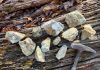
Trancas geodes are normally found during surface mining activities.
Breaking Barriers
In the metaphysical world, geodes are thought to help with overcoming barriers and obstacles. They are thought to help with being calm and centered. The crystals inside a geode are also thought to work together to provide assistance…kind of a two-for-one!
Geodes with Crystals Facts
The word geode comes from the Greek word Geoides which means “earthlike.” Geodes are secondary structures formed in sedimentary and volcanic rocks.
Frequently Asked Questions About Trancas Geodes
What are Trancas geodes?
Trancas geodes are small mineral-filled geodes from Chihuahua, Mexico, known for their drusy quartz interiors and gray to peach outer shells.
Why are Trancas geodes sometimes called Chihuahua geodes?
They were discovered in Mexico’s Chihuahua region in 1971, so both names are used interchangeably in the mineral trade.
Do Trancas geodes glow under UV light?
Yes. Some Trancas geodes fluoresce green under short-wave ultraviolet light due to trace amounts of uranium in the minerals.
What crystals are found inside Trancas geodes?
Common minerals include clear quartz, drusy quartz, chalcedony, calcite, aragonite, and occasionally quartz scepters.
Are Trancas geodes hollow?
Many are hollow with crystal-lined cavities, but some form solid or nearly solid agate cores known as thunderegg-type specimens.
Are Trancas geodes valuable?
They are generally not rare on the high-end market, but well-formed drusy quartz specimens are highly desirable to collectors.
Trancas geodes remain a fascinating example of Mexico’s diverse geode deposits, combining subtle colors with striking internal crystal formations.
This story about Trancas geodes appeared in Rock & Gem magazine. Click here to subscribe. Story by Richard Gross.